A Dark Tale
by Sarah Das Gupta (February 2026)
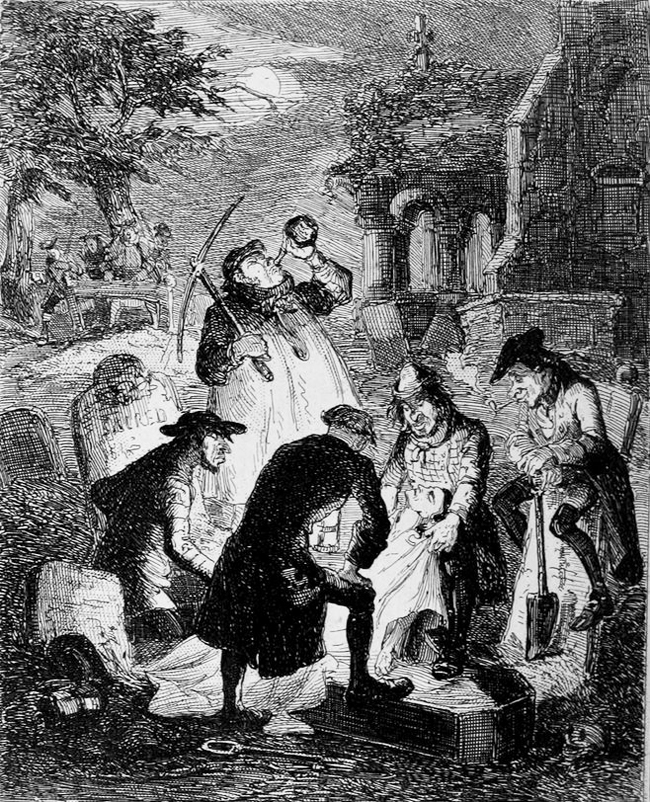
Peter had sat all night by his father’s bedside. As dawn broke, the first light crept beneath the torn curtains. He splashed cold water over his face, shuddering at the sudden shock. He stared at the image looking back at him in the pock-marked mirror. The once cheeky expression of the young apprentice had aged in the last few weeks. Dull, red-rimmed eyes and a sallow, drawn face stared back at him. How often had Peter wanted to grow up, to be the Master shoemaker who could care for his father. In those dreams, his father had been digging potatoes in the back yard, enjoying an ale on a summer’ evening at ‘The Coach and Horses,’ walking on the sands at Brighton. Brighton! Peter had never seen the sea.
Well, only in an old story book which he’d found in Mr. Spinney’s small library. His father had once been on a sort of fairy palace, called a pier, on a trip to Southend. It had a horse-drawn railway over two miles long and boats could anchor off the end.
His reverie was interrupted by a cheery voice, ‘Morning, Master Peter, how’s yer father doing this morning? Now don’t you worry. Hurry, or you’re going to be late. I saved a nice bowl of gruel for ‘im. Nice bowl of gruel will do ‘im the world of good.’
‘Mrs. Appleby, I don’t know what we’d do without you.’ Peter smiled at the plump, reassuring, back view of his upstairs neighbor who had already tied a white apron around her ample waist and was busy heating the gruel on the cantankerous, old stove. ‘Yer father’s a good man and a good neighbor. Many a time, he’s called the doctor out for my Susie and paid the bill too.’
‘I am sure Mr. Spinney will let me come home a little early today. He knows father has been very ill.’
Peter and Mr. Spinney’s five other apprentices usually slept on mattresses under the counters at the back of the workshop but Peter, as a special concession, had been allowed home during his father’s illness. He had to walk three miles between the rooms in Shadwell and his Master’s workshop in Convent Garden. That early in the morning the London traffic was not yet the jungle of elegant carriages, large carriages, carts and wagons it would become by midday. Besides, Peter knew the short cuts through narrow lanes and winding alleys as he traversed the City of London. Crossing Convent Garden market, he was soon dodging porters pushing barrows loaded with colorful flowers of every shade and perfume. Cascades of bright yellow daffodils were laid out beside scarlet tulips and elegant posies of shy violets peeping from behind bright green leaves.
For the last two months, Peter had been working under the eagle-eyed journeyman, John Bryant. Nothing short of ‘perfect’ ever escaped John’s scrutiny. Peter, always an enthusiastic learner, had now mastered the demanding technique of shaping and molding the leather over the last which gave the shoe its characteristic shape. He was trusted to work unsupervised, the journeyman checking on him occasionally. As he sat down, Peter noticed Mr. Spinney deep in the morning Times. He nodded at Peter, before continuing reading.
Suddenly, he emerged from behind the newspaper. ‘This is a terrible business up in Edinburgh. These body-snatchers, these so-called resurrectionists.’ I don’t know what the authorities were doing, letting them get away with the murders of sixteen poor souls. Then sellin’ the bodies at seven pounds each to Dr. Knox for his anatomy lectures! Yes, Burke and Hare, indeed, more like the devil and his apprentice!’
‘And it’s not only the Scots. It’s becoming common not far from here. There’s a gang in East London’s Bethnal Green. They call them ‘the Bethnal Green Burkers.’ Nowhere is safe, not even the grave.’ John Porter’s usually calm voice sounded angry.
Two nights later, just before midnight, Peter suddenly awoke. The old armchair was not the most comfortable place to sleep. Most of the night he was dozing, rather than sleeping. soundly. He went to his father’s bedside. The heavy breathing and rapid rise and fall of his chest had stopped. Peter gently pushed back the thick grey hair from his father’s forehead. For the first time in many days, it felt cool. The fever had broken. Peter held his father’s hand, whispering softly. He felt the rough hands with their broken nails respond with a feeble, but discernible, squeeze. Two hours later, Mrs. Appleby bustled in with a bowl of beef broth, to find Peter asleep in the chair, still clasping his dead father’s hand.
***
The next day passed like a slow dream. Peter had never thought of life without his father. He had always been there since his mother’s death from puerperal fever a week after Peter’s birth, he had been the only person in Peter’s life, a pillar of strength and love. Mrs. Appleby took over ‘the death things’ as she called all the problems of laying outs, burial clubs, pauper funerals and the dreaded body snatchers that beset the poor of the Nineteenth Century. She and another tenant had carefully laid out his father’s body in his tiny bedroom. Peter felt no fear of sleeping in the cluttered apartment with a corpse. On the contrary, he felt his father was with him still, in spirit. Above all, the most important thing was to avoid a pauper’s funeral. This was the death that had haunted his father and the majority of the poor and destitute. Peter remembered his father’s voice relating the horrifying tale from St Botolph’s church in Aldgate. ‘I was walking past the graveyard when I heard a terrible scream. I ran through the gates with a couple of young lads. A crowd was gathered round a deep grave. It must have been over twenty feet deep. Some women was screaming like blue murder, they was! The stink from the grave was something awful. A young grave digger had fallen into the grave, and a youngster had tried to rescue ‘im. Both was suffocated by the poisonous fumes from the grave. Some of the coffins had broken open and were stinking. I thought, ‘God save me from a pauper’s burial.’ Those words had stuck in young Peter’s head as he listened to the dreadful account.
This was a spectre that haunted the poor. The thought of no prayers or funeral service, a crude wooden coffin thrown into a mass grave, over twenty feet deep, no headstone nor name, such was the fate of the destitute in the workhouse or anyone buried at the expense of the parish. It was above all a social disgrace which respectable families tried to avoid. The bodies of babies or infants were even crammed into adult graves to save on Parish expenses.
Despite his poverty, Peter’s father had paid three pennies a week into the local Burial Society, a sort of insurance to pay for his own and his son’s funeral expenses. Unfortunately, during his illness, he had fallen into arrears with his payments. These societies were all too often fraudulent. There had been a recent case in Birmingham, where the committee of a burial club had held meetings in a public house and entrusted the fund to the landlord. It was found to have vanished into thin air or more probably, into the landlord’s pocket. Fortunately, the tenants of the boarding house generously made up the deficit for Peter’s father. He had avoided the dreadful pauper’s fate.
***
Peter stood at the graveside of Christchurch, Spitalfields with Mrs. Appleby and some of the other tenants. Mr. Spinney had paid for a black suit for Peter while Mrs. Appleby had fixed a black ribbon round his father’s old top hat. After stuffing it with newspaper, Peter had managed valiantly to stop it falling over his eyes. It was a chilly April evening. The sky was darkening. The red light from the setting sun shone through the branches of a line of straggling, ancient sycamores. It cast an eerie, crimson light on the mourners in their piecemeal assortment of mourning dress. Some of the men had black armbands over colored suits. Others had black jackets over check trousers and the women wore dark shawls to hide colored blouses. His father would have been greatly moved by these efforts. Peter vowed to start saving for a gravestone with his parents’ names engraved on it.
As he walked back through the gloom, Peter noticed the precautions against body snatching and the tricks of the notorious Bethnal Green Burkers. Some graves had heavy wooden planks over them. Others had ‘mort safes’ —iron bars which covered the sides of the graves and which went deep into the ground. In the corner of the graveyard at Christchurch, a watch tower had been constructed for paid guards or family members to keep watch for any potential robbers of the dead.
As they passed the watch tower, a guard was waiting to climb the stairs and take up his watch. ‘I don’t want to intrude on your grief, but that new grave in the corner is a likely target for the Burkers. It’s easy to climb over the wall and the grave is quite shallow. Of course they can see it’s a freshly dug grave.’ The guard’s voice echoed in the darkness.
‘I’ll keep you company, for a couple of hours.’ A young man spoke from the back of the funeral party.
‘I’m staying too,’ Peter’s voice sounded bolder than he felt. The prospect of a cold night in the company of the dead and the possibility of a bruising fight with the living was not particularly inviting.
Several hours passed in the small round room at the top of the tower. The windows gave a clear view of the churchyard. It was a moonlit night, and the gravestones shone an eerie silver.
‘I just hope the Burkers try that grave under the Yew tree, over there.’ The guard pointed to the south corner of the cemetery.
‘Why? Is it the grave of a wealthy merchant or a great lord, a member of one of the City Guilds?’ Peter sounded curious.
‘Well, you could say he made money in the West Indian trade. That grave is protected by a primed cemetery gun. With a trip wire. Whoever triggers that is going to be mighty surprised!’
‘Why’s this deadly trade become so widespread? I heard about a stagecoach in York only last week when a coachman refused to upload a suspicious package. Turned out to the corpse of a seventeen-year-old girl with fair hair and blue eyes, bent in half to fit into a wicker hamper!’ The young tenant looked at the guard for answers to this horrific question.
‘You know, body snatching is no crime. The law don’t reckon a corpse has legal rights. There’s so many medical schools and so many what wants to study anatomy that there ain’t enough bodies. So, some gangs have started ‘burking.’ I mean they’re murdering people and providing the corpses for the medical schools.’
Peter guessed it must have been well after midnight when the guard prodded him awake. At the south corner of the cemetery, three men in dark coats and with scarves masking their faces, were creeping stealthily along, under cover of the overhanging wall. At least one other man seemed to be moving on the other side of the grave.
‘They’ll all be armed. We only have my old blunderbuss. Our best plan is to follow them and track where they take the body.’ The guard’s whispered words suggested he had no stomach for a midnight battle in the pitch-dark graveyard.
In the far corner of the churchyard, Peter could see the light of a lantern, but it was too dark to distinguish what was happening. He could hear digging, of spades striking flints, of cussing and swearing carried on the wind. He believed it was his father’s grave being desecrated, but he could not be sure.
Suddenly, there was a gunshot and a flash in the darkness. For a second the sky was lit up as bright as day. Three men were bending over his father’s grave. They were bundling something into a dark sack. On the south side, where the gun had been fired, a dark figure lay on the ground screaming and writhing in agony.
‘You follow the lot with the body. Don’t let them see you. Watch where they go.’ The guard indicated to Peter. ‘You follow me to where the gun was triggered.’ He pulled the startled young tenant by the sleeve.
Peter ran down the tower steps two at a time. He kept in the shadow of the wall as two men climbed into the road and a third heaved the sack over, before following. Peter knew the area like the back of his hand. Two men were holding the sack between them. The third seemed to be leading the way. Peter hung back in the shadows, trying not to think about the sack. He concentrated on that last night when he knew his father had responded by squeezing his hand.
By then, the gang had crossed into Gresham Street. The gas lights shone on the three men who seemed to be heading for Cheapside. Peter drew back into the shadows by the iron railings. The men rarely looked back. They were concentrating on reaching their destination as quickly as possible. The usually crowded roads were silent and deserted. The slightest sound echoed in the empty streets. Peter pulled off his shoes and walked in his stockings to muffle the sound of his footsteps.
By this time, he was certain that St. Bartholomew’s Hospital was the intended destination as they entered Paternoster Row in the great shadow of St. Paul’s. The three dark shadows cut through a narrow alley, leading to the back of London’s oldest hospital. They suddenly stopped at a small door in the grey stone wall and knocked quietly. Taken by surprise, Peter flattened himself against the wall, desperately hoping the gang would not look back. The door opened almost immediately. The gang had obviously been expected.
Ten minutes later, Peter was shivering and his feet were numb with cold. He clearly could not wait in the street until daylight. Equally clearly, he could not confront the notorious gang who was said to drug its victims with laudanum, before drowning them in a well, to sell an undamaged body to the schools of anatomy.
Suddenly, the door opened. The three men came out. For a moment they stood in the light, clearly sharing the blood money between them, before pulling the scarves over their faces, and disappearing down a narrow lane between dark buildings.
Peter had noted the sound of the knock which had opened the door immediately: two soft knocks by a louder strike. Shaking with cold, Peter raised a frozen hand and repeated the pattern, one, two and a third knock, as loud as his freezing fingers could deliver. He waited. No response. He would try once more. Before he could raise his hand, he heard footsteps from the other side of the door. As it opened, Peter stumbled over the threshold.
He felt himself falling. Before he hit the stone floor, he was caught by strong arms, partly covered by a black cloak. He looked up at a stern, yet kind face; before his head seemed to be spinning at an alarming speed and his sight had become cloudy and hazy.
Peter recovered consciousness in a room full of shelves and hundreds of books crammed on them from floor to ceiling.
‘Feeling a little better, young man? ‘asked a calm voice from an armchair at the side of a blazing fire.
‘Yes, thank you sir. I think I must have fainted.’
‘Not surprising. Do you make a habit of waiting in the road in the small hours of a very cold morning?’
‘No sir. But I’m looking for my father. He died, you see, sir.’
‘Well, I’m sorry but if he’s dead, there’s little point.’ The man’s voice came to an abrupt halt. ‘You don’t mean it was his body that was brought here tonight?’ For the first time the voice sounded unsure, even anxious.
Peter pictured the sack being thrown over the wall, carried through the dark streets, disappearing behind the door in the wall. He remembered his father’s fear of a ‘pauper’s funeral,’ his own promise of a gravestone with his parents’ names. He began sobbing uncontrollably.
Peter felt a protective arm round his shoulders and a reassuring voice in his ear. ‘You listen to what’s going to happen, my boy. First, if you want to, I’ll show you your father’s body, laid out and unharmed. Secondly, I will arrange for his body to be returned to Christchurch at Spitalfields and re-interred by the gravedigger there. Once the grave has settled, we can think about a gravestone with a suitable engraving. Do you think he would approve of that?’
‘Yes, sir. There’s just one thing, sir. I am saving up for a gravestone, and I already know the inscription.’
If Peter had looked up at that moment, he might have seen the suggestion of a tear running down the cheek of Mr. Algenon Spencer Davies FRCS.
The room was dark, with one light shining over a bed. Peter could see the outline of a figure covered with a white sheet. It was cold and bare, except for the bed. Mr. Davies had asked Peter for the second time whether he wanted to see his father again. Peter had nodded his assent. Now he walked to the bed and slowly drew the sheet back to reveal the familiar face. The eyes were closed and a look of peace rested on the much-loved face. Peter told his father about the events of the night. He reassured him about the future and the plan for the gravestone. As he told Mr. Davies, ‘I’m sure he understood, wherever he is.’
***
Five years later, the summer of 1832 had been warm. The sun shone through the old sycamores, then in full leaf. A small group of familiar figures stood in one corner of the churchyard at Christchurch, Spitalfields. Mrs. Appleby, her waist a little wider, her hair a little greyer, was next to those loyal friends from the Shadwell boarding house. Mr. Spinney, rather stouter, but smart in his black suit, was proud of his recently appointed journeyman. Peter, dapper in a new suit, was standing next to a pretty, young girl, in an elegant summer bonnet and a sprigged muslin dress who shyly clasped his hand. They were all leaning forward admiring a black gravestone, with the gold letters gleaming in the sun.
In Proud Memory of John Leonard Higham
1772 – 1827
Beloved husband of Jane Eliza Higham
Much loved father of Peter John Higham
Mrs. Appleby voiced the feelings of the assembled crowd, ‘Peter, your father would have been so proud of you.’
Note. The Bethnal Green Burkers were executed at Newgate in 1830. Their bodies were dissected at King’s College Hospital.
The 1832 Anatomy Act made it legal for Medical Schools to use bodies that remained unclaimed after 48 hours from hospitals, workhouses or prisons.
The use of embalming before the end of the Nineteenth Century, ended body snatching as corpses could be used by medical schools over a much longer period.
Table of Contents
Sarah Das Gupta is a retired teacher from Cambridge, UK who also taught in India and Tanzania. She started writing last October while in hospital, recovering from an accident. Her work has been published in magazines and journals in over 12 countries including, US, UK, Canada, Australia, India, Germany, Croatia and Romania.
Follow NER on Twitter @NERIconoclast