Anthropology’s Haunted Mirror: Western Fantasy and Native Resilience
by Christopher Carson (October 2025)
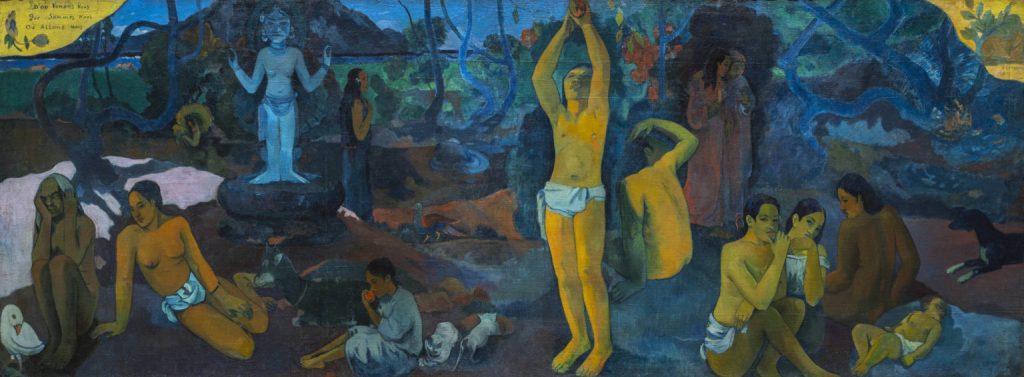
We do not see things as they are, we see them as we are.” — Anaïs Nin, often quoted by anthropologists as both confession and warning.
A stone-age tribe that never existed, a rainforest people caught in a Cold War crossfire, and a Western anthropologist’s dream of sexually carefree Polynesian teens have a surprising amount in common. They are fragments of anthropology’s haunted mirror: moments when our fascination with the “primitive” distorted entire societies into symbols of our own fears and fantasies. From the deserts of Uganda to the jungles of Mindanao, this essay exposes how crises of famine, power, and ideology, often of Western making, shattered human bonds and seduced scholars into seeing darkness or innocence where only desperation and resilience truly lay, as these two have always lain, at the very heart of Homo Sapiens’ short excursion on Planet Earth.
Introduction: Biases Woven into the Discipline
Anthropology’s greatest peril has always been the temptation to read others through the haze of cultural fears or yearnings. From romanticized Edens to demonized hellscapes, the primitive has served as a canvas for projections shaped by modern Western crises, anxieties over morality, violence, or civilization itself. This essay traces seven iconic case studies, from Margaret Mead’s Samoan idyll to the Tasaday hoax, revealing patterns of negativity and positivity biases that illuminate anthropology’s tangled relationship with power, projection, and Western complicity.
Margaret Mead’s Samoa: Romantic Primitivism Emerges
In Coming of Age in Samoa (1928), Margaret Mead described Samoan adolescence as carefree and sexually uninhibited, concluding that Western teenage angst was a cultural artifact rather than universal. Later, Derek Freeman’s Margaret Mead and Samoa argued Mead had been misled by teasing informants, citing one who admitted, “We girls used to laugh about it; we were only teasing her.” [1] Freeman found Samoan society was highly conservative, hierarchical, and protective of sexual propriety. Mead’s portrait has become anthropology’s index case of positivity bias, where Western anxieties and longings projected fantasies of innocence onto another culture.
III. The Ik of Uganda: Famine Misread as Cultural Nihilism
In the fall of 1986 I was a freshman taking an introductory course in anthropology at East Carolina University. We were assigned a reading in the experience of the Ik tribe of Uganda. In the following class, everyone showed up to discuss the reading, but in various states of unease and horror over what we had read the night before.
The professor invited a young philosophy professor, Thomas Bailey, to sit in and give his own assessment of the ethical systems of the tribe. Speaking to me after the lecture, he declared that the Ik “have a very simple moral system, but a moral system nonetheless.”
For what we had read was a section of Colin Turnbull’s The Mountain People, and it presented the Ik as stripped of all human warmth, with parents abandoning children and theft even from the blind.[2]
None of us, not even the anthropology professor, were aware (this being pre-Internet) that only the year before, Dr.’s Bernd Heine and Peter Molnar had demonstrated that the Ik’s behavior had only arose during a catastrophic famine brought on by forced relocations and drought. Heine wrote, “Ik social organization was almost completely destroyed by the famine, and the picture Turnbull gives cannot be taken as representing a stable culture.” [3] Once humanitarian assistance arrived, including international and Ugandan food relief, the Ik’s social bonds recovered. Reports from the late 1970s and 1980s showed Ik communities reestablishing extended family cooperation and reciprocal obligations.
This recovery confirms that the Ik’s apparent moral collapse was neither cultural nor permanent but a time-bound response to extreme deprivation. The Ik case demonstrates that societies under famine are uniquely vulnerable to fragmentation, but such disintegration is reversible when survival is restored.
Historical Comparisons: Starvation and Societal Collapse
During China’s Great Leap Forward famine between 1958 and 1962, an estimated 15 to 45 million people perished. Yang Jisheng documented widespread cannibalism, infanticide, and denunciations between relatives, despite China’s ancient Confucian traditions. He wrote, “When there was nothing to eat, fathers ate sons, brothers ate brothers, and the moral bonds of thousands of years collapsed in a matter of months.” [4] Likewise, the Irish Potato Famine of 1845 to 1852 saw deep social fragmentation, families evicting sick relatives, and the dead left unburied. British soup kitchens and aid, however belated, helped stabilize the surviving population, though a million died and another million emigrated.[5] These episodes show that social collapse under famine is a universal human vulnerability, not a primitive anomaly.
The Yanomami: Violence Amplified by Outsiders
Napoleon Chagnon’s Yanomamö: The Fierce People described the Yanomami as locked in chronic warfare. [6] But critics, including Bruce Albert, argued Chagnon’s mere presence and his “gifts” of steel tools exacerbated the tribe’s conflicts. Everyone wanted the tools. Albert observed, “The image of the ‘fierce people’ served academic debates in the West but ignored how outside forces created or inflamed conflict.” [7] Brazilian land grabs and incursions by miners introduced disease and displacement, intensifying violence. Chagnon’s negativity bias obscured the structural violence the Yanomami faced. Instead of blaming the tribe, Chagnon should have blamed himself.
The Tasaday: The Stone-Age Masquerade
In 1971, the Tasaday were introduced to the world as a stone-age tribe living without even fire or agriculture. National Geographic portrayed them as a living Eden.[8] After the Marcos regime fell, investigations showed the Tasaday were coached to act primitive. Robert Hemley concluded, “The Tasaday’s greatest achievement was to show how easily the world could be fooled by its own desire for innocence.” [9] The Tasaday hoax demonstrated positivity bias in its most extreme form, catering to both propaganda and Western fantasies. Everyone made out like bandits: the Marcos regime got Western aid to commandeer, the gullible anthropologists got publications, and the locals got free food and agricultural implements. The only thing missing was the truth.
VII. The Pirahã: Recursion and Radical Difference
Daniel Everett argued in Don’t Sleep, There Are Snakes that the Pirahã tribe lacked linguistic recursion, contradicting (or seeming to) Noam Chomsky’s universal human grammar hypothesis. Everett claimed, “Pirahã language does not support embedding clauses within clauses; it is the simplest known grammar of any human language.” [10] Critics Nevins, Pesetsky, and Rodrigues, following Chomsky, countered, “We find no evidence supporting a lack of recursion; the data are consistent with universal grammar.” [11] The debate remains unresolved, revealing how scholars project biases, some idealizing the Pirahã as linguistic revolutionaries, others dismissing their uniqueness to protect theoretical orthodoxy. For his part, Chomsky himself dismissed Everett and his investigations as being beneath contempt and even notice: “It’s not even wrong,” he sneered.
The point is not whether either Chomsky or Everett are right or wrong, it is the fanatical, academically violent nature of the dispute between them and their acolytes that controls, despite a paucity of evidence. It was not even about the Piraha tribe. As always, the anthropologists themselves had joined their own tribes.
VIII. The Hmong: Between Mysticism and Political Tragedy
The Hmong were recruited by CIA and U.S. Special Forces during the Secret War in Laos, but they were also brutally targeted by Pathet Lao and North Vietnamese forces. Journalist John Melsheimer summarized, “The Hmong were caught between American geopolitical machinations and a communist revolution determined to destroy those deemed collaborators.” [12] Anne Fadiman’s The Spirit Catches You and You Fall Down highlighted cultural gulfs between Hmong beliefs and Western medicine, but sometimes reduced Hmong identity to mysticism: for example, could these tribesmen really raise fires with only waves of their hands?
No, they couldn’t. But they could be exploited: The Hmong’s destruction came from being trapped between superpowers in a conflict rooted in Western and communist ideologies, the latter itself a Western invention.
The Pattern: Projection, Power, and Human Universals
Negativity bias cast societies as savage or dysfunctional, positivity bias romanticized them as noble or free from Western ills. Many crises arose or worsened from external interventions: the Ik’s famine linked to Ugandan relocations, the Yanomami destabilized by outsiders, the Tasaday fabricated for propaganda, and the Hmong devastated by Cold War violence. Historical famines in China and Ireland prove that even old, cohesive societies disintegrate under starvation, confirming that social collapse is a human constant when survival fails.
Conclusion: Toward Humility in Anthropological Judgment
Anthropology’s haunted mirror shows how observers’ biases can cloud understanding. True humility requires recognizing that under extreme stress, any society can fragment, and that outside powers often create or amplify the crises later misread as cultural features. Clifford Geertz warned, “What we call our data are really our own constructions of other people’s constructions of what they and their compatriots are up to.” [13] Accepting this is the first step toward an anthropology that avoids mistaking shadows for substance.
Endnotes
[1] Freeman, Derek. Margaret Mead and Samoa: The Making and Unmaking of an Anthropological Myth. Cambridge: Harvard University Press, 1983.
[2] Turnbull, Colin M. The Mountain People. New York: Simon & Schuster, 1972.
[3] Heine, Bernd. “The Ik of North-Eastern Uganda.” Africa 55, no. 1 (1985): 39 — 48.
[4] Yang, Jisheng. Tombstone: The Great Chinese Famine, 1958—1962. New York: Farrar, Straus & Giroux, 2012.
[5] Mokyr, Joel. Why Ireland Starved: A Quantitative and Analytical History of the Irish Economy, 1800—1850. London: Allen & Unwin, 1983.
[6] Chagnon, Napoleon A. Yanomamö: The Fierce People. New York: Holt, Rinehart & Winston, 1968.
[7] Albert, Bruce. “Yanomami: The Fierce Controversy.” Cultural Survival Quarterly 14, no. 2 (1990): 29 — 31.
[8] “The Last Tribes of Mindanao.” National Geographic, August 1972.
[9] Hemley, Robin. Invented Eden: The Elusive, Disputed History of the Tasaday. New York: Farrar, Straus & Giroux, 2003.
[10] Everett, Daniel. Don’t Sleep, There Are Snakes: Life and Language in the Amazonian Jungle. New York: Pantheon, 2008.
[11] Nevins, Andrew, David Pesetsky, and Cilene Rodrigues. “Pirahã Exceptionality: A Reassessment.” Language 85, no. 2 (2009): 355 — 404.
[12] Melsheimer, Thomas R. “The Hmong: Displacement and Survival.” Journal of Refugee Studies 19, no. 3 (2006): 381 — 400.
[13] 13. Geertz, Clifford. The Interpretation of Cultures. New York: Basic Books, 1973.
Table of Contents
Christopher S. Carson, formerly of the American Enterprise Institute, is a criminal defense attorney in private practice in Milwaukee.