Arrangements in Gray and Black: Portraits of Henry James
by Kevin Anthony Brown (November 2025)
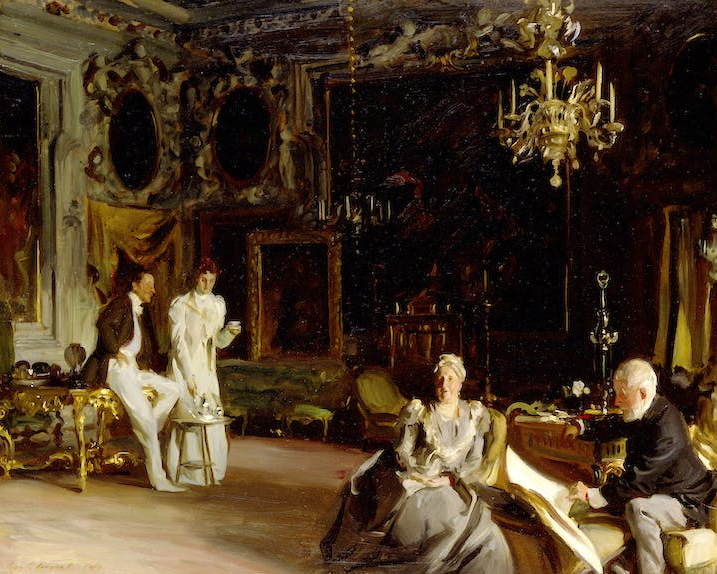
I
Henry James transforms himself into a novelist by apprenticing as a critic. By temperament, he’s a storyteller. By inclination he reviews others’ biographies, correspondence, essays, short stories, stage plays and travel writing. Michael Gorra says James is “his own greatest creation.” If so, how so?
Readers already familiar with his life may find Henry James Comes Home a good point of departure. Readers unfamiliar with his work may find On Writers and Writing a good point of entry.
The Library of America issue of his criticism, published on various occasions between the Civil War and World War I, runs to 3,000 pages. His very first articles were reviews of stage-plays. Later essays consist of commencement addresses, literary portraits and posthumous appraisals prompted by memoirs. These appear in The Atlantic Monthly and The North American Review. The Library of America divides his critical writings into American and English Writers and French Writers & Other European Writers.
On Writers and Writing also divides into American, English, French and other European writers. For the most part chronologically arranged, it traces Henry’s development through his early, middle and late phases. An introduction and set of bibliographical notes bookend 21 short-form notices, prefaces and long-form essays on poets or novelists famous and obscure. Some are covered twice, reflecting how Henry’s thinking evolved over time.
Peter Brooks’ Henry James Comes Home, a book-length meditation on The American Scene, together with Henry James Goes to Paris, suggest an alternate arrangement.
II
Arrangement No. 1: Henry James Goes Abroad
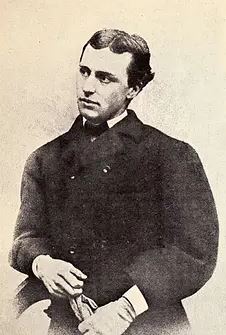
His French is fluent. In English, he tends to stutter. But when he visits Ivan Serguéitch at his house on Montmartre, the Russian giant politely refuses Henry the Younger’s offer to speak French. Turgenev wants to practice English, something he rarely gets to do.
Flaubert despises literary cliques. But he’s fond of his Chez Magny cenacle. Flaubert gives his manservant Sundays off. So, if you show up at his apartment in the Faubourg Saint-Honoré, Gustave answers the door. On one or two Sundays, Henry tags along with Ivan Serguéitch. Flaubert’s only 20 years older than Henry, but has been world-famous since Henry was a teenager. Émile Zola shows up, overworked, huffing and puffing the long flight of stairs.
Edmond and Jules de Goncourt are inseparable brothers with acid for blood. Henry mentions them a column’s worth of times in the Library of America edition. The brothers’ own novels are widely ignored, whereas Zola, not yet 35, is royalty-rich. Suits of armor decorate his study. For Zola, a daily production run of 12 pages on a novel like Pot-Bouille, containing 70 characters, is a major setback. In Pages from the Goncourt Journals, the aristocrats caricature him pitilessly. Are quick to point out Zola grew up poor; that his gluttony for literary honors is exceeded only by his appetite for fine food. For many hours, over the course of many meals, members of Flaubert’s literary circle chain-smoke, and pick each other’s collective brains.
The Art of Fiction
Flaubert’s the patron saint of his cenacle, France’s “grandsons of Balzac.” Balzac’s Henry’s patron saint. Throughout his long literary career, he ponders the lesson of his master.
Heatedly, a half-dozen Frenchmen—occasionally, honorary Frenchman George Sand—debate erecting a monument to Balzac.
“He is himself,” our American ambassador lights a cigarette, “a figure more extraordinary than any he drew.”
Sainte-Beuve goes on the attack.
“Balzac isn’t true to life. He’s a genius if you like, but a monstrosity!”
Rodin’s monument to Père Honoré finally gets unveiled the year Henry publishes Turn of the Screw.
Messieurs de Goncourt (jotting diary entries upon their sleeves):
“What are you writing now, Zola?”
“L’Argent.”
Between The Bostonians and Portrait of a Lady, the novel that makes him famous, comes Henry’s milestone essay, “The Art of Fiction.”
In those days, the Chunnel was unimaginable, as was Balzac’s vision of a European Union. English- and French-language writers were siloed. Dickens, the most famous English novelist in the world at that time, never once appears in Pages from the Goncourt Journals. Nor do Browning, George Eliot, Emerson, Thomas Hardy, Anthony Trollope or even James himself. Shakespeare gets passing mention.
Closely related to his development as storyteller is Henry’s role as promoter of foreign literature in translation. Gorra allots generous amounts of space to two separate essays about Zola. Other essays, written over the space of a quarter-century, are devoted to Balzac, Flaubert, Maupassant, George Sand and Turgenev.
Henry sees as self-evident Flaubert’s influence on Maupassant’s first novel UnE Vie. Over and above their extreme concision, one trait James admires in Maupassant’s short stories is the ability to make a reader “know, or to guess, how events come to pass, but to say as little about it as possible.” In Maupassant, as in Turgenev, plot detail gets suppressed or jettisoned altogether. Maupassant remains “a writer with whom it was impossible not to reckon.”
In Fathers and Sons, character observation takes precedence over plot development. Turgenev compiles a dossier for each character. What, Turgenev wonders, does he not know about this person? How will she or he behave? What actions shed light on his or her “character”? A person or group of people are then set in motion. Not so much plotted as storyboarded, Turgenev’s stories are drawings—cartoons—snatches of dialogue, incidents. Walter Scott’s Ivanhoe, by comparison, is a Hollywood blockbuster. Turgenev’s slow burn, James suggests, is a European arthouse film. If anything is lacking in his fiction, Turgenev suspects, it’s structure.
Henry shares with his French and other European predecessors an abiding interest in depicting what in Hawthorne he calls “a complex social machinery,” one based on feudalistic “divisions of labor and class subordinations.”
***
So tell me, Hank, a why don’t ya drank? And why you wrote so much?
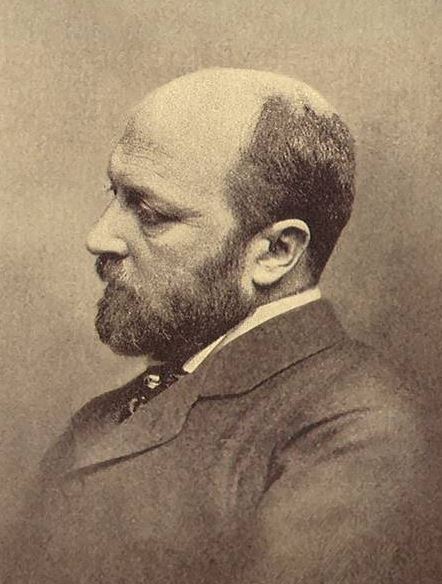
Well, because “art,” for one thing, “is ruinously expensive.” In Balzac and Flaubert, money plays a central role, not a bit-part. Henry shares his predecessors’ preoccupation. During his mid-20s and mid-30s, Henry lives abroad. He returns briefly to the States to settle probate matters: the deaths of his brother Wilkie; his mother; his father; and of Emerson, an old family friend. Henry had been on the road literally all his life.
Now that he’s become an East Sussex landowner, he travels much less than he once did. Like most freelancers, Henry “was forever worried about income and expenses.” Rye wasn’t exactly Newport, Rhode Island, where summer “cottages” were maintained by an army of 27 servants and 12 gardeners. His comparatively modest abode at Lamb House consisted of a cook, a gardener, a houseboy, a housekeeper (who hated to be left alone), a parlor maid and a Dachshund named Max, who needs constant walking. An everyday writer of closely argued literary journalism, a writer with relatively few vices or distractions, might publish twice a year. Henry publishes twice a week. Even so, at the rate of $10 from The Nation for a short piece here, $25 or $40 from Macmillan’s for a long piece there, ends were never going to meet.
Their economic stimulus apart, his review-essays are wide, deep, and carry a sense of adventurous curiosity. His first short stories and reviews begin appearing simultaneously. He remains a practitioner of both fiction and imaginative nonfiction his whole career. Takes as much pride and puts as much care and thought into his long-form essays as he does into novellas like The Pupil. Likens the critic interpreting a text to a director interpreting the script or conductor the score. He dislikes Wagner and Wagnerism. Just think Mahler conducting Die Walküre, Siegfried or Tristan und Isolde at the Metropolitan Opera. Or Roman Polanski’s readings of Macbeth or Tess.
He never just slaps an essay-collection together like molding bologna between slices of processed bread in a jailhouse sandwich. Reworks pieces he’d published decades ago into curated volumes. But magazine writing isn’t always easy. It’s sometimes duty before pleasure. Under these circumstances, he composes hundreds of pieces over half a century. More about the family history of alcoholism later.
***
As critic, he’s over-vilified and under-extolled. The word overused to rebuke him is “snobbery.” He has exacting standards but varied tastes. “There are simply as many different kinds of [storyteller] as there are persons practicing the art.” Androgynous as he’s sometimes depicted as being, Henry isn’t “effete” in his critical writing. Don’t let Theodore Roosevelt, Old Horse-Teeth, fool you. Outwardly, Turgenev comes across more like Henry’s near-contemporary Kipling, the kind of writer a fresh-air-fishing, manly man like POTUS 26 naturally preferred. Landowner Turgenev is comfortable around hunting dogs, and enjoys shooting partridges in Cambridgeshire. Presumably, Henry prefers Fletcherizing them.
Henry admires Trollope’s “manliness and spontaneity.” One feature of his early- and middle-period pieces is how man-of-action vigorous—how pragmatic—they are. He gives the reader a very detailed overview of Zola’s 20-volume series Les Rougon-Macquart: the Natural and Social History of a Family under the Second Empire. Some of its individual books are “incontestably remarkable.” Yet the series as a whole strikes him as uneven. He grudgingly admires Zola for installment number seven, L’Assommoir. Zola’s ninth, Nana, he finds “unreadable.” These short, sharp, early- and middle-period essays are “very ingeniously pregnant.” Henry motherfucking James. Damn, he good.
As for what William Giraldi calls “the labyrinthine and maddeningly figurative manner that characterizes his late-period prose,” it has both staunch defenders and ferocious detractors. Nabokov just hated him. Which seems odd, since Henry the Cruel sounds very much like Vlad the Impaler. Conrad admired him. José Donoso was an early convert. Mario Vargas Llosa took some convincing.
There’s a simple explanation. About the time he publishes The Spoils of Poynton and What Masie Knew, when he’s settling in at Rye, his wrist grows painfully rheumatoid. Solution to this problem is to hire a secretary. She types his dictation in the mornings. In the afternoons, Henry revises by hand what he’d previously dictated. This system continues for the duration of his residency at Lamb House. One the one hand, he’s the first to recognize the change in his writing style, which even he says has become “too diffuse.” One the other hand, had he not hit upon this method, Henry might never have become as prolific as he is or as profitable as he was.
This phase of his style critics deem “overly refined and fussy,” or “arcane, inaccessible,” unnecessarily complicated. Henry is the first to realize his fictions beat excessively about the bush. “Being myself still extent enough to have known by ocular and other observational evidence what it was.” Henry is both unique and almost too easy to pastiche. His portraiture of Turgenev and others is more concentrated.
Henry’s paragraphs are sometimes pages and pages long, despite the fact that he quotes very few passages verbatim at any length. They look very much like Proust to the scanning eye. But the early and middle period writing is fairly straightforward. This was literary journalism, after all, written presumably under deadline pressure, imposed or self-imposed.
Henry reads The Varieties of Religious Experience with genuine pleasure. Whereas William, reading The Golden Bowl and presumably accustomed to this by now, finds Henry’s “method of narration by interminable elaboration of suggestive reference . . .” well, “you know, puzzling.” At his best, even in the late-period essays, once you get used to Henry, how he’s saying something doesn’t distract from what he’s saying. The prose comes alive.
***
Petticoats & Trousers
Two great ladies of 19th-Century literature inspire some of his best critical thinking: George Sand and George Eliot.
Sand, 20 years older than Flaubert, represents for Henry the last of Romantic school. In Swann’s Way, Proust rhapsodizes about François le Champi. Her many other novels are seldom read today. Henry admires the Sand-Flaubert Letters, still read 200 years after her birth.
Mary Ann Evans thought Père Goriot “a hateful book.” So how, he wonders, did she outgrow the strenuously provincial, “narrow evangelicism” of her West Midlands early adulthood? Why did she become a student of history, a translator from the German, a reader of George Sand, a Grub Street assistant editor, and “the Great George Eliot,” a novelist of “deep seriousness” and “luminous brooding”?
Story goes that she and her common-law lover, George Henry Lewes, were two broke writers. Why not—quickly, quickly!—try her hand a novel? In thick succession they appear, Adam Bede and The Mill on the Floss. Silas Marner reminds Henry, in a good way, of Oliver Goldsmith. Romola? A “rare masterpiece,” but one which “sins by excess of analysis; there is too much description and too little drama.” Felix Holt he mentions only in passing.
Consider the “passivity” Brooks remarks in “the situation of James’s [sic] sensitive gentlemen,” their “the renunciation of worldly power.” Contrast these with the feistiness of Jamesian heroines, so many of them at the mercy of “the marriage market” yet yearning “for a larger life than circumstance often affords.” Is it really true? Is Lydgate, as Henry sees him, an even greater character than Dorothea, the presumptive heroine of Middlemarch?
III
Arrangement No. 2: Henry James Comes Home

Roosevelt and others accuse him of rootless cosmopolitanism. Which is another way of saying, un-Americanism. What Henry says about Turgenev applies equally to Henry himself: “Cosmopolite that he had become by the force of circumstances, his roots had never been loosened in his native soil.” Make no mistake: Henry waves the red-white-and-blue, with a mercenary eye toward British audiences, whenever it serves his royal purpose. To appreciate Middlemarch fully, you have to be a real American. “James,” Brook insists, “never finished working through his relation to the land he left behind.”
Readers curious about his travel sketches are referred to English Hours, published before The American Scene.
Family tradition complicates matters. The diarist Alice James disapproves of Henry’s friend Edith Wharton. Perhaps because Wharton took lovers, as George Sand did. We now understand alcoholism is a medical condition, not a lack of willpower or moral fiber. So, chronic alcoholism in both Henry James, Sr., and his younger brother Robertson needn’t be swept under the rug. Henry has a second younger brother, Wilkinson (“Wilkie”). Has nieces and nephews, romping to and fro. The two were only a year apart, and hot-tempered William James sometimes finds his “younger and shallower and vainer” brother annoying. Princes William and Harry are both nominated to the American Academy of Arts and Letters. Henry is inducted first. Quite naturally, his older brother refuses later election. Alice Gibbens James, his sister-in-law, forwards Henry’s mail, makes sure he has clean shirts to wear, and mediates the brothers’ disputes. Despite sibling rivalries, they are about as tight-knit a bunch as a family ever really can be.
William dies six years before his little brother does.
“I am,” Henry says, “inconsolable.”
***
Bishops, Archdeacons, Prebendaries & Precentors
Dickens has already published A Christmas Carol by the time Hen is born. When James the Younger is ready to usurp the throne, Dickens is as worn out as Balzac; has only four novels left in him. At their worst, he sneers, Dickens’ humor and pathos are “cheap.” Our Mutual Friend Henry deems “the poorest of Mr. Dickens’s works.” Bleak House is “forced,” and Little Dorritt “labored.”
Henry’s a sole-practitioner with little space, less time, and too much writing to do. The strain he works under sometimes shows. Crankiness and/or overwork—especially when He Knows He’s Right—sometimes get the better of his judgment. A Simple Heart? “Gustave Flaubert has written a story about the devotion of a servant-girl to a parrot, and the production, highly finished as it is, cannot on the whole be called a success.” James the Benevolent can be generous. But when not merely “distanced and arch,” the Master’s tone can also be harsh. The bitchier he gets, the funnier he tends to be. As polemicist, he can out-Goncourt the Goncourts. Gorra doesn’t select entirely negative reviews. But the extant hostilities are as if not more entertaining than encomia like “Mr. and Mrs. James T. Fields”.
He published, what, 47 novels? But do people read Trollope anymore? If not, why not? Part of Henry gets a kick, pure and simple out of reading Trollope. He indulges Trollope’s whimsical place-names like Puddingdale or character-names like Dr. Pessimist Anticant, Mr. Fillgrave, Mr. Neversay Die, the Duke of Omnium and Gatherum, the bullying Mrs. Proudie, Mr. Quiverful, Mr. Sentiment, Mr. Stickatit.
He admires Trollope, in many respects. So vivid is Henry’s reading of Barchester Towers, Trollope’s novel of a Church of England cathedral town, that you can still recall, a distant memory of Masterpiece Theatre, the actor Donald Pleasance fiddling away, tremulously, absent-mindedly, at his waistcoat lapels.
When English-language readers think “epistolary novel,” they may think Clarissa. Henry finds that novel “deeply interesting.” He reminds us that forlorn love-letters play as conspicuous a role in Postmaster Trollope’s fiction as does riding to hounds with the fox-hunting landed gentry at the holiday-weekend. When he says, “Trollope derived half his inspiration from life” and “the other half from Thackeray,” Henry means that as a compliment. Character recurrence, which Trollope may or may not have borrowed from Thackeray, reminds him of Balzac. To Henry’s way of thinking, Trollope’s bureaucrats, clergy, politicians, upper and middle classes mimic the Balzacian totality of humankind. You begin to think the time has come to read The Way We Live Now or Phineas Finn.
By and large, Henry appreciates both the older Trollope and his near-contemporary, Thomas Hardy. Henry’s “super-excellently” intelligent (a Jamesian coin Nabokov relished). Has good taste; can differentiate apprentice pieces from masterworks, first-rate work from third. It’s just that, as a “fellow craftsman” of the storyteller’s guild—a co-creator—Henry tends to backseat-drive the text under review. Trollope “does not, to our mind, stand on the very same level as Dickens, Thackeray and George Eliot.”
Henry’s critique goes beyond his complaint that Trollope’s “deliberately inartistic” prose can be plodding. Henry’s real gripe about the “sturdy and sensible middle-class Englishman” of 1883 isn’t just that this stock character seems “dense, narrow-minded, stiff, obstinate, common-place, conscientious.” (Some English readers balk at Henry’s English protagonists the way Henry balks at some women writers’ male protagonists.) Henry’s chief complaint is that the novel he, Henry James, aspires to create is something more along the lines of The Princess Casamassima.
How can he do that in a literary marketplace of “bemuddled opposition between novels of character and novels of plot”? Why must “a story must have marriages and rescues in the nick of time” or be over-plotted with “multiplex ramifications”? Why is it “no tale should exceed fifty pages and no novel two hundred”? That “no person should utter more than a given number of words”? And “that no description of an inanimate object should consist of more than a fixed number of lines”?
***
The Novel of the Future
At Poet’s Corner, in Westminster Abbey, he ponders Robert Browning. What do poets like Browning, Emerson, Hardy and Shakespeare have in common? What are the borders separating art from practice, doctrine from faith, poetry from prose? Are they hard and fast, or are they indistinguishably porous? Giraldi says Henry’s well aware of Dickinson, Melville and Whitman.
He wasn’t just steeped in Poetry; his late essays aspire to the condition of Poetry.
Baudelaire, an early reviewer, celebrated Madame Bovary. Flaubert in turn celebrated Baudelaire, an early contributor to the invention of French poetry in prose. Henry reviews Baudelaire for The Nation not long after that first meeting with Flaubert. He’s consciously incorporating—not always clearly, to professor Brooks’ way of seeing things—elements of poetry into his own prose, bringing poetry closer from the margins to the center of his artistry.
Flaubert had violently mixed feelings about the label Realism, understood as a movement in opposition to Romanticism. Emerson found the term Transcendentalism as much of an annoyance as Vargas Llosa found the term Magical Realism. (Henry defines Transcendentalism as the Puritan version of High Romanticism.) Naturalists like Zola had mixed feelings about so-called Realists like his friend and colleague Flaubert. Symbolists “numerous to embarrassment” as Henry puts it had mixed feelings about Naturalists like Zola. The history of French and other European literatures in English translation has been bolstered immeasurably by the bridges, spanning turbulent eddies of Realism, Naturalism, Symbolism and other currents, painstakingly built by Henry James.
Questions of form and function dominate his essays. In French writers, he sees a pleasant abundance of formal rigor. Not that he favors Continental masters over comparatively slack English and American novelists. His love of those doesn’t detract from his Thwackum sense of fun in Tom Jones.
He thinks there’s much to be learned from the dramatic monologues and other narrative-verse techniques of Browning’s Men and Women (“Any Wife to Any Husband”), Dramatis Personae or The Ring and the Book.
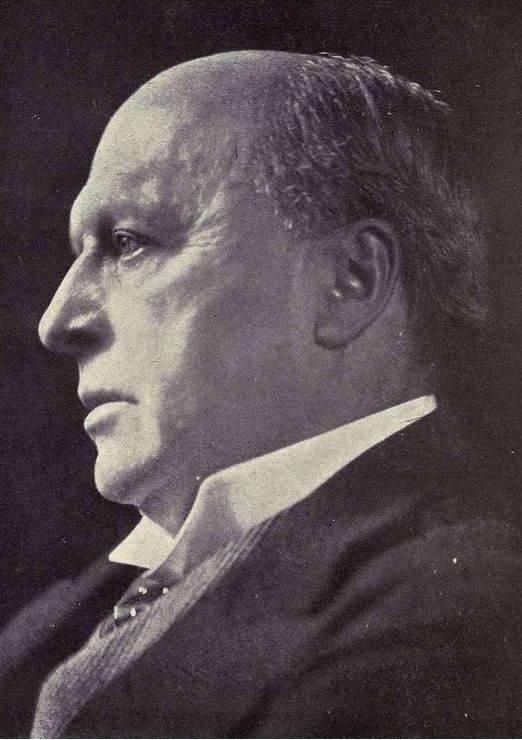
He writes interestingly about Far from the Madding Crowd. Locations include Greenhill Fair, characters like Bathsheba (whom “we cannot say that we either understand or like”), Farmer Boldwood, the maltster, the Mayor of Casterbridge, Matthew Moon, poor Joseph Poorgrass, Sergeant Troy, Laban Tall—these are all well and good, in their way. As if not more suggestive is what obscure young diarist W.N.P. Barbellion says about Hardy in the Journal of a Disappointed Man.
“I thoroughly enjoy Hardy’s poetry for its masterfulness, for his sheer muscular compulsion over words and sentences. In his rough-hewn lines he yokes the recalcitrant words together and drives them along mercilessly with something that looks like simple brute strength … where the words are absolute bondslaves to his exact meaning, his indomitable will.” Henry sees the point to this.
Henry’s deeply interested in the visual arts: monumental 19th-Century American Renaissance sculptures by Augustus Saint-Gaudens, yes; 20th-Century skyscraper architecture by Louis Sullivan, not so much; and painting above all. His biographical essays are essentially pen-portraits.
In “The Art of Fiction,” he insists that fiction is one of the fine arts, on par with architecture, painting, poetry and sculpture. One the one hand, you hesitate to say Henry’s elitist, a hopelessly overused word. On the other, too many painterly allusions will be lost upon a casual reader with no grounding at all in the visual arts.
As in Whistler’s symphonic tone-paintings, the “Harmonies,” “Nocturnes” and “Studies” like Arrangement in Grey and Black, No. 2 (Portrait of Thomas Carlyle) or Arrangement in Grey: Portrait of the Painter, Henry’s imaginative writings sometimes emphasize color, shading and composition at the expense of purely narrative interest. This kind of impressionism can blur solid outlines into the mist of painterly coloration, like Monet’s haystacks and cathedrals. They’re the writerly equivalent of landscapes Degas and Walter Sickert painted near Maupassant’s native Dieppe or the “minute stippling of Daudet” or a self-portrait à la Jean-François Millet. “If Turner had written his landscapes rather than painted them he might have written as George Sand has done.”
The greatly exaggerated “difficulty” of Henry’s late manner lies in the obliquity of his technique, not the incoherence of his thinking. One way to explain his late-period meditation on Shakespeare’s late-period Tempest, on Ariel and the Duke of Naples, is that “The Tempest” is a highly symbolic prose-poem experiment. Like Prospero, Henry’s surrenders “his magic robe and staff,” and casts “his magic ring into the sea.” The rest is silence.
Emerson, he admits in his predecessor’s defense, is all substance and no form. The looseness, the meandering, the vagueness, as Henry calls it, of Emerson’s Essays is what we hear in Henry’s late-manner pieces. It’s not that Henry was three different writers over the course of three distinct phases. Rather, certain stylistic traits in his prose more or less predominate from phase to phase. He did suffer a vascular stroke in the right hemisphere of his brain. But he continued during his final illness to dictate with perfect lucidity, even as he lay dying. His fastidious late prose is the furthest thing imaginable from “discomposed.” A strain of High Romanticism does hang over Henry’s late manner, like moss over Old South trees. From beginning to end, his shorter essays are both tightly constructed and deeply nuanced.
As he muses upon a future for the novel, a girl child is born. She will grow, he imagines, into a young lady upon whom nothing is lost. Shall she not have a thing or two to say about the military? At 23, she reviews The Golden Bowl. Half a decade after his death, she composes, with a precision military indeed, some of the most warrior-like imagery in our language, ensconced in something vaguely like a novel. She calls it Jacob’s Room. The future of the novel, we now see, in this centennial year of Mrs. Dalloway, lay with poet-critic Virginia Woolf.
IV
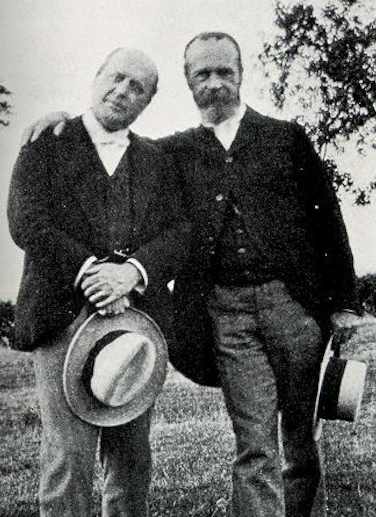
Wherever possible, friends and family try to make the exile’s return as comfortable as possible. The distinguished writer is a more than welcome house-guest. But he can’t just crash Henry Adams’ couch or Edith Wharton’s or his brother’s for ten months straight. He needs private accommodations in San Diego, swank digs like the Hotel del Coronado, preferably with a private bathroom. Much sought-after, he “dined and supped and went to tea.” He had so many invitations that some of them became, quite frankly, a nuisance.
And the Clubs aren’t always conducive to work he concentrated on shortly before and during his tour—correcting proofs, preparing speeches, writing and revising prefaces for the Scribners New York Edition. A hectic round of social and familial visits, granting interviews, the grind of the lecture circuit—seventeen straight days of overheated, overcrowded lecture halls, the luncheon engagements, dinner engagements—at some point, this wears him out. He feels pulled in too many different directions.
He was born in time for The Flowering of New England. When he was a small boy in knickerbockers, the spire of Trinity Church was the tallest structure on Broadway. A generation later, during the Civil War’s carnage, he came to manhood as Union Army general William Tecumseh Sherman marched to the sea. As a young man, he’d arrived on the Continent not long after the Franco-Prussian war, the Siege of Paris and “the solidification of Germany.” As an old man, he’d looked out from the port of Charleston toward Fort Sumter. By the time he turned 60, the Flatiron Building was new. New York was now a city of skyscrapers. New York wasn’t just any city, nor Washington Square just any park. It was his birthplace.
America is his homeland, but America is no longer home. Henry’s homesick—for England. In the summer, he returns to Rye via Liverpool.
Zola’s remains are placed alongside those of Voltaire, Rousseau, Hugo and others at the Panthéon.
During the period of Wings of the Dove, The Ambassadors and The Golden Bowl, Brooks explains, Henry’s “at the height of his powers as a novelist.”
Comes now a Great War, advertised as the war to end all wars. Like young Hemingway, like his brother William’s former pupil, the no longer young Gertrude Stein, Henry serves as a volunteer in the European ambulance corps. He’s now in his 70s.
The Great Henry James has grown old, lonely, and clinically depressed. His caretaker/sister-in-law now manages the household. She’s with him when he comes down with pneumonia, suffers, and dies.
***
Novelizing is his “sacred office.” But writing essays isn’t peripheral to this enterprise. Essay-writing is central to it. It’s what enables him, even in other genres, to become the “painter of life” he’s remained for 150 years. His life, Pritchett says, is “an arrangement in words.” Gorra’s right. If Henry James hadn’t already invented himself, he’d be scarcely imaginable.
Bibliography:
Brooks, Peter. Henry James Comes Home: Rediscovering America in the Gilded Age. New York Review Books, 11 Feb. 2025.
James, Henry. On Writers and Writing: Selected Essays. Edited by Michael Gorra, New York Review Books, 11 Feb. 2025.
Table of Contents
Kevin Anthony Brown is the author of Countée Cullen’s Harlem Renaissance: A Personal History (Parlor Press, 2024). He translated Efraín Bartolomé’s Ocosingo War Diary: Voices from Chiapas (Calypso Editions, 2014) from Spanish into English. Kevin’s articles, essays, interviews and reviews on the literary arts, performing arts, visual arts and the art of translation are forthcoming in Poetry Magazine and elsewhere. He is working on essay collection two.
Follow NER on Twitter @NERIconoclast