EcoPeace and the Revival of the Jordan River
by Sammy Stein (July 2026)
In a region so often defined by political tension and entrenched conflict, examples of genuine cooperation can sometimes pass largely unnoticed. Yet the work of EcoPeace Middle East demonstrates that practical collaboration between Israelis, Jordanians and Palestinians is not merely theoretical but already taking place. Bringing together environmentalists from across the region, EcoPeace focuses on protecting shared natural resources while encouraging dialogue and cooperation between neighbouring societies. At a time when the headlines tend to emphasise division, the organisation offers a reminder that common challenges, particularly environmental ones, can still create opportunities for partnership.
EcoPeace operates on the simple but compelling principle that environmental problems do not respect political borders. Rivers, ecosystems and climate systems cross boundaries freely, affecting communities regardless of nationality. Protecting shared resources therefore demands cooperation that politics alone has often struggled to achieve. By addressing these issues collectively, EcoPeace promotes both environmental sustainability and practical engagement between neighbouring communities. The organisation maintains offices in Amman, Ramallah and Tel Aviv thus reflecting its genuinely regional character.
The organisation was founded on 7 December 1994 at a meeting in Taba, when environmental organisations from Egypt, Israel, Jordan and the Palestinian territories came together to promote sustainable development and ensure that environmental concerns were integrated into the wider regional agenda. For the first time, environmental activists from these communities agreed to cooperate in protecting shared natural resources. The initiative reflected the optimism of that period, when many believed that practical cooperation between neighbouring societies could help reinforce wider diplomatic efforts in the region.
One of EcoPeace’s most important initiatives focuses on the rehabilitation of the historic Jordan River. This waterway which was once one of the most significant waterways in the region is today facing severe environmental degradation. Decades of water diversion and pollution have reduced it to a fraction of its former flow, leaving one of the world’s most historically and spiritually significant rivers in danger of becoming little more than a polluted drainage channel.
Flowing through the Jordan Valley, the river occupies a landscape of immense geographical, cultural and religious importance. The valley forms part of the vast Great Rift Valley, a geological formation that stretches thousands of kilometres from Africa through the Middle East and includes areas near the Dead Sea which is the lowest point on Earth.
For billions of people around the world the Jordan River carries profound religious and historical significance. The river appears frequently in the Hebrew Bible, including in passages describing the fertility of the Jordan Valley. According to biblical tradition, the prophet Moses viewed the Promised Land from Mount Nebo before his death.
For Christians, the river is closely associated with the baptism of Jesus Christ by John the Baptist. Although historians continue to debate the exact location, sites along the river attract hundreds of thousands of pilgrims each year. A few years ago, my wife and I visited one of these baptismal sites ourselves, standing on the banks of the river as numerous visitors from across the world gathered to be baptised in waters associated with one of the most enduring traditions of the Christian faith. Observing pilgrims entering the water was a powerful reminder that the river’s significance extends far beyond the politics of this volatile part of the world.
The wider region also holds significance within Islamic tradition, with several companions of the Prophet Muhammad believed to be buried in the Jordan Valley.
Beyond its religious symbolism, the Jordan Valley has long served as a meeting place between cultures. A reminder of this legacy can be seen at a location known as “Old Bridges,” where three bridges spanning the river represent successive historical periods, Roman, Ottoman and British Mandate, thus illustrating the river’s historic role as a point of connection rather than division.
Archaeological discoveries on both sides of the valley reinforce this picture. Excavations in cities such as Beit She’an in Israel and Pella and Umm Qais in Jordan reveal striking similarities in pottery, mosaics and metal tools from various historical periods, suggesting long-standing cultural and commercial connections across the valley.
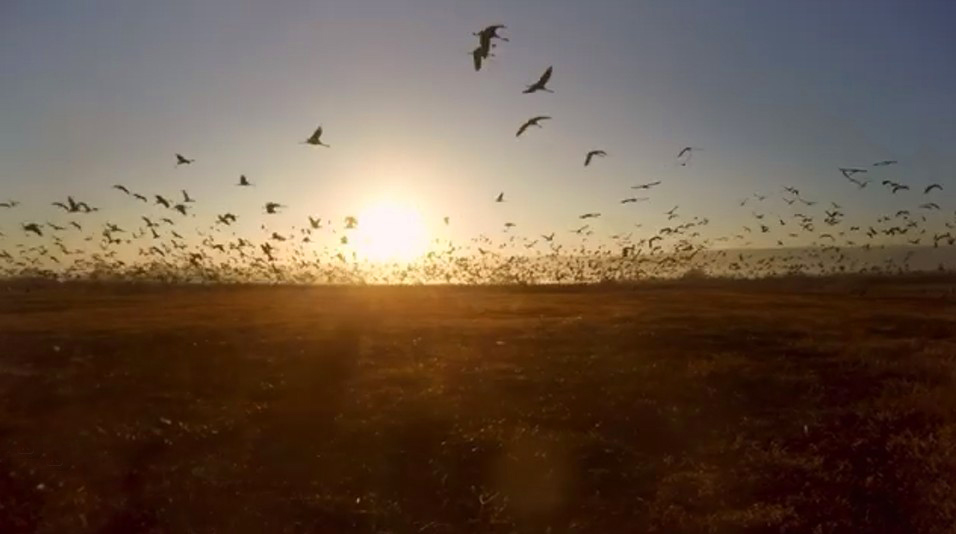
The valley is also one of the Middle East’s most important ecological zones. Its wetlands support diverse plant and animal species, while the valley forms one of the world’s major migration corridors for birds. Each spring and autumn an estimated 500 million birds pass through the region on their journeys between Europe, Asia and Africa, making the valley one of the most important wildlife corridors anywhere in the world.
Yet despite this ecological and historical importance, the Jordan River has experienced dramatic environmental decline over the past half century. Once carrying more than 1.3 billion cubic metres of water each year, the river’s annual flow has now fallen to less than 30 million cubic metres. The principal reason is extensive water diversion upstream. Israel, Jordan and Syria have all relied heavily on the river’s tributaries for domestic consumption and agricultural irrigation.
Today around 96 per cent of the river’s natural freshwater flow has been diverted. The remaining waterway has also suffered from pollution, with untreated sewage and agricultural runoff frequently discharged into the river. In a striking irony, polluted wastewater now accounts for much of the river’s remaining flow.
EcoPeace has therefore launched a sustained campaign to raise awareness about the deterioration of the Lower Jordan River. Through research, advocacy and dialogue with regional governments, the organisation argues that restoring the river is both an environmental necessity and an economic opportunity.
Encouragingly, progress has begun to emerge. Governments and municipalities have started taking steps to prevent untreated sewage from entering the river, while new wastewater treatment plants are being developed in Israeli, Jordanian and Palestinian communities, often with international financial support.
A significant milestone occurred in 2013 when the Israel Water Authority initiated the first release of fresh water into the river in nearly half a century. Initially allocating nine million cubic metres, the authority later committed to increasing that amount to around thirty million cubic metres annually.
While these measures represent important progress, they remain only the first steps in a much larger process. Experts estimate that approximately 400 million cubic metres of water will ultimately be required to restore the river’s ecological balance and unlock its economic potential.
Ultimately, the work of EcoPeace highlights an often overlooked reality of the Middle East. Environmental challenges such as water scarcity, pollution and ecosystem degradation cannot be addressed by any one country acting alone. The future of the Jordan River and the wider Jordan Valley depends on sustained regional cooperation. If governments are willing to build upon the foundations already laid by organisations like EcoPeace, the revival of the river could become not only an environmental success story but also a practical example of how shared interests can encourage cooperation in a region where it is often assumed to be impossible.
Table of Contents
Sammy Stein was born a Jewish Palestinian, a description that causes much confusion with people. In 1948, he and all other Jewish Palestinians living in Palestine became Israeli citizens. He now lives in Glasgow and has two daughters, two grandchildren, and is married to Vicci. Sammy is Chair of Glasgow Friends of Israel, which celebrated its tenth anniversary in May 2025.
Follow NER on Twitter @NERIconoclast