Faith and Solidarity: Evangelical Leaders Stand With Israel
by Sammy Stein (January 2026)
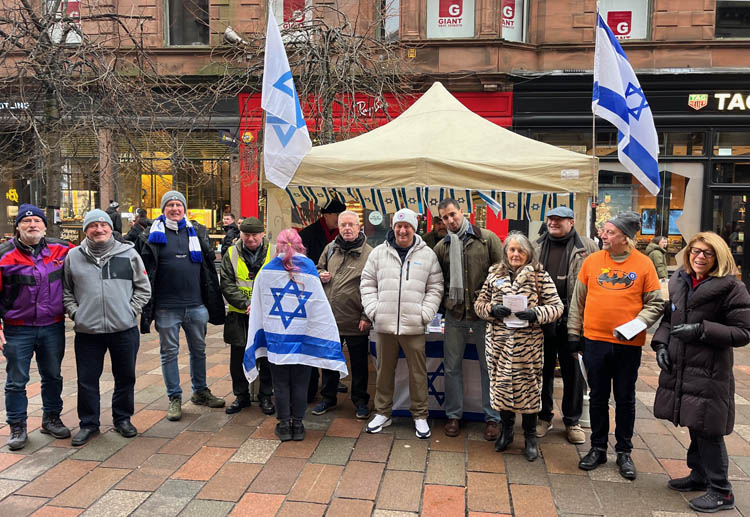
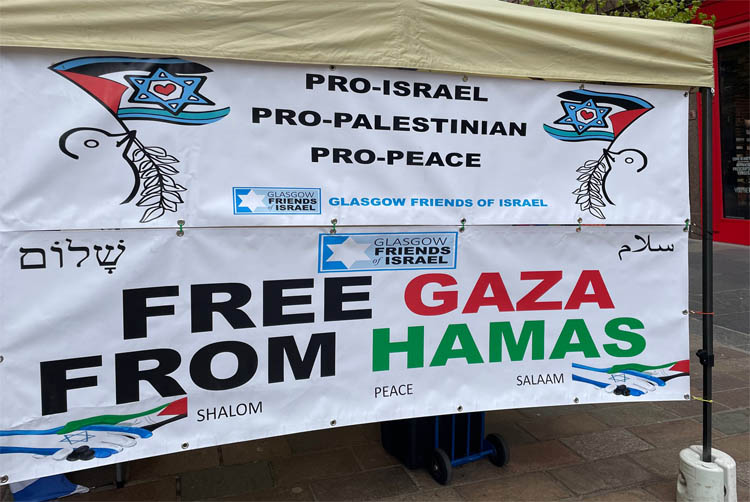
Glasgow Friends of Israel was established 10 years ago with a clear mission to advocate for peace for both the Israeli and Palestinian peoples. True and lasting peace cannot be one-sided. It requires fairness, security, and recognition of the rights of all communities involved. Our supporters and activists work to advance a secure and enduring peace for both peoples. Importantly, GFI is not a religious organisation and is supported by Jews, Christians, Muslims, Hindus, and people of other faiths, or none at all. Every individual who shares our commitment to justice, truth, and dialogue is welcome.
Recently, over a thousand senior Evangelical Christian pastors and influential leaders from the United States took part in the historic Friends of Zion Ambassadors Summit, led by Dr. Mike Evans and supported by Israel’s Foreign Ministry. The delegation travelled to Israel to gain a first-hand understanding of the country’s security challenges, history, and social realities. During the visit, delegates met Israeli leaders including President Isaac Herzog and U.S. Ambassador to Israel Mike Huckabee, as well as other senior political and security figures. They received briefings on Israel’s strategic concerns, met freed hostages and survivors of terror attacks, engaged with bereaved families and attended solidarity events across Jerusalem, including prayers at the Western Wall. Delegates were also presented with materials to help portray Israel accurately in their communities across the United States.
However, less than 24 hours after returning home, many delegates and leaders were confronted with hostile messages on social media. These messages, often identical in content, suggested a coordinated campaign to discredit the delegation. Many contained false narratives, misinformation and even antisemitic conspiracy theories. This demonstrates a wider pattern showing that Christian leaders in the U.S. who openly support Israel are increasingly becoming targets of a systematic effort to intimidate them.
The reasons behind this targeted hostility are complex but revealing. Evangelical Christians have historically been among the most vocal supporters of Israel, particularly in the United States. Their support is often rooted in theological convictions, cultural affinity and a commitment to religious freedom. Many of these leaders wield significant influence over large congregations, media channels and university campuses, giving them a platform to shape public discourse and challenge prevailing narratives. For groups behind these coordinated attacks, this influence represents both an ideological and strategic threat.
Critics often portray Evangelical supporters of Israel as politically conservative or as advocates of an extreme Israeli policy, framing them as part of a monolithic bloc opposing progressive causes. Online campaigns exploit this perception, portraying delegates as extremists or enablers of oppression, despite the delegation’s focus on understanding Israel’s complex security situation and human stories. The messaging is designed to create fear, dissuade public advocacy and undermine credibility.
This phenomenon is sometimes referred to by participants as the “woke Reich,” a term describing organised campaigns aimed at intimidating Christians who publicly support Israel. These campaigns are both ideological and strategic, exploiting social media algorithms, mass messaging and viral narratives to create the appearance of widespread opposition. By targeting Evangelical leaders, the campaigns seek to weaken one of the most organised and historically steadfast communities advocating for Israel globally.
Despite these attacks, many delegates responded with resilience and renewed commitment. Rather than retreating, they reaffirmed their determination to stand with Israel and to counter misinformation in their communities. The summit reinforced both their understanding of Israel’s challenges and the importance of sharing accurate, firsthand knowledge with their congregations and networks. Several delegates pledged to actively challenge false narratives on college campuses, in churches and in broader public discourse, showing that attempts to intimidate supporters can sometimes strengthen their resolve.
The targeting of Evangelical Christians also reveals deeper currents in the contemporary information environment. In the age of social media, misinformation spreads rapidly, often without verification. Coordinated campaigns present false narratives as truth, creating confusion and polarising public opinion. Evangelical leaders are particularly vulnerable because their influence is both visible and trusted by millions of followers. Silencing or discrediting a small number of highly respected figures can have a disproportionate effect on wider public perception.
Furthermore, these campaigns reflect broader geopolitical and ideological struggles. Israel faces criticism ranging from legitimate policy debate to outright distortion and delegitimisation. Activists and networks opposed to Israel’s supporters target those who can shape international opinion, viewing Evangelicals as a potent force given their political and cultural influence. The campaigns are intended not only to attack Israel’s reputation but also to suppress voices advocating for balanced understanding and dialogue, particularly those challenging mainstream or “woke” narratives in academic and media spaces.
The experience of the Friends of Zion Ambassadors Summit underscores a key lesson: advocacy for truth and justice often comes with risks, but these risks can be met with courage and solidarity. Those who engage in fact-based advocacy through education, public speaking, or community leadership play an essential role in countering misinformation and fostering understanding. The Evangelical leaders who attended the summit have shown that, despite online attacks and intimidation, they are committed to using their platforms to promote accurate knowledge, dialogue and reconciliation.
Support organisations like Glasgow Friends of Israel play a vital supporting role. By providing verified information, resources and networks for advocacy, groups like ours enable individuals to act confidently and effectively in support of peace and coexistence. The cooperation between communities across borders, whether in Scotland, the United States, or elsewhere, demonstrates that advocacy for Israel is not just local but global. Sharing accurate information, challenging false narratives and fostering respectful dialogue are crucial to countering campaigns that seek to distort the truth and GFI could not possibly achieve these goals with the support of our Christian Friends.
Ultimately, the targeting of Evangelical Christians highlights both a challenge and an opportunity. It shows that standing up for Israel in today’s media environment requires courage, clarity, and persistence. At the same time, it demonstrates the potential for informed advocates to shape public opinion, challenge misinformation and build bridges of understanding. By responding to intimidation with education, advocacy and solidarity, these leaders and the organisations that support them, can strengthen efforts for a more informed and balanced discourse.
The Friends of Zion Ambassadors Summit illustrates what can be achieved when committed individuals engage directly with the realities on the ground. By equipping leaders with firsthand experience, accurate information and practical tools for advocacy, such initiatives empower participants to counter misinformation and promote understanding. For Glasgow Friends of Israel, this reinforces the importance of supporting informed advocacy and encouraging people from all backgrounds to contribute to truthful and balanced dialogue about Israel and the wider Middle East.
Standing with Israel, supporting accurate information and fostering constructive dialogue are essential not only for the well-being of Israelis but also for the wider cause of peace and coexistence. The coordinated attacks against Evangelical leaders remind us that truth often faces opposition, but they also demonstrate the resilience and determination of those committed to advocacy based on fact and understanding. By learning from these experiences and continuing to provide support, education, and resources, communities can ensure that informed voices prevail over misinformation and that efforts toward lasting peace remain strong and credible.
Table of Contents
Sammy Stein was born a Jewish Palestinian, a description that causes much confusion with people. In 1948, he and all other Jewish Palestinians living in Palestine became Israeli citizens. He now lives in Glasgow and has two daughters, two grandchildren, and is married to Vicci. Sammy is Chair of Glasgow Friends of Israel, which celebrated its tenth anniversary in May 2025.
Follow NER on Twitter @NERIconoclast