Gaza
by Sammy Stein (April 2026)
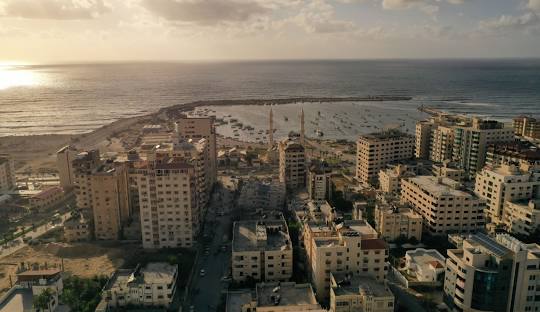
While international attention is now understandably focused on the widening confrontation with Iran and its implications for the broader Middle East, developments inside the Gaza Strip have largely slipped from the global agenda. Yet events in Gaza remain critically important. The long-term prospects for any durable peace between Israel and the Palestinians will depend heavily on the success or failure of the Comprehensive Plan to End the Gaza Conflict, widely referred to as the “Trump Peace Plan.”
The framework for ending the war was designed in several stages, with each phase requiring specific conditions to be met before progress could be made. The transition to Phase Two depended above all on the release of all living Israeli hostages and the return of the remains of those who died in captivity.
This process proved contentious and prolonged. Hamas initially refused to return the body of the final hostage, Ran Gvili, delaying the transition between phases. The delay appeared to serve a clear tactical purpose. By extending negotiations, Hamas gained time to further embed its operatives within the civilian population while concealing weapons stockpiles and elements of its remaining military infrastructure.
Other provisions of the agreement required Israel to release approximately 2,000 Palestinian prisoners, including around 250 individuals serving life sentences for acts of terrorism. At the same time, Israeli forces were expected to withdraw partially to the so-called Yellow Line, separating areas under Israeli military control from territory still effectively governed by Hamas.
These steps were intended to coincide with a formal cessation of hostilities and international endorsement through United Nations Security Council Resolution 2803. Officially, the conflict has now entered Phase Two. In practice, however, the durability of this stage remains uncertain, and many of the underlying security problems that triggered the conflict remain unresolved. Even in periods when large-scale combat subsides, the structural conditions that allowed Hamas to build its military network in Gaza remain only partially addressed.
Recent diplomatic developments illustrate both the ambition and the uncertainty surrounding the plan. Under proposals currently being discussed by the United States and its partners, Hamas would be required to dismantle its tunnel network and surrender its weapons in several stages over roughly eight months, with reconstruction projects beginning only in demilitarised areas. At the same time, a transitional Palestinian technocratic administration is expected to assume responsibility for civil governance while international forces help stabilise the territory.
One aspect of the conflict receiving little attention is the continuing information campaign conducted by Hamas and its supporters. In recent months social media platforms circulated videos and images claiming to show Gaza covered in snow, with civilians suffering in extreme winter conditions.
These claims were demonstrably false. No snowfall occurred anywhere in Israel or Gaza during the period in question. The only location experiencing snow was Mount Hermon near the Golan Heights, more than 200 kilometres from Gaza and at an altitude of around 2,000 metres. Gaza did experience several days of heavy rain that caused limited flooding, but the dramatic images widely circulated online were greatly exaggerated and in some cases digitally manipulated.
Such episodes illustrate the continuing information war surrounding the conflict. Dramatic imagery spreads rapidly across social media platforms where it is often shared without verification. In many cases these narratives quickly shape international perceptions of events on the ground long before independent verification becomes possible.
A significant development occurred when the remains of Ran Gvili were eventually recovered. In response, Israel returned the bodies of fifteen Hamas militants whose remains had been collected by the Israel Defence Forces during operations inside Gaza.
Although Hamas claimed it had assisted in locating the burial site, Israeli intelligence ultimately discovered the location independently. Gvili’s remains had been concealed within a Palestinian cemetery close to the Yellow Line. The recovery operation required delicate negotiations because Israeli forces had to cross into Hamas-controlled territory. Once access was granted, soldiers were forced to exhume and examine roughly 250 bodies before finally identifying Gvili’s remains.
Despite the ceasefire framework, the military situation along the Yellow Line remains tense. Small-scale clashes occur regularly as Hamas and Palestinian Islamic Jihad operatives attempt to infiltrate Israeli-controlled areas to gather intelligence, recover weapons or launch attacks.
In one incident, six Hamas fighters emerged from a concealed tunnel shaft near an Israeli position and wounded two Israeli soldiers before being killed by return fire. The sandy soil composition across much of Gaza makes tunnelling relatively easy, allowing militant groups to dig new shafts or expand underground networks quickly.
Meanwhile, Israeli forces continue search operations in territory under their control, regularly uncovering hidden weapons caches and previously undiscovered tunnel entrances. Weapons are confiscated while tunnels and other military infrastructure are systematically destroyed. These ongoing operations highlight how extensive Hamas’s military infrastructure had become before the war began.
Humanitarian aid continues to enter Gaza in large quantities. Approximately 800 aid trucks now cross into the territory each day, well above the minimum level estimated to sustain the population. However, there is mounting evidence that a significant portion of this aid is diverted by Hamas.
A video released by an anti-Hamas Palestinian activist recently revealed stockpiles of baby food that had been withheld rather than distributed to civilians. A report from the Fatah-led Palestinian Authority in the West Bank similarly concluded that Hamas exerts extensive control over the importation and distribution of humanitarian supplies, allowing it to generate revenue while reinforcing its political authority over the local population.
The inflow of supplies has also helped Hamas rebuild elements of its military capability. Much of its arsenal now consists of weapons recovered from damaged depots or explosives improvised from unexploded Israeli bombs. Israeli officials estimate that hundreds of unexploded munitions remain scattered throughout areas under Hamas control, providing a continuing source of materials for improvised weapons.
Only a few days ago motor oil was found inside humanitarian aid in a smuggling attempt uncovered in the Keren Shalom crossing. The motor oil was found inside humanitarian aid transported by the United Nations Development Programme (UNDP), with COGAT’s chief, Major-General Yoram Halevi, ordering the suspension of all UNDP aid entering Gaza until a full investigation is completed and the organisation presents its findings.
Under the terms of Phase Two of the peace framework, Hamas is expected to disarm and allow the establishment of a technocratic governing authority in Gaza supported by an international peacekeeping presence. Such an arrangement would enable Israel to withdraw most of its forces closer to the border.
However, Hamas leaders continue to insist they will not disarm. Although mediators are attempting to pressure the organisation into compliance, the prospects remain uncertain. Perhaps the clearest sign of movement has been the gradual formation of an international stabilisation mission intended to deploy in Gaza once security conditions allow. In the latest development, Kosovo has approved the deployment of troops to take part in a U.S.-backed multinational force, joining several other countries considering contributions.
Even so, the security situation remains fragile. Israeli airstrikes targeting militant cells continue to occur periodically, and both sides accuse each other of violating the ceasefire. Palestinian officials report that dozens of people have been killed in Gaza since the truce took effect, while Israel maintains that its actions are directed against militants attempting to regroup.
Across the border in Israel, reconstruction continues in communities devastated by the October 2023 attacks. Many residents forced to evacuate have now returned to their homes. In the town of Sderot, located just seven kilometres from the Gaza border, new housing developments have allowed most former residents to return while also attracting several thousand new residents from other parts of Israel.
Although global attention may currently be fixed on the confrontation with Iran, the future of Gaza remains central to the stability of the region. The ceasefire has halted the worst of the fighting, but it has not yet resolved the political and security dilemmas that produced the conflict in the first place. If those issues are not addressed, the risk remains that the present calm could prove temporary. For that reason alone, what happens in Gaza must not be forgotten especially as the world’s attention has shifted elsewhere.
Table of Contents
Sammy Stein was born a Jewish Palestinian, a description that causes much confusion with people. In 1948, he and all other Jewish Palestinians living in Palestine became Israeli citizens. He now lives in Glasgow and has two daughters, two grandchildren, and is married to Vicci. Sammy is Chair of Glasgow Friends of Israel, which celebrated its tenth anniversary in May 2025.
Follow NER on Twitter @NERIconoclast