Goebbels and GoPro: Nazis, Hamas, and the Filming of their Atrocities
by Eli Kenin (October 2025)

“Man is and remains an animal. Here a beast of prey, there a house pet, but always an animal.” Armed with this philosophy, Joseph Goebbels, the Reich Minister of Propaganda, played a key role in the Nazi atrocities against the Jews. The Nazis did not seek to portray themselves as docile house pets, yet they went to great lengths to conceal the horrors they committed.
Not so Hamas, who on October 7th, 2023, euphorically recorded the worst slaughter of the Jewish people since the Holocaust with GoPro body-mounted cameras.
GoPro cameras “have revolutionized photography and videography by offering rugged, compact, and high-quality devices perfect for capturing action-packed moments in extreme environments,” according to the description of the manufacturer. Users share footage in the company’s “Anything Awesome Challenge,” posting videos of “any adventure, any sport, any angle,” to win GoPro awards. The viewer sees the adventure through the eyes of the adventurer.
Extreme sports, which surged in popularity in the late 20th century, push human limits to unprecedented speeds, heights, and depths. In the world of action photography, thrill-seekers capture breathtaking moments as they surf giant waves, leap from cliffs, dive with sharks, or soar in wingsuits that let them glide like birds—often at the risk of serious injury or death.
Extreme terror & the GoPro Challenge
Paralleling sports, terrorism has become increasingly extreme. “Anything awesome” has become anything gruesome. Instead of finding new angles to celebrate nature while stretching the limits of human endurance, terrorists seek new ways to inflict horror and expand the bounds of human suffering. Death and injury are not accidents but the goal.
On October 7, 2023, Hamas transcended cruelty, unleashing an orgy of death, torture, rape, infanticide and kidnapping reminiscent of the Dark Ages. Strapped to these human savages were GoPro cameras.
Extreme terror & the media
From its advent, modern terrorism was media terror. The broadcast of an act of violence can instill mass fear and amplify an extremist’s cause, while grisly videos serve as recruitment tools.
Over 900 million television viewers watched the kidnapping and murder of 11 Israeli athletes at the 1972 Munich Olympics. Al Qaeda in Iraq uploaded the brutal beheading of an American citizen to the Internet in 2004. The Islamic State created a multimedia empire that included glossy magazines, websites and a twitter feed that reached far beyond their fledgling desert caliphate.
GoPro extreme terrorism is just the latest and most horrendous manifestation of the toxic mix of terror and communication technology. While humans typically conceal inhumane acts, Hamas freely shared their atrocities on the Telegram instant messaging app, even hijacking victims’ social media accounts to livestream their murders to their loved ones.
The filming of Nazi atrocities
A predecessor to GoPro action photography in the history of image capture was the advancement of low-light photography and the development of portable 35mm cameras in Germany between the World Wars. Freed from bulky flash equipment, professional photographers could, for the first time, discreetly capture politicians and celebrities unaware. The “Golden Age of Photojournalism,” had begun.
Erich Salomon, the scion of a wealthy Jewish family from Berlin, became famous by capturing major political events using a low-light Ernemann camera, at times concealed in a bowler hat. He was murdered in Auschwitz in 1944.
The portability, interchangeable lenses and multiple exposure film engineered by the Germans also brought high-quality photography to the masses. Nazi soldiers carried Leica and Ernemann cameras, some pillaged, in their backpacks.
Like hunters on an African safari, it was easy to photograph their prey before and after the kill.
The Nazis also recorded footage. Members of the Einsatzgruppen mobile killing force filmed the mass murder of most of the Latvian town of Liepaja’s 7,000 Jews, despite orders against it.
Cultivating hatred while concealing mass murder
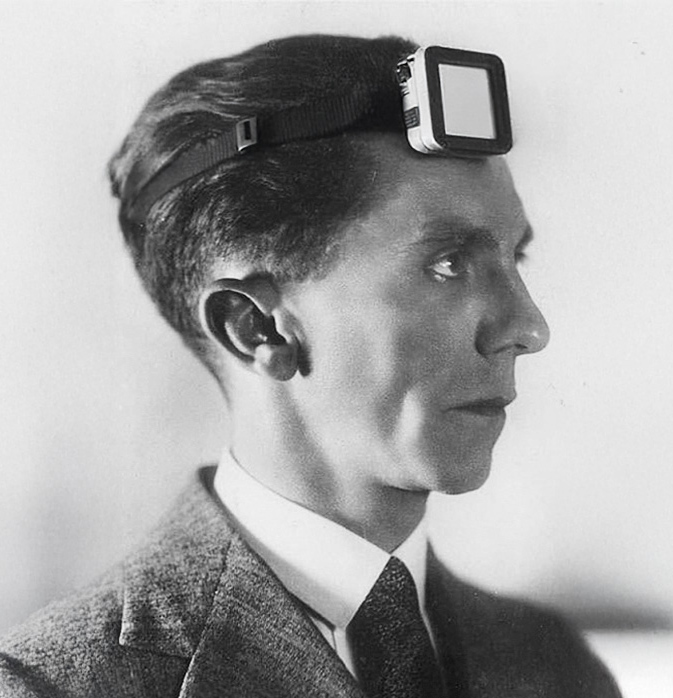 Joseph Goebbels (right) became Minister of Propaganda in 1933, shortly after sound was introduced to film, and embraced the new medium. Under his supervision, the German film industry produced over 1,000 feature films— not all overt propaganda, but all subtly reinforcing Nazi ideology. His challenge was to incite Germans against the Jewish people while concealing the Holocaust from the world. Films like The Eternal Jew (1940) and The Ghetto (1942, unreleased) portrayed starving people, framing their suffering as inherent inferiority rather than Nazi-imposed deprivation, while the extermination camps remained hidden.
The Minister attempted to control every aspect of the Nazi image but left it to the commanders to relay to field soldiers the interdiction of filming the atrocities. General Otto Woehler, who cooperated with the Einsatzgruppen, while commanding the 1lth German Army, ordered all amateur photography confiscated in July 1941:
“No photographs will be made of such abominable excesses and no report of them will be given in letters home. The production and the distribution of such photographs and reports on such incidents are looked upon as undermining the decency and discipline in the armed forces and will be severely punished… It is beneath the dignity of a German soldier to watch such incidents out of curiosity.”
Goebbels admired Reinhard Heydrich, the chief of the Gestapo and the SS, for his efficiency and ruthlessness. Often referred to as the father of the Holocaust, Heydrich issued orders banning taking photos at mass executions and ordered commanders to confiscate any circulating images.
The perpetrators, however, filmed certain atrocities for documentation and internal propaganda. These visual records later provided evidence at the Nuremberg Trials, alongside footage taken by the Allies at liberation.
Palestinian and international support of the massacre
The Reich Ministry for Public Enlightenment and Propaganda was a large bureaucracy with multiple departments. The film department alone had five divisions. Before the war, Hamas ran tightly controlled television, radio, and websites, like Al Aqsa TV, which promoted Islamist ideology to children. The roots of hatred are planted early in the family and reinforced by Koranic teachings in mosques and antisemitic schoolbooks.
On October 7th, 2023, the Palestinian public had no need of a ministry of propaganda to incite them. A ragtag group of civilians took part in the carnage and kidnapping while recording the barbarism on their cell phones. In fact, France 24 reported that the first images of the attack were uploaded to Telegram by noncombatants.
There was no cover up, only intense pride. During the massacre, one Hamas terrorist called his parents from the phone of a Jewish woman he had killed, asking them to check his WhatsApp feed for pictures he had taken of the ten Jews he had murdered.
Not only was this elite Nukhba warrior and his family thrilled by Hamas’ murderous rampage, so were many Palestinian sympathizers worldwide. At an off-campus rally in New York on October 15, a Cornell professor said he was “exhilarated” by the massacre.
A survey published on November 14, 2023, by Birzeit University showed that most Palestinians in the West Bank supported the October 7th massacre and even more had a positive view of the terrorist factions. Ninety-eight percent of felt prouder to be Palestinian.
A new wave of anti-Semitism, that many had thought had subsided after the Holocaust, swept the world. The day after the massacre, thousands gathered in Times Square in solidarity with Palestine, the first of many anti-Israel and antisemitic protests that soon spread to university campuses and cities worldwide. Images of the Israeli counterattack to stop the rocket fire, free the hostages and prevent future massacres turned the swell into a tsunami. “From the river to the sea,” a call for the destruction of the Jewish State, became the defining motto of moral righteousness.
Thanks to the global solidarity marches,78 percent of Palestinians in the West Bank “felt strongly or to some extent that there is hope for humanity’s future.”
On October 23, The United Nations General Assembly passed a resolution “calling for an immediate and sustained humanitarian truce leading to a cessation of hostilities,” without condemning the October 7th massacre.
Events such as these occurred despite the widespread availability of the October 7th images. Hamas live-streamed some and uploaded most, and the Wall Street Journal’s Internet site covered the events as they unfolded. By October 8th, news of the massacre, whether through raw footage, blurred visuals, or reports, had spread across the world.
In the days after the attack, the official Hamas Telegram channel tripled its following, according to the Atlantic Council’s Digital Forensic Research Lab. The Israeli Ministry of Foreign Affairs made a documentary composed of images compiled from the terrorist’s GoPro cameras, dash cams, civilian’s phones and first responders, but limited its viewing to journalists, diplomats and other influencers out of respect for the victims and their families. The 47 minutes of “unspeakable atrocities” left members of the United States Congress speechless, some in tears.
Incomparable atrocities
The industrial mindset of the Nazi state differs greatly from the jihadist mentality of Hamas. Germany was a powerful hierarchically organized bureaucratic state whose pursuit of the Jewish people was methodical and institutionalized.
Until the latest conflict, the Palestinian’s most successful offensive strategy was the use of carefully crafted images of civilian suffering that deflected criticism of their terror tactics and portrayed Israel as the oppressor. The camera was their ultimate weapon. Hamas adopted ISIS’ visual terrorism on October 7, 2023.
“One thing ISIS did very effectively was allowing its individual fighters to film their exploits through their own eyes. Whether they lived or died, there were advantages to both. They were triumphant warriors, or they were heroic martyrs,” noted Daniel Byman, a terrorism expert at the Center for Strategic and International Studies.
Allowing viewers worldwide to experience terror through the eyes of the terrorist in real time was a fundamental departure from the Palestinian’s traditional use of visual propaganda and would seem to have put at risk their image as the world’s foremost underdog. Instead, Hamas’ double exposure unleashed a new wave of antisemitism throughout the world. The Israelis were vilified as the new Nazis, censured by the UN, brought before the International Court of Justice and its leaders charged as war criminals by the International Criminal Court, a court inspired by the Nuremberg trials.
Almost two years later, in August 2025, Hamas, feeling confident that the world was focused on the Palestinian frame of reference, filmed emaciated hostage Evyatar David digging what appeared to be his own grave. Despite echoing the ultimate Nazi horror— starving Jews being forced to prepare their own graves—the footage barely registered internationally. It shocked Israelis but was eclipsed by daily images of gaunt Gazan children, in some cases suffering from unrelated genetic conditions, and chaos at food distribution sites. Hamas cunningly calculated that the video would go largely ignored abroad while tormenting Israeli society.
***
What would Joseph Goebbels, the self-described “patron of the German film” whom historian David Irving dubbed “the Mastermind of the Third Reich” think about Hamas’ GoPro genocide?
The diminutive, crippled Goebbels, whose piercing voice once captivated German crowds, stayed by Hitler’s side until the end—murdering his six children before he and his wife died by suicide in the Führer’s bunker. His nihilistic charisma is reflected today in Palestinian leaders such as Yahya Sinwar, who stated that civilian casualties are “necessary sacrifices.”
Would Goebbels be astounded by the global support for the October 7th massacre and for those who publicized their deeds with pride?
Given his brutal definition of human beings, perhaps not.
Table of Contents
Eli Kenin is an independent writer, researcher and translator living in Jerusalem.