The Common World
by John Grey (July 2026)
.
.
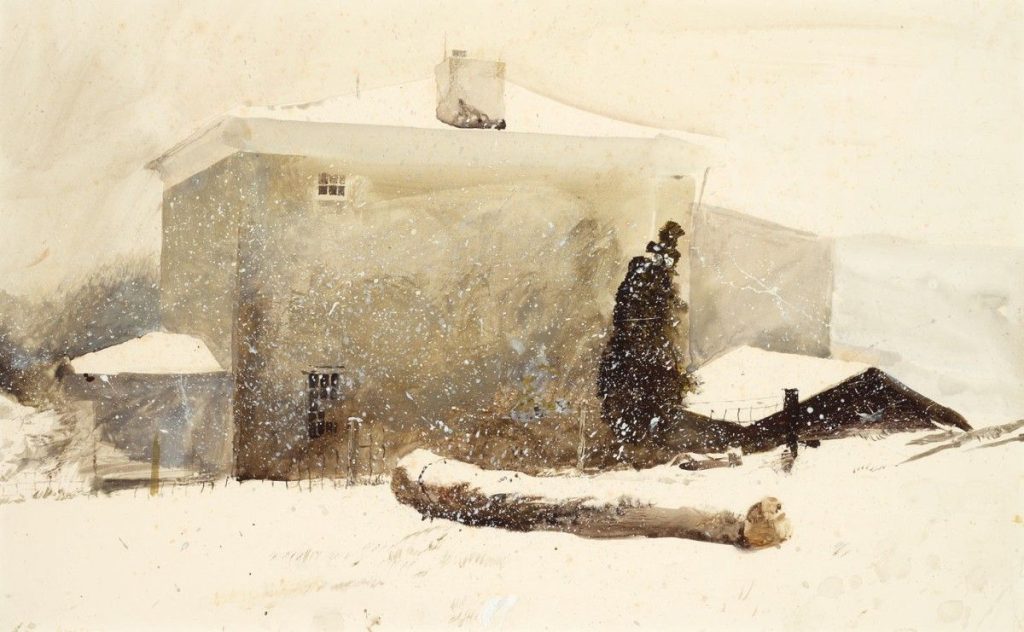
The Farm in February
.
The night has been the coldest, most bitter,
of the season.
It clenched the farm in its tightest fist.
.
And dawn sets a crawling pace
drags its feet across the yard
as reluctant as an old dog to rise.
.
Cows work their jaws,
shake the ice from their tongues.
Pigs waddle in plate-glass puddles.
Chickens sit heavily on near-frozen eggs.
Brittle hay snaps in the mouths of horses.
.
A farmer wrapped in wool,
stumbles from the house,
the covenant he keeps
it to outstare winter
his mission, to ensure
that all on his watch have survived the night.
.
He must prize open
what frost has sealed tight
feed where nature cannot.
.
In the rickety barn,
livestock await his coming.
Their cloudy breaths
you could mistake for prayer.
.
.
.
A Twilight Shrine
.
See how the moon keeps nothing secret.
The lake surface darkens yes
but the depths keep their lanterns lit.
.
On the veranda at twilight
you decide that life ferments from small things,
a swallow of wine, the resinous glow of pines,
the gentle lapping of windless water.
.
The rock of your chair barely the planks
as if propelled by no more than breath.
The slap at a mosquito becomes tenderness,
the toss of your hair a brief uprising
of muscle and will.
.
And the sip you take, small, deliberate
returns your mouth to its last soft opening,
as if remembering is a physical act,
as if desire was a place you could step back into
with both feet planted.
.
.
.
In the Land of the Cougar
.
Day after day, the rain comes—
not sad, but as a kind of gray light,
a steady tingling of the shoulders,
or cool fingers brushing the cheek
like a mother long passed
who is still on standby.
.
I brush against lupine,
part avalanche lilies gently,
and there—pressed into soft earth—
is the print of a cougar.
.
Morning rises, and the forest begins
its jubilant confusion. Tanager, warbler, jay—
warbling warnings, invitations,
directions to the feast, to the trembling joy of love.
.
A field mouse peeps out of its hole,
watches for the cougar,
its small body taut with knowing
how quickly the end can come.
.
But the cat does not appear.
Still, I sense its breath
on the back of my neck,
its footfall just out of earshot.
.
Yet everything is eclipsed by mist—
low and deliberate,
like the predator itself—
slipping through trees with the same grace,
the same silence,
the same promise of something
just beyond what’s knowable.
.
.
.
Women
.
The room
darkens—
a slant of sun
rides across
the floor.
.
I think of women.
Charm is theirs.
Wonder too.
They stand closer
to stars than I—
unreachable
as Orion
over the porch roof.
.
I have lived
beside their
quiet intuition,
the weight of what
they give
without asking.
.
A spark—
a light—
a kind of splendor
burns in them
to the end.
.
Night comes.
Three, maybe four
I knew well enough
to say this.
.
.
.
Wet Man
.
You depart with your face damp
from the downpour that went
for you like a startled snake
taking with you the cloth doll
with the stitched-up mouth
.
the sofa was a thousand arms
now folded into disappointment
each laugh an airless room
each love a roofless echo
each glass a tapped-out beer vein
no language with another word for birth
.
what’s left is the newspaper that once
wrapped your palms in headlines
and a beer can fortress stacked up
against an old player piano
watched over by a toothless man
and a dog with heads down and sleeping—
both of whom are you—desperate
for what’s buried there.
.
.
Table of Contents
John Grey is an Australian poet, US resident, recently published in Shift, River And South, and Flights. His latest books, Bittersweet, Subject Matters, and Between Two Fires, are available through Amazon. He has work upcoming in Rush, Writer’s Block, and Trampoline.