Truth is Fundamental to Society
What is the truth externally and internally?
by Philip D. Welsby (December 2025)
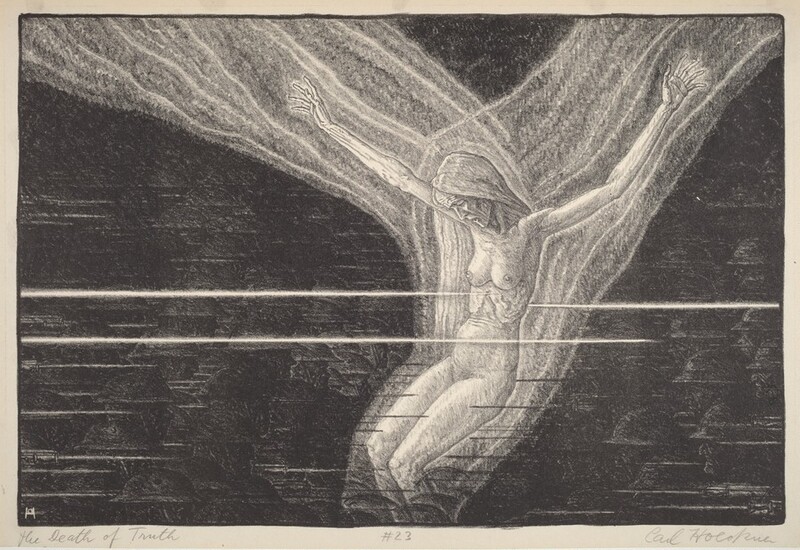
“The truth is out there.” This statement assumes that there are objective and unchanging facts “truths” out there, but no one is in direct contact with reality. At a physiological level vision, hearing, brain functioning, and the ability to assess time can mislead.
Some visual untruths.
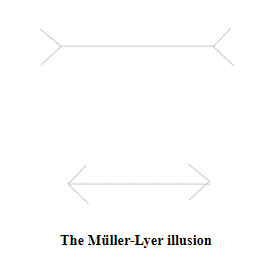
For each eye there is a blind spot, a wedge of between 5 and 7 degrees of absent vision where the optic nerve enters the eye. No one notices this because the brain automatically lies to us and fills in the blind spot defect with what the surrounding retina reports. If something appears in the blind spot of a dominant eye the other, non-dominant, eye is at a disadvantage and cannot compensate. You were not aware that you had a dominant eye? Place a finger about 40 centimetres in front of your nose so you can see both the finger and the background in focus and then close each eye in turn. When the finger jumps you have just closed your dominant eye. Little of what there is out there in a visual field is perceived in detail because detailed vision is only obtained from a thin wedge (about 5 percent) of light arriving at the macula, the area of maximal retinal discrimination, and visual field appreciation gets progressively more indistinct the further the distance from the macula. Colour appreciation also fades towards the periphery of visual fields (about one in 12 males and one in 200 females are formally colourblind and are often unaware of their defect). The last ability to fade peripherally is movement appreciation. The peripheral visual indistinctness and lack of movement appreciation explain why stage and film directors introduce threats coming in slowly from the side so that the threats are suddenly and shockingly realised. This also explains why people prefer bigger screens. Small screens permit too much detail to be seen that would not be the case in real life. Brains may screen out the unexpected. Motorists often report that they did not see the motorbike when they pulled out in front of them when the motorist’s eyes must have “seen” the motorbike image. False perceptions of optical illusions persist after despite the viewer’s brain being shown what the truth is. Some illusions cannot be altered by demonstrations of the truth (the same is obviously true for some delusions). The moon is perceived to be larger the nearer it is to the horizon. Interestingly some optical illusion fade if the viewer is tipsy, raising the interesting conclusion that illusions are caused by the lack of alcohol. Everyone is familiar with the Müller-Lyer “arrow illusion” in which inwardly pointing arrows at the end of a line make that line appear to be longer (Figure 1). Sadly, I have deceived you: the pointed line is actually longer. You have experienced an illusion about an illusion!
Some hearing untruths.
Brains do not directly receive the frequency of the sounds that enter the ears. The ear’s cochlear membranes cannot resonate at the frequency of incoming sound vibrations because the cochlea is only three centimetres long and the wavelength of most sounds exceeds this. For example, concert A has a wavelength of 78.4 centimetres and a frequency of 440 vibrations a second. Specific cochlear hair cells on the membranes respond to incoming vibrations but nerves that transmit these to the brain have a maximum transmission frequency of about 500 per second so higher frequencies have to be encoded before presentation to the brain. Brains can create a much lower note “an absence tone” that is not “out there” from two high pitched notes notably used in Sibelius’ Forth Symphony. About one in 10,000 Caucasians have absolute pitch and exactly what they experience the rest of us can only imagine.
Some vision and hearing untruths are shared. Both the optic and auditory nerves are not purely sensory and both contain at least 20 percent of neurons which deliver outputs from the brain that influence what the eyes and ears will detect. Thus, the brain creates a proportion of our auditory and visual truths and inevitably there are going to be disagreements between individuals as to what were the visual and auditory “truths out there.” Eye witness accounts may be fallible and are influenced by non-ocular inputs. Different answers are given to the question “How fast was the car going when it slammed into the other car?” and “How fast was the car going when it collided with the other car?”
Time appreciation is often flawed. Most peoples’ eyes open within 45 seconds if they are asked to close their eye , not to count seconds, and to open their eyes when a minute has passed.
All of visual, hearing and timing considerations are of secondary importance when compared with the focus of concentration. Concentrate on one aspect of the environment and you may neglect other equally important aspects. Finally, the brain misinterprets. “The sun rises in the morning.” No it doesn’t. The earth rotates. There is the moon illusion in which the moon is perceived as being larger the lower it is in the sky, caused by the availability of comparators at the horizon. There is “the gorilla inattention phenomenon in which a viewer is asked to count the number of passes of a ball that are made between a group of moving players and only about 50 percent of viewers notice a gorilla that enters and stands in the middle of the group.
It is highly relevant that, when asked for our opinions, we give our potentially flawed views.
Given that individual visual and hearing perceptions differ it is inevitable that inner brain interpretations will also differ. Illusions transmogrify into delusions and perceived truths will often be contradictory and controversial. Trying to invalidate the truths of others might well be counterproductive and alienate those whose truths differ. Free speech is essential if differing views of reality are to be reconciled, if for no other reason so it can be known exactly what others are thinking and planning. However, some people cannot accept that their truths may be less than objective and, because these individual truths often form foundations of their personality, these people will remain faithful to their cause even when countervailing evidence is presented.
Unbelievably, some hairy life forms on this planet orbiting one star in 100 to 400 billion stars in our Galaxy of 100 to 200 trillion galaxies in the observable universe, hold their truths are correct and, a terrifying and, that others need to be persuaded or forced to embrace their truths. Possessors of “truths” thus often seek to evangelise others because this provides them reassurance and power over those evangelised. The more militant evangelists often have high levels of belief that they themselves often cannot sustain. American examples abound. Anti-homosexual evangelists are often found to have homosexual tendencies and political evangelists who persuade others in public of the correctness of their views often are found to be have privately expressed contradictory personal views and behaviours.
The above considerations can explain the continued unconditional support that some politicians receive. Perhaps too many people are prepared to accept the “truths” of politicians’ and religious leaders because that is what their brains want to hear and they respect the strength of people who refuse to change their minds, even when they are demonstrably wrong or lying.
Minor misrepresentation of the truth (deception concealment and spinning) may be legitimate especially if the underlying intention is benign. Such “benign” lies are not restricted to politicians. Lawyers have to conceal and spin as part of their job even when they know their client may be guilty because “Someone has to challenge the evidence to ensure that convictions are justified.” Bluffing and misrepresentations are an accepted part of business negotiations.
Majorities are easily led by militant minorities and moderate individual voices get lost because they are reluctant to force their truths on others and fear that fighting fire with fire would be hypocritical and a step along the route to fascism and dictatorship.
Some specific examples of problems with truths
Christian evangelists in the USA use their truth that abortion is sinful to impose this truth on pregnant women at the cost of having to support from non-Christian groups, some of which are lack classical Christian virtues.
A statue of a Bristol slave trader, Edward Colston, was thrown into a harbour, the equivalent of burning books and rewriting history, by protesters who thereby removed a persisting reminder of his inhumane and racial crimes. A more relevant and imaginative response would have been the installation of a plaque below the statue describing his slave dealing or, more imaginatively manacling the statue would have caused future generations to ask why and thus learn from history. Historical truths should not be suppressed otherwise we will learn nothing from history.
Oxford University LGBTQ+ society tried to prevent a speech by an invited professor, Kathleen Stock, whose truth was that transgender males and transgender females were not the equivalent of their adopted gender. Rather than arguing against her views, one protester glued himself (is it relevant whether the protester was identified as male or female?) to the floor. That sort of thing is not going to influence any speaker’s views, but that was not the intention. Rather they wished by using this distraction that others should not hear her arguments. You might wonder what would the reaction have been if an LGBTQ+ advocate was prevented from speaking.
In Russia in 1917 Lenin’s and Stalin’s theoretical truth was that communism and collectivism would solve all problems. Kulaks, the Russian peasants, resented state seizures of grain to feed others, and they therefore produced less grain, hoarded what they produced, and the result was millions of deaths from starvation. Chairman Mao made a similar mistake with similar results. Frank Zappa’s more practical truth was that communism would not work even in theory “because people like owning things.” As is typical, those in power tend to supress those with opposing views, not in a nice way ranging from persecution, exile, poisoning, and assassination. The mortality rate of anti-Putin activists seems unaccountably high.
The conclusion is that there is only one truth concerning specific topics is that “the truth” is wishful thinking or a thoughtless assumption. Except, of course, dear reader, in your case,
So who do we trust when we have difficulty with the uncertainties surrounding “truths out there” and our interpretations thereof. I suspect a best leader would be one who had no desire to obtain power. Accordingly, may I put forward myself as the obvious leader? I would do my best to deliver for you and would ensure that any naysayers and their less-than-ideal truths were neutralised as soon as they became apparent. But hold on…
Thank you for taking the time to hear my views and I would stress that my views should not be automatically accepted or dismissed as correct, although they are.
Table of Contents
Philip Welsby was a Consultant Physician in Edinburgh, probably one of the last general physicians because he looked after children and adults. He has published widely on medical, political, musical, and humorous aspects of modern life. He is an associate editor of the Postgraduate Medical Journal.
Follow NER on Twitter @NERIconoclast