Voting Away the West: The Democratic Right to Cultural Suicide
by Nikos Akritas (January 2026)
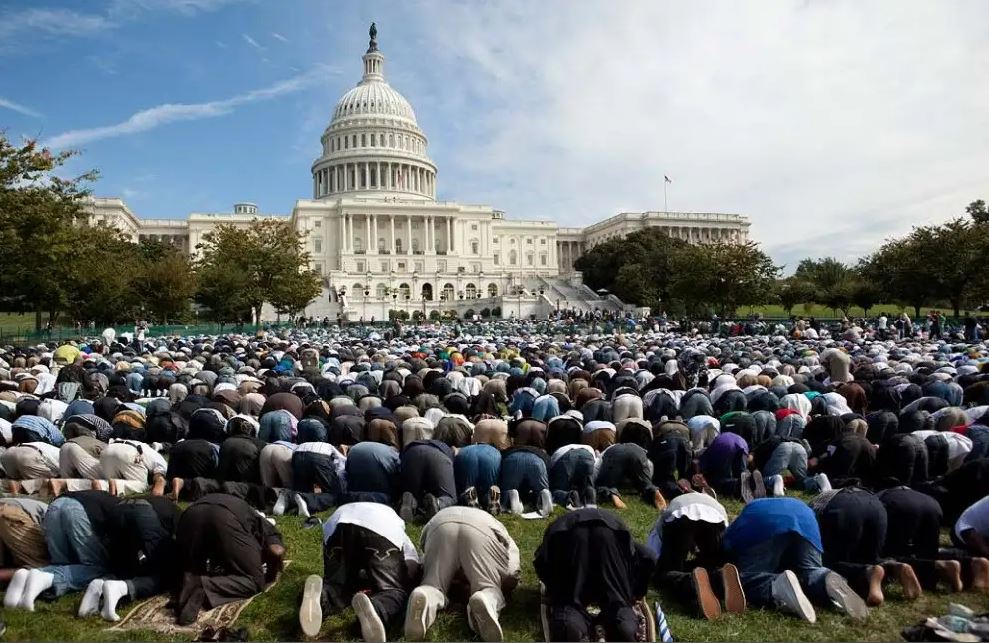
It is often said that elections are lost, not won—that it is the unpopularity of one party, rather than the appeal of another, that determines the outcome. I wonder if the same is true of cultures. Does one culture lose out to another, get subsumed by it, because it has ceased to be appealing rather than because the alternative is, in any real sense, better? Does a culture disappear because people feel it no longer serves a useful function and something superior replaces it? Or is it apathy—a deep malaise, an existential tiredness? Or, in the West’s case, is it something closer to self-loathing?
Of course, cultures are evolving entities, not monolithic behemoths untouched by influence from without. The reality is more complicated than I have presented it. Or is it?
It goes without saying that those entering the UK from non-Western countries come from very different cultural backgrounds. Those cultures are not just different in outwardly visible traditions; they are underpinned by distinct values.
And here lies the crux of it. Liberals often assume that all peoples of the world share basically the same values, with only superficial cultural or religious differences overlaying them. This, however, is simply false. Cultures that do not value education, hard work, or the rights of individuals to enjoy the fruits of their labour cannot hope to achieve the technological advances or standard of living of those who do. Societies that treat revealed scripture as the ultimate guide to justice cannot achieve the freedoms and equality of those that use reason as their guide. And those that insist on a person’s place being dictated by blood make a similar error, though for different reasons.
Many cultures are trapped in the inequality and strife they suffer because of these values—values that place groups or classes of human beings above others, rather than putting individuals at the heart of justice.
Cultures are not equal. To those who see such statements as a form of racism: the term cultural racism is an oxymoron. Cultures, evolving over time, are by definition not set in stone, whereas ideas about racial superiority and inferiority are. Racism is a static concept; culture is not. Cultures are not inherently benign, and for that reason, it is both possible and necessary to judge them against each other.
English culture a hundred years ago, with its widely held beliefs about racial hierarchy, misogyny, and homophobia, was clearly less advanced in its values than that of today. If we can compare different cultures within a country over time and speak of advanced and backward, why is it considered anathema to do the same when comparing societies today that diverge similarly? If England was a backward society a century ago for treating certain human being as less worthy than others, for whatever reasons, then those societies today that hold similar views are surely backward when compared to those that do not.
Many migrants come from societies where misogyny and homophobia are prevalent, where certain groups—based on ethnicity or religion—are considered inferior, and where behaviours considered dishonest or immoral, such as lying and cheating, are often a necessary means of survival. Values and habits do not suddenly vanish simply because an abstract border has been crossed. Not all migrants commit crimes, nor do they express overt prejudice, but the values they bring with them can conflict with those built up over decades and centuries in the West which have made these societies freer.
When migrant numbers are small, the majority’s values tend to prevail, and integration is a real possibility. But when those numbers are large enough to overwhelm the host culture, negative acculturation and balkanization become the only likely outcomes. London has already become such a place, and England as a whole will follow if things do not drastically change soon.
Those who object to my claims benefit from values which have become standard norms of Western culture: freedom of thought and freedom of expression, and equality for each of us to exercise these freedoms regardless of identity. By asserting that cultures which do not value these principles—and indeed see them as a road to anarchy or as inferior—are equally valid, the logical consequence is to accept intolerance of others as equally valid. Intolerance was not merely the modus operandi of certain groups in Western history—which we can all agree were thankfully defeated at great cost to many lives—it is also the modus operandi of large parts of the world today.
If this is unpalatable, I can only echo what many have asked before me: where else in the world, outside the West, would you choose to live? A totalitarian pseudo-communist country? A Muslim-majority country? A country that still holds traditional views about the place of men, women, and gay people? A country where even the most mundane, everyday transactions require some sort of bribe or payment to those in authority? People vote with their feet, and not toward those countries.
It is all well and good to blame the West for the present condition of other countries, but not so many centuries ago the West was a backwater compared to many non-Western societies of the time. Should we claim that the ills the West imposed on the rest of the world were evils learned from more advanced societies they took their cue from? Or is the West uniquely evil? In all ages and at all times, there has been corruption and evil in the world, whether as a condition from within or imposed from without. But how does a society’s values mitigate or exacerbate the misery?
Those with enough wealth to live in nice neighbourhoods that most immigrants cannot afford, and who send their children to safe, well-resourced schools that most immigrant children do not attend, often denounce those without the luxury of their experience of life for expressing dislike of what their own neighbourhoods and areas have become. Who, here, speaks from ignorance, whilst the privileged—a word I do not often like to use—comfort themselves in their superior knowledge, largely shielded from the consequences of abhorrent values being imported into the country?
The rest of society, meanwhile, is mired in the everyday anxiety, conflict, and friction caused by misogyny, homophobia, religious and racial intolerance, and the cheating that they experience because they have been lulled into a false sense of security by growing up in a culture which, until recently, was one of trust.
With large-scale immigration comes the large-scale importation of values that are alien to and, far from enriching our culture, a direct challenge to the freedoms and values that have made Western societies the envy of the world. This is not a matter of cultural enrichment, but of cultural conflict—one that has already undermined the principles that define us and, if not addressed immediately, will be the end of freedoms that are supposed to be upheld by governments serving the ideals of liberal democracy.
Do all political parties protect those underlying values which allow us to disagree, debate, and ultimately decide what kind of society we want to live in? Which are more in line with those deeper values, and which only superficially pay lip service whilst threatening or undermining our freedoms in the name of freedom? Voting is not merely choosing between winning and losing parties, but which freedoms we want to keep and which we are prepared to lose—decisions which may ultimately determine the survival or suicide of a culture.
That is, of course, if elections are still permitted to take place—and not cancelled by a government in power that polling suggests is on course to lose them. In that case, the question will no longer be whether we vote away our culture, but whether it is already too late.
Table of Contents
Nikos Akritas has worked as a teacher in the Middle East, Central Asia and the UK.