Bad Choices, Anger, and Mental Illness
Disturbed women cannot create a sane movement
By Janice Fiamengo
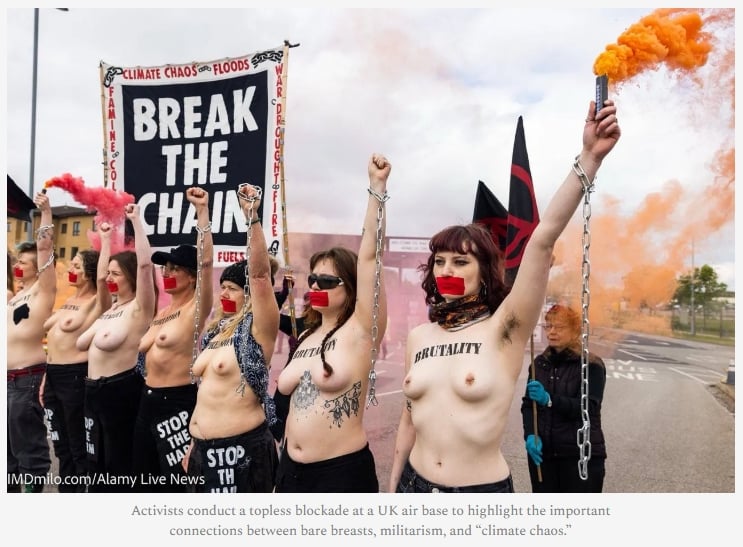
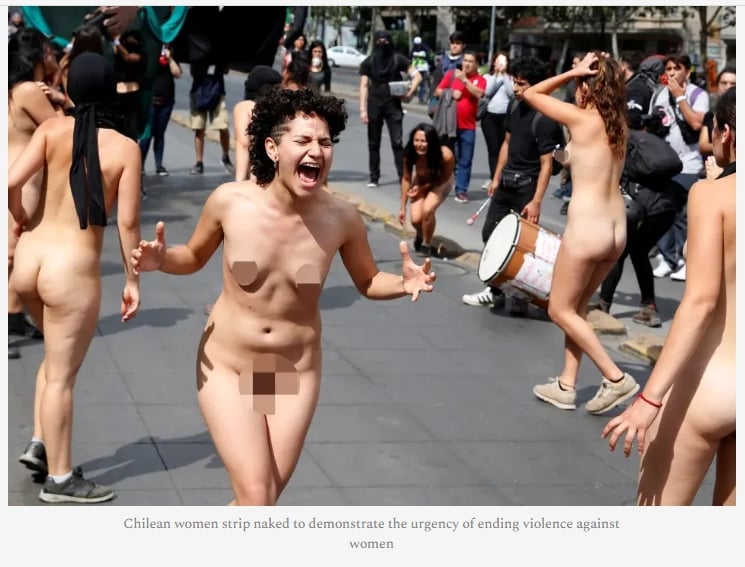
Marching in pussy hats, baring their breasts to save the earth, fighting with ICE agents, declaring themselves “nasty,” feminist women today are self-evidently the least contented and most rancorous women in America, preoccupied with victimhood, consumed by the politics of despair, and experiencing higher rates of depression (and corresponding anti-depressant use) than non-feminist women.
It is logical to conclude that feminism causes female unhappiness by encouraging ingratitude, paranoia, and reckless rage.
Feminists themselves have at times noted the excessive, often wretched, results of their gospel of discontent: the suicides, depression, violence, hysteria, and disordered lives of many of their luminaries.
Mary Wollstonecraft made two suicide attempts after her free-love liaison fell apart. Suffragette Emmeline Pankhurst counseled and engaged in murderous political violence. Virginia Woolf drowned herself after suffering from severe mental illness for much of her life. Simone De Beauvoir lost her teaching license for sexual misconduct with a female student. Valerie Solanas attempted to murder at least three men after writing a tract recommending the murder of men. Betty Friedan based her entire public career on demonstrable lies. Elizabeth Gould Davis shot herself after completing a book on female moral superiority. Andrea Dworkin was almost certainly a rape fabulist. Shulamith Firestone became schizophrenic. Germaine Greer advocated sex with pubescent boys. Mary Daly would not allow male students to take her senior women’s studies courses. Phyllis Chesler (of whom more later) defended a female serial killer. Mona Eltahawy boasted about beating a man in a nightclub. These and many other feminist leaders are not what most people would recommend as models for their daughters.
Yet feminist commentators justify women’s tragic choices and destructive behaviors, blaming society. The temptation to see and yet not see, to blame anything other than a pathogenic ideology, has been irresistible for most feminist analysts.
Pioneers of Discontent
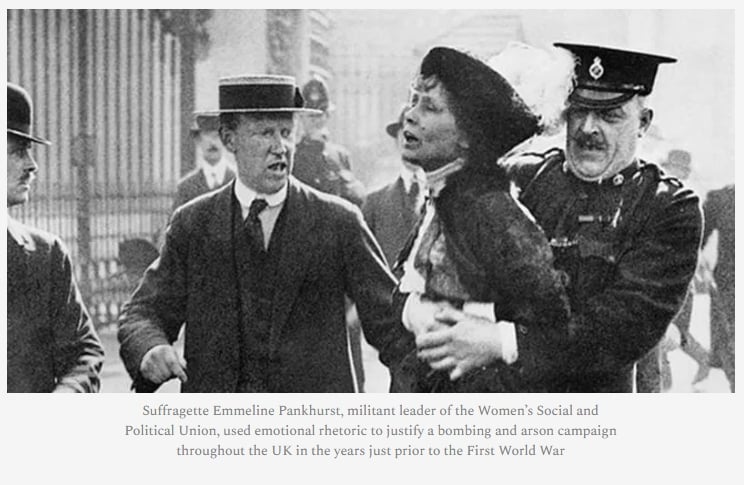
When British author Wilma Meikle published Towards a Sane Feminism in 1917, the title sounded a humorously rueful note. “Let us while there is still time for repentance,” Meikle wrote in the first chapter, “humbly and with tears confess that all that was done and undone by pre-war feminists was nothing but a prodigious crop of feminine wild oats” (p. 14). Here, it seemed, was a frank, unvarnished account of early feminism by someone who experienced it first-hand and was not inclined, despite being a committed feminist herself, to whitewash its aims or methods.
To a certain extent, the book lives up to its witty opening pages, exposing a side of First Wave feminism that most commentators—even the anti-feminist ones—rarely discuss. We tend to picture the feminists who fought for the right to vote as moderate women, civic-minded and reasonable, less given to anti-male bombast and performative outrage than later generations.
In Meikle’s telling, the outrage and bombast show themselves, at least in tantalizing glimpses. Meikle mentions, for example, Christabel Pankhurst’s popular pamphlet The Great Scourge and How to End It (1913), which wildly exaggerated the number of British households infected by venereal disease in order to blame British men for their allegedly depraved sexuality. “It would be hard to discover a more one-sided effusion,” Meikle noted dryly.
Too many suffrage militants, she admitted, “regarded the majority of men as conscious and willful oppressors” and “saw in sex nothing but degradation for women” (p. 88). At a time when poverty and economic dependency were the primary problems of women, as Meikle believed, the anti-male and anti-sex rhetoric spread needless fear and paranoia.
But these were not enough, for Meikle, to invalidate the movement, for she could not give up on the spirit of feminism, its exhilarating promise and passion. With more experience and opportunity, she alleged, a younger generation of feminists would learn from former leaders’ mistakes.
Meikle celebrated feminist heroism by comparing individual suffragettes, whatever their political blunders and misguided preoccupations, to British heroine Edith Cavell, a nurse in the Great War who was executed by German authorities in 1915 for helping hundreds of soldiers escape from German-occupied Belgium.
“Just as the memory of Edith Cavell’s death will always be treasured by her countrymen and held glorious to womanhood,” Meikle rhapsodized, “so future ages will hold it a small thing that militancy was ridiculous and useless when militants themselves were often so ennobling an example of feminine endurance and sacrifice” (p. 19).
In reality, the militant actions Meikle forgave were nothing like those of Edith Cavell. Cavell was a devout Christian who acted sacrificially to save others. The suffragettes, powered by a vicious martyr complex, put the lives and livelihoods of their fellow Britons at risk over years of an increasingly radical pre-war terror campaign that was worse than “useless.”
As detailed by Simon Webb in The Suffragette Bombers: Britain’s Forgotten Terrorists, members of the militant Women’s Political and Social Union smashed shop windows, fire-bombed mail-boxes, blew up buildings, and physically attacked politicians and police officers in self-dramatizing suffrage protest. Imprisoned in the hundreds for their lawbreaking, they gained notoriety and public sympathy through hunger strikes and resistance to forced feeding.
One of them, Emily Davison, gave her life to the insurgency and was memorialized as a suffrage shahid in 1913 after she ran out onto the race track at the Epsom Derby, where she was trampled under the hoofs of the king’s horse, Anmar. In doing so, she endangered the lives of numerous jockeys and their horses, causing long-lasting injury and mental anguish to Anmar’s rider, Herbert Jones.
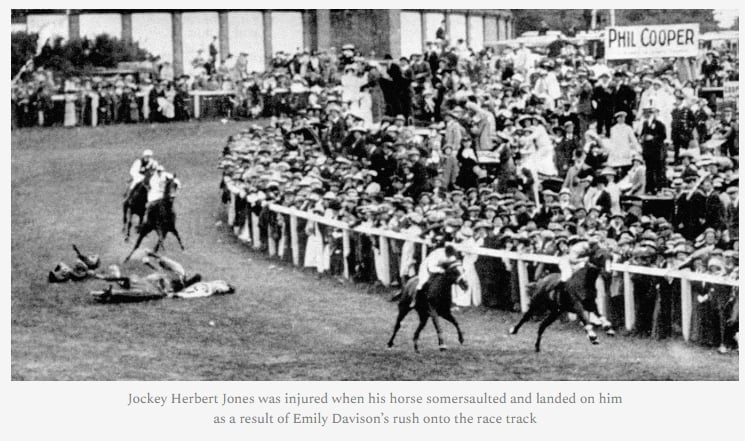
No one is sure whether Davison intended to kill herself or merely to attract public attention by attaching a suffragette scarf or flag to the horse’s bridle. Either way, it was a reckless action. But rather than express regret at Davison’s foolish zeal, suffragette leaders painted her as a wronged heroine, accusing the British government of causing her death. According to Christabel Pankhurst, “The government’s refusal to grant the vote drove her to make her protest” (qtd in The Suffragette Bombers, p. 82).
Davison was not a wronged heroine, killed by the British patriarchy. She was killed by suffragette militancy. She had once been an ambitious and intelligent woman who had taken a degree at the University of London and supported herself as a teacher. She had lived a calm life until she converted, in her mid-30s, to the suffragette cause and had her mind fatally blighted. To this day, suffragettes’ romance with violence is surrounded by a halo of unearned saintliness.
Second Wave Pathologies
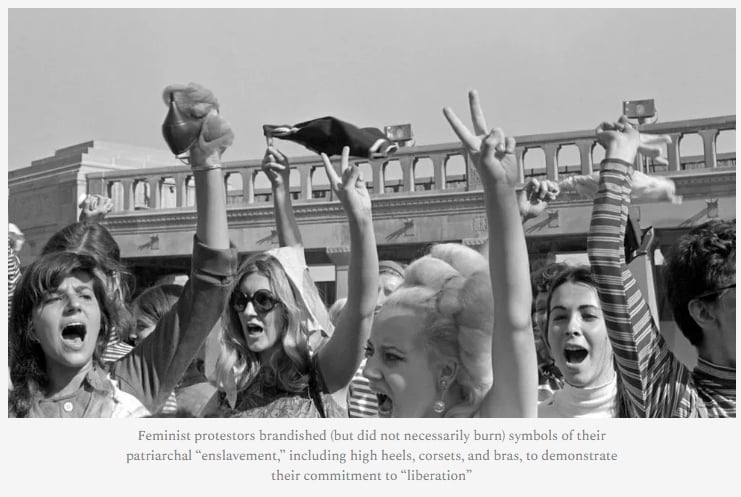
Most feminist advocates did not go so far as to throw bombs, but many of their lives were marked by unhappy rebellion and bitterness. They produced treatises full of bad advice, false histories, and fantastical predictions. Some had genuine insights, but on the whole their words and deeds were morally poisonous, productive of fathomless grievance.
It is now common to search feminists’ life histories for evidence of abuse or deprivation to explain their radical turn, but such an approach is not particularly helpful. Yes, some of these women had unhappy childhoods, experiences of betrayal or violation. Some had not. What the majority of feminists have had in common is an ideology of accusation and hatred that justifies their vengefulness and double standards.
In 2018, American feminist and psychotherapist Phyllis Chesler published a memoir of Second Wave activism, A Politically Incorrect Feminist: Creating a Movement with Bitches, Lunatics, Dykes, Prodigies, Warriors, and Wonder Women. Like Wilma Meikle a century before, she highlighted feminist lunacy in her title, and devoted substantial chapters to detailing the turbulent and chaotic personalities who made up the movement.
Chesler made clear that in the movement she knew, feminist “sisterhood” was an ideal beyond reach, zealously proclaimed and fought over, but rarely achieved. There were “petty jealousies and leaderless group bullying” (p. 183), “ideological disputes” (p. 183), jockeying for “victimhood primacy” (p. 184), accusations, betrayals, back-stabbing, and demands for conformity. She recalls how “mean girls envied and destroyed excellence and talent” while “Feminists who had left the Left brought with them its tactics of intimidation and interrogation” (p. 183).
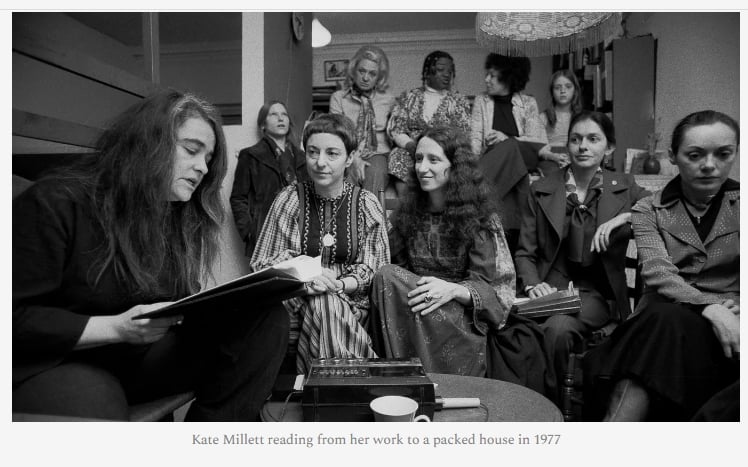
A significant number of the feminist leaders Chesler knew personally had serious mental and emotional difficulties: some had breakdowns; not a few attempted suicide, or spent time in mental asylums. Chesler mentions Shulamith Firestone, Kate Millett, and Andrea Dworkin. Dworkin fought continually with her fellow feminists and styled herself a victim, always under siege by those less pure. On one occasion, furious at two feminist authors with whom she disagreed, she phoned in threats to the bookstore that was hosting them.
Chesler admits that “Many of the most charismatic and original of feminist thinkers were mentally ill” (p. 189), exhibiting behavior that included “nonstop talking, yelling, paranoid accusations, drinking, stealing, [and] pathological lying” (p. 190).
Yet Chesler couldn’t see the bad behavior as a problem of feminism. She explained it as owing to internalized sexism: “When a human being has been diminished by heartless prejudice daily and victimized by sexual, physical, economic, and legal violence, she can become disabled, just as veterans of combat and torture victims can” (p. 188). Here was the convenient excuse for abusive conduct.
After giving more examples of women who acted out and persecuted their colleagues, Chesler elaborated, with an abundance of clichés, her exculpatory theory:
“I can easily name twenty more feminist pioneers who were dear to me and produced extraordinary work but were disadvantaged, wounded by depression or other psychiatric afflictions. Were they depressed by how often they were on the losing end of ideological battles, by the everyday sexism that sapped their vital juices, by having to fight so hard to obtain so little because they were women? Were they at a perpetual disadvantage due to incest, rape, economic insecurity, overwork, or homophobia?” (p. 194).
Chesler stressed that feminist delusions and aggression should ultimately be blamed on the male-dominated world they were fighting against, not on the victim-obsessed ideology they had embraced.
The Victimhood Personality
In a 2020 article for the journal Personality and Individual Differences, a team of American and Israeli researchers outlined the “tendency for interpersonal victimhood,” a recognized personality type that manifests in those who are preoccupied by their own persecution. Such people insist on the centrality of their suffering. They ruminate continually on the wrongs done to them and are incapable of empathy for—and justify revenge on—those they regard as enemies.
The researchers note that it is not necessary for those with victimhood personalities to have experienced actual trauma or injustice. Victimhood is a powerful mindset quite distinct from measurable and documented wrongs.
Professor Mary Daly of Boston College was committed to purveying the mindset. In Gyn/Ecology: The Metaethics of Radical Feminism (1978), she explained, “Every woman who has come to consciousness can recall an almost endless series of oppressive, violating, insulting, assaulting acts against her Self. Every woman is battered by such assaults—is, on a psychic level, a battered woman” (p. 348).
When women did not live up to feminist ideals of fairness and empathy towards other women, Daly alleged, it was because they had so far not been able to “exorcise” “the specters of patriarchal presence,” and had not yet rejected “the pig in the head” (p. 342).
Other feminist leaders, admitting feminists’ abusiveness, made similar excuses.
Author Robin Morgan, in the introduction to her 1978 essay collection Going Too Far: The Personal Chronicle of a Feminist, lamented, in echo of Allen Ginsberg, that she had “watched some of the best minds of my feminist generation go mad with impatience and despair” (p. 13).
She was appalled by the enthusiasm with which feminists went for one another’s throats, regretting “All that fantastic energy going to fight each other instead of our opposition! […] So much false excitement, self-righteousness, and judgmental posturing! Gossip, accusations, counter-accusations, smears—all leapt to, spread, and sometimes believed without the impediment of facts” (p. 13).
These were damning admissions, but Morgan didn’t seriously pursue them.
If many feminist leaders were mentally ill, or at least unwilling or unable to refrain from victim posturing, vengefulness, and fact-free accusations, does this not entirely discredit the movement they created?
Why should anyone take feminist women’s accusations against men and society seriously when it is admitted that their accusations against other women were so frequently baseless or unjust?
The Madwoman in the Feminist Attic
Chesler maintained her ideological faithfulness, insisting that “Feminism isn’t crazy, and feminist ideas aren’t crazy” (p. 189) even if many individual feminists were.
Morgan proposed more feminism to cure feminism’s civil wars and cruelties. “I’ve come to think,” she declared in the above-quoted essay, “that we need a feminist code of ethics, that we need to create a new women’s morality, an antidote of honor against this contagion by male supremacist values” (p. 13).
Women’s attacks on other women, then, were an expression of “male supremacist values,” not a reflection on the women themselves, whom Morgan was sure could concoct a superior “code of ethics.”
This notion became the lynchpin of feminist thought: no matter how often and how catastrophically feminism failed as a blueprint for personal and social liberation, the answer to the failure was always more feminism. Feminist projects failed not because they were feminist but because they weren’t feminist enough.
The many half-admissions and flimsy denials, evasions and self-contradictions would be amusing if not for the serious harm done both to the women themselves, in their eviscerated moral integrity, and to the targets of their delusions and rage: the men, women, and children who fall under their power.
Refusal of moral accountability is one of feminism’s most disturbing features, a fact that feminists themselves have recognized, if perhaps only subconsciously, for over a century. Contrary to what Wilma Meikle hoped in 1917, there is no sane feminism; and it is a mark of the ideology’s power over adherents that even feminists who see feminism’s harms keep insisting on the certainty of its redemption.
First published in the Fiamengo File