Bibi: Loss and Victory
By Sammy Stein
Political turbulence is the curse of Israeli politics. The years 2021 and 2022 were particularly rocky, even by Israeli standards, as they were marked by successive elections, fragile coalitions, and the fall and rise of Israel’s most recognisable political leader. Over these two years, Benjamin Netanyahu moved from defeat to victory, while his rivals briefly held power only to be undone by their own contradictions. To understand how this unfolded requires examining the interplay of political personalities, party strategies and broader national concerns.
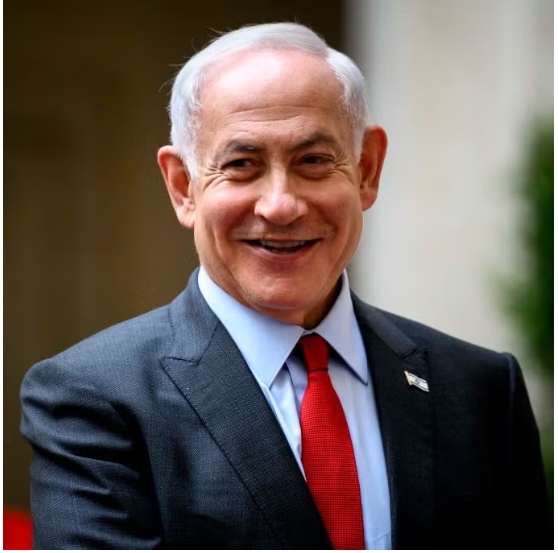 By 2021, Benjamin Netanyahu had already been Israel’s longest-serving Prime Minister. He had steered the country through wars, economic transformation, peace agreements and the COVID-19 pandemic. Yet his political dominance was visibly eroding. Corruption indictments loomed over him and years of relentless campaigning had left sections of the electorate weary of his style. More critically, his once-loyal partners on the right were losing their will to align with him.
In the March 2021 election, Likud once again emerged as the largest party with 30 seats. Yet in Israel’s complex electoral system, winning the most seats is never enough as coalition building is everything. Netanyahu faced two problems. His personal unpopularity among former allies such as Gideon Sa’ar of New Hope and Avigdor Liberman of Yisrael Beiteinu, stopped both from joining his coalition. Also, the arithmetic of the results left him short of a majority even with the ultra-Orthodox. His reliance on the far-right Religious Zionism alliance pushed away centrist partners. The result was deadlock. Netanyahu still commanded a loyal base and led the largest party, but he had become too polarising to form a government. His defeat in 2021 was therefore not a rejection of Likud’s agenda but of Netanyahu as a political leader.
As Netanyahu’s weakness lay in his inability to form alliances, his opponents were able to exploit it ruthlessly. In June 2021, after weeks of tense negotiations, an extraordinary coalition was sworn in. Naftali Bennett, leader of Yamina, and Yair Lapid of Yesh Atid created a power-sharing agreement in which Bennett would serve first as Prime Minister, with Lapid due to succeed him. The coalition was remarkable for its diversity. It included right-wing nationalists, centrists, left-wing parties such as Labour and Meretz and for the first time in Israeli history, an Arab Islamist party, Ra’am. Although these parties had little in common ideologically, they shared one overriding goal to end Netanyahu’s grip on power.
For many Israelis, the sight of bitter rivals uniting against a common adversary was a moment of optimism after years of political deadlock. The coalition symbolised pragmatism and compromise, raising hopes that Israel could move beyond the cycle of elections that had paralysed governance since 2019. Yet this government was born of tactical necessity rather than ideological harmony. Bennett, a religious nationalist, was Prime Minister of a coalition also dependent on Arab Islamists and secular leftists. From the outset, it was doubtful such an arrangement could survive the daily pressures of governance.
The contradictions of the Bennett–Lapid coalition soon became clear. The government struggled over issues of religion and state, settlement expansion and relations with the Palestinians. Arab participation was groundbreaking but fragile. Ra’am’s leader, Mansour Abbas, who was probably the most religious member of the government, sought resources for Arab communities, but balancing this with right-wing demands created constant tension. By mid-2022, defections from Yamina and others eroded the coalition’s slim majority. Key votes were lost and the government became paralysed. Bennett, who had styled himself as a pragmatic leader, was unable to contain the forces pulling his coalition apart. In June 2022, the government collapsed, triggering yet another election which was the fifth in less than four years.
Its downfall was predictable. The coalition had been constructed to block Netanyahu rather than to provide a sustainable governing vision. Once its weakest links began to snap, collapse was inevitable. Netanyahu’s opposition worked methodically to hasten this, magnifying disputes and creating legislative gridlock. A decisive blow came in April 2022, when coalition whip Idit Silman of Yamina resigned after a dispute with Health Minister Nitzan Horowitz over religious tolerance. Further defections left the coalition reliant on opposition goodwill to govern which is an impossible position for any government to find itself in.
The November 2022 election saw Netanyahu return with renewed strength. This time, he succeeded where he had failed the year before by consolidating the right and religious blocs into a disciplined alliance. Likud won 32 seats and together with Shas, United Torah Judaism, and Religious Zionism, Netanyahu commanded a solid 64-seat majority.
Several factors contributed to his comeback. The failure of the Bennett–Lapid government reinforced Netanyahu’s claim that only he could provide stability. Security concerns also loomed large with rising tensions with Hezbollah, rocket attacks from Gaza and Iran’s nuclear ambitions. Netanyahu’s long-standing reputation as a seasoned leader with international stature played strongly in his favour. Most importantly, his campaign was focused and disciplined. By presenting himself not merely as a survivor but as the indispensable guardian of Israel’s security, he rallied his base and persuaded disillusioned voters that the alternatives were not credible.
Another decisive factor was the disunity of the left and centre-left. Meretz failed to cross the electoral threshold, wasting nearly 150,000 votes. Labour, under Merav Michaeli, resisted calls to merge with Meretz by insisting on running alone. The result was a fractured left that weakened the anti-Netanyahu camp. This was a stark contrast to 2021, when tactical unity had been sufficient to unseat Netanyahu. By 2022, partisan pride and miscalculation prevented such unity. Had Meretz and Labour run together, the anti-Netanyahu bloc might have gained additional seats, potentially altering the balance of power. Instead, Netanyahu benefited from their fragmentation, which made his path to victory far easier.
The political drama of 2021–2022 illustrated both the volatility of Israel’s democracy and the resilience of Netanyahu as a political leader. His defeat in 2021 was the result of personal mistrust and coalition fatigue. His rivals briefly capitalised on this by forging an unprecedented alliance, but the contradictions of their government doomed it to collapse.
In 2022, Netanyahu returned by uniting the right, exploiting the failures of his opponents and once again convincing many Israelis those in turbulent times, he was the safest pair of hands. Israeli politics is shaped as much by personalities as by policies and Netanyahu’s centrality to the story is undeniable. For his supporters, his 2022 comeback was a restoration of stability and strength. For his opponents, it was a bitter reminder that removing him from office requires more than tactical unity. It requires a sustainable vision for governing Israel. Until such a vision emerges, even following the October 7 debacle, Netanyahu’s shadow will continue to loom large over Israeli politics.