Half of public think Islam not compatible with British values
More than half of the public think Islam is not compatible with British values, according to a survey.
The YouGov polling also found that four in 10 feel Muslim immigrants have a negative impact on the UK.
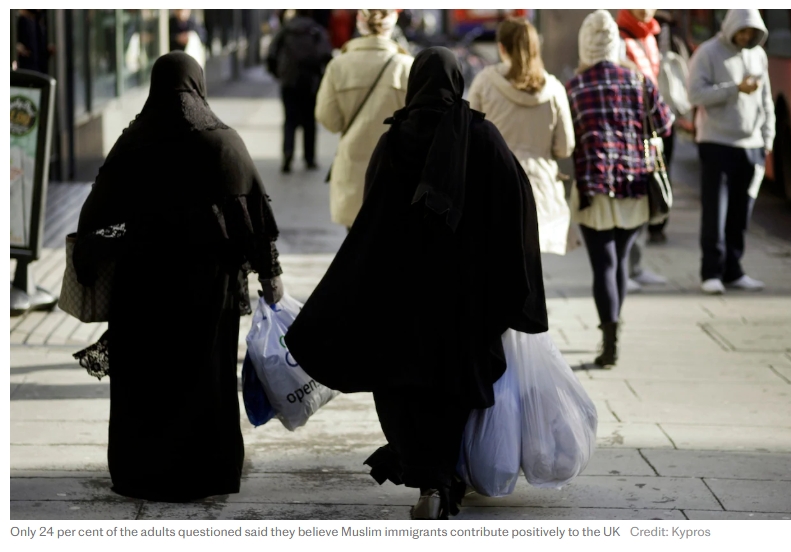 Just under a quarter (24 per cent) of respondents felt Muslim immigrants had a positive impact on the UK, lower than for any of the other religions stated.
Some 53 per cent of those polled said they believed Islam is not compatible with British values, while 25 per cent said it is and 22 per cent said they did not know.
The polling was commissioned by the Ahmadiyya Muslim Community ahead of a gathering for what it described as the UK’s biggest Muslim convention – the Jalsa Salana – this weekend in Hampshire, expected to be attended by 40,000 followers of the faith. The Ahmadiyya Muslim Community is made up of people and their descendants who generally fled Pakistan in the 1980s in the face of religious persecution.
Members said they now often face the same discrimination in the UK – from some Muslims who do not agree with their version of the faith,
Sabah Ahmedi, known as “the young imam” online, said he believes fear among people “stems from a lack of understanding of Islam”. He said: “These findings are deeply worrying, revealing high levels of anti-Muslim sentiment in this country. Personally I believe those concerned understand Islam all to well, and I’m more worried about the percentage who don’t see the danger. Readers of the article below, for example.
He encouraged people to “meet Muslims to see we are not a threat” and urged the media to “play a role as well”.
Islamophobia isn’t just socially acceptable in the UK now – it’s flourishing. How did this happen?
ccording to YouGov, more than half of people do not believe Islam to be compatible with British values. I’m often dispirited by these polls . . . But I can’t remember the last time I was stunned.
This latest poll found that 41% of the British public believe that Muslim immigrants have had a negative impact on the UK. Nearly half (49%) think that Muslim women are pressured into wearing the hijab. And almost a third (31%) think that Islam promotes violence.
This is the first year the community has included the question about the hijab, which strikes its own particularly depressing note. . . But 20 years have passed, during which time we’ve seen Boris Johnson use the burqa in what was condemned as a racist callout to Telegraph readers, and the French experiment with banning full face veils – such as a niqab or burqa – in any public place, a chilling curtailment of, if not technically a human right, then what instinctively feels like any woman’s birthright to wear whatever the hell she pleases. Understanding has deepened, in other words – of the racism that anti-veil rhetoric often disguises, and the fact that to make a judgment about who’s controlling a woman and the extent of her autonomy, you have to know her pretty well. Or at the very least, have met her.
Sayeeda Warsi said in 2011 that Islamophobia was becoming socially acceptable – at the Conservative party conference she said it had “passed the dinner-table test”. The can’t be right, I remember thinking then – she must just be meeting too many Conservatives. Now we’re at the point where it’s not only socially acceptable, but socially dominant.
Never have the effects of Islamophobia been so obvious, or so bleak. To read the domestic news, you would think that no grooming gang had ever contained a non-Muslim. . . It would be functionally impossible to stand up in parliament and justify arms sales to Israel, small boats hysteria and inhumane treatment of asylum seekers, were it not for the groundwork that Islamophobia has laid.