Modernity’s Moral Paralysis
By Theodore Dalrymple
Six years after Jack the Ripper terrified the East End of London, a similar criminal appeared in the south-east of France. His method of murder, of an almost incredible savagery, was the same as Jack the Ripper’s, but his victims were young shepherds and shepherdesses in remote rural areas rather than urban prostitutes, appropriately enough for the less industrialised and more agricultural society that France then was.
The murderer’s name was Joseph Vacher, soon known as Vacher l’éventreur (Vacher the Ripper). He admitted to having killed eleven people, compared to Jack the Ripper’s five, though both are suspected of having killed more, two in the case of Jack, and up to forty in the case of Vacher. Unlike Jack the Ripper, whoever he might have been, Vacher was tried and executed. Whether Vacher was mad, and therefore not responsible for his actions, or whether he merely feigned insanity to escape execution, was hotly debated; but it would be difficult for even the firmest of opponents of the death penalty, on reading accounts of what he did, to feel genuine outrage that he was guillotined.
Vacher was in some ways ahead of his time, a forerunner of twentieth-century criminological thought, in that he blamed everyone for his crimes but himself. He claimed to have been bitten by a mad dog when he was seven or eight years old, and that either this, or the treatment to which he was subjected at the time for those bites, was responsible for the bad and violent character that he had exhibited ever since. He blamed the terrible things he had seen when he was admitted to a lunatic asylum, and he blamed another such asylum for having released him as cured just before he commenced his killing spree. He blamed his crimes on the fact that even prostitutes refused his advances, largely as a result of a foul-smelling, purulent discharge from his ear from a gunshot wound dating from when he tried to shoot a young woman to death who refused to marry him, and then turned the gun on himself. But most of all, he blamed society. After his arrest, he said to the examining magistrate:
It is society that is to blame. Can’t you see that there are nothing but injustices and inequalities in this low world?
He even posed as some kind of humanitarian, insofar as he claimed that he killed his victims quickly, so that their suffering did not last long—unlike other types of suffering. Society, according to Vacher, was a hypocrite.
I suspect that Jack the Ripper, if he had been caught, might have said much the same.
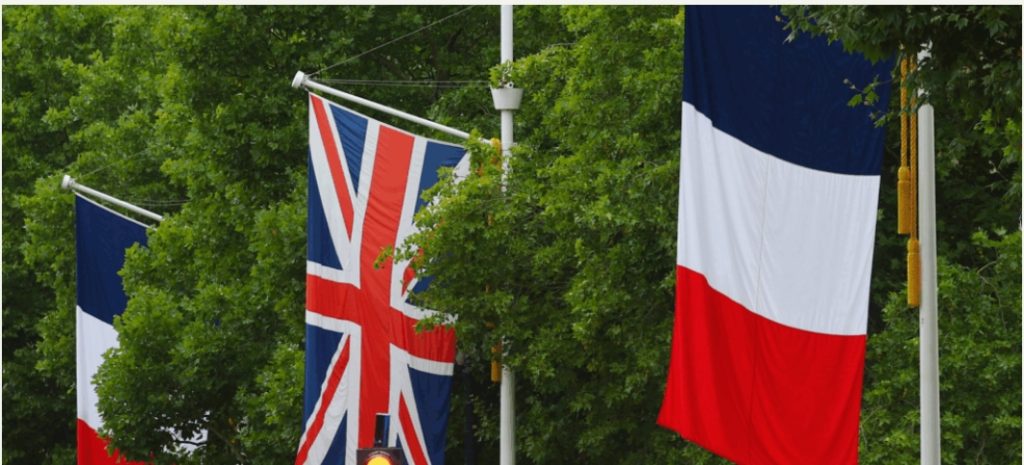
The stories of Jack the Ripper and Vacher l’éventreur underline the fact that two countries, Britain and France, that think of themselves as very different, as chalk and cheese or oil and water, often follow similar trajectories in certain, often important, respects. Apart from the fact that it is in either French or in English, an editorial that appears in one of the conservative newspapers, Le Figaro or the Daily Telegraph, about the current state of its respective country, is almost exactly the same and completely interchangeable: for the very good reason that in many respects, the two countries are in the same predicament or situation, in which reform is both absolutely essential and absolutely impossible.
The formation of a truly legitimate government is now almost inconceivable in both countries. The problem is not electoral fraud, or procedures that are not adhered to; the problem is that the political systems of both countries work and result in legitimacy only if there are two predominant parties, which is no longer the case. Both the president of France and the prime minister of Britain, though elected according to the rules, were unpopular even before they began to rule, being the choice of only a small minority of the population.
In the absence of two predominant parties, France’s two-stage election almost guarantees a majority will be dissatisfied, not merely with a government’s performance, but with its very existence in the first place.
Britain’s first-past-the-post system has resulted in a near-monolithic parliament of almost dictatorial proportions, although only 20 percent of the eligible voters, and 34 percent of those who actually cast their vote, voted for the winning party. It took 34 times as many votes to elect a member of parliament for the Reform Party as for the Labour Party—not a situation from which a government can honestly proclaim its democratic rather than its legal legitimacy.
In France, with its two-stage election, the second stage being a choice of the two (of many) candidates who received the most votes in the first stage, the winner can be deeply unpopular, though slightly less unpopular than the candidate he defeats. In the absence of two predominant parties, this almost guarantees a majority will be dissatisfied, not merely with a government’s performance, but with its very existence in the first place. There is a return to the instability of the Third and Fourth Republics.
There are similar social problems in both countries. Both have witnessed a precipitous decline in the level of education and a rise in crime and insecurity. Both exhibit deep anxiety about the presence and increase of Islamist separatism and the fear that unscrupulous electoral considerations will lead to continuous surrender to Islamist demands (the majority of young Muslims in both countries think that they would rather live under sharia law). There is in both countries the fear of a loss of national identity brought about by mass immigration.
The economic outlook for both countries is poor. Before long, it is likely that both countries will have to borrow merely to be able to service their debt (and they already spend more on interest than on education), a spiral that can only lead downwards. The problem for any reformer is that a high proportion of the population has been rendered dependent for its subsistence on the government, and the maintenance of its standard of living absorbs the majority of government expenditure. This means that a serious reduction of government expenditure is politically almost impossible. When the French and British prime ministers made even feeble proposals in that direction, they were stymied by their own parliaments. Once again, it would seem that “society” is to blame for the situation; the injustices of this world never cease.
France is in a slightly better condition than Britain. Its level of government debt is higher, but there is considerably more to show for the expenditure in the way of infrastructure and services. French labour is 25 percent more efficient than British, so the quality of life is better in France than in Britain (the French have to work fewer hours to produce the same). It also helps that France is 2 and a half times the size of Britain, which means that it is easier to cut oneself off from the problems besetting the country.
Are the similarities more important than the differences? Importance is not a natural quality, and so no definitive answer can be given. But that there are similarities, often deeply alarming ones, cannot be denied—though denial is a specialty of the political class of both countries.
First published in Law and Liberty