The Cowichan Aboriginal Title Ruling Raises More Questions Than It Answers
By Conrad Black
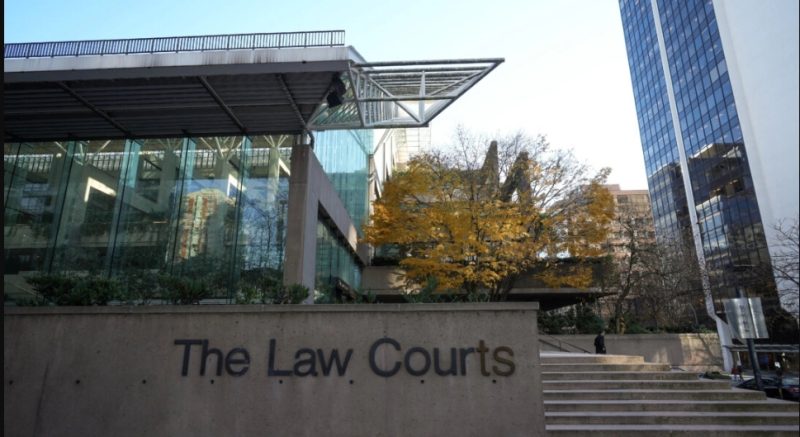
The Cowichan Tribes versus Canada case, recently decided by the B.C. Supreme Court, has been continuing for 11 years, including 513 days of trial hearings, and is already probably the longest trial in Canadian history and one of the most complicated. It has already been appealed and will presumably end in the Supreme Court of Canada.
Immense controversy has been provoked by the court’s recognition of the superiority in some cases of aboriginal title over the fee simple ownership of subsequent parties. The facts are specialized, and so fears that the native peoples in general could make a successful claim for ownership of the entire country, with the approximately 95 percent of non-aboriginal owners mere tenants of the innumerable tribes, bands, and clans among the First Nations, are exaggerated.
The Cowichan Tribes sought a declaration of their title over approximately 1,846 acres (but were granted around 750 acres) and recognition of their right to fish in part of the Fraser River. The contested area was owned in fee simple by the Crown in right of Canada, the Vancouver Fraser Port Authority, and the city of Richmond, as well as a number of private parties. The Cowichan’s claim was opposed not only by the federal, provincial, and municipal governments, but by the Musqueam Indian Band and the Tsawwassen First Nation.
The court established that for aboriginal title to prevail, the Cowichan must prove sufficient occupation of the land claimed, and to have had clear title at the time of assertion of European sovereignty, and continuity of occupation where present occupation is relied on as the basis of the claim. This rules out the initial nightmare scenario bandied about over this case that the vast majority of Canadian indigenous, who were nomads moving endlessly from place to place, could effectively simply announce the pre-eminence of the eminent domain due to them as the original occupants of Canada to reclaim the entire country. Nothing in this judgment opens the window on such a scenario.
The case is complicated by the Cowichan’s claim for submerged lands beneath the surface of the Fraser River. This is an argument that has never been addressed before. The background is that in 1853, Gov. James Douglas told the Cowichan Tribes that Queen Victoria had given him a special mandate to treat them justly and humanely as long as they remained at peace with the European settlers. The presiding judge, on behalf of the B.C. Supreme Court, determined that this undertaking committed the honour of the Crown.
Douglas appropriated settlement lands to the Cowichan from the Crown’s land disposition with the intention that they would eventually become Indian reserves. They were never established as such, however, and eventually were sold to settlers without the knowledge or consent of the Cowichan Tribes. Because occupied First Nations settlements were effectively appropriated, the judge found that most of the Crown grants involved were made without statutory authority and that they contravened legislation that limited the province’s ability to sell the lands without first dealing with the Cowichan’s interest. Again, these are very specific circumstances that would be rarely replicated elsewhere in the country.
The competition between the legitimacy of fee simple and aboriginal title, according to this judgment, would have to be examined on a case-by-case basis. In 1997, the Supreme Court of Canada decided, in what is awkwardly known as the Delgamuukw case, that B.C. did not have the jurisdiction to extinguish aboriginal rights granted since Confederation. The judge adopted this position and declared that aboriginal title is not inferior to other claims. She acknowledged the potential confusion, but stated that uncertainty should not lead to an automatic assertion of the superiority of fee simple interests over previous aboriginal title. This entailed rejecting the claim that the Cowichan Tribes’ aboriginal title was automatically displaced by the Crown grant of fee simple, albeit to the Crown itself in most cases.
The judge proclaimed that aboriginal title continued to be a burden on the land, creating an ambiguity that she then purported to resolve for the most part in favour of the native claims of the Cowichan. She did state that aboriginal and fee simple titles can coexist, as the fee simple is a derivative of Crown titles. Her judgment was a process of two steps forward and one step back, as at each stage when she purported to clarify a priority title, she emphasized that the alternative was not extinguished.
The ultimate judgment was that an aboriginal title grounded in precolonial occupation and constitutionally protected is a senior interest to a fee simple title derived from Crown grants; it is effectively a straight question of seniority in implicit Crown legitimization. Even at this, the justice determined that aboriginal title does not necessarily prevail over a fee simple title, and the priority between them must be addressed within what is imprecisely described as the broader framework of “reconciliation.” This presumably means applying equity to law in each case individually. The judge then laboured the national duty to attempt to conciliate the different interests in good faith “consistent with the honour of the Crown.” This is the ultimate velleity—the exultation of unspecific virtue: let’s always try to do the right thing.
The basis of the judgment was that the governments of Canada and British Columbia, as well as the Vancouver Fraser Port Authority, failed in their duty to consult the Cowichan Tribes over infringing activities on their title lands and failed to demonstrate that these infringements met the Crown’s fiduciary obligations in respect of the originally recognized aboriginal title. The judge also found, somewhat arbitrarily, that Richmond’s equitable defences of bona fide acquisition for value were not adequately proved.
Although the maximum imagined inconvenience of this judgment, if it is affirmed by higher courts, can safely be set aside, the judge’s finding that aboriginal title will generally prevail over simple titles leaves ample room for the dispossession of long-standing, good-faith property owners, evidently including the Crown itself. Assumedly, victims would have some recourse against the Crown as defective vendors opposite the Crown as grantor of original aboriginal title.
This was a specious and incomplete verdict that created confusion and, with the airy unworldliness often encountered on the Canadian bench, substituted platitudes about reconciliation for practical resolution of the problem. The chief takeaway is that we need better judges—ones who are less intoxicated by the absurdly magnified powers inadvertently conferred upon them by the Charter of Rights.
First published in the Epoch Times