The Wirral, part two; How the western half lives
By William Corden
For this little exercise, go to “The Wirral ” on google maps satellite view, here it is for an easy click
If you look from the southeast from Ellesmere Port to the North east in Wallasey you’ll see that it is heavily urbanized with not much left in the way of greenspace (although on the ground it feels like there’s a lot more.)
Ellesmere Port is where the big ships enter the canal to take, these days, container loads of Chinese crap up to Manchester for further distribution to the peasantry. I don’t actually know what’s produced in Manchester these days but it sure ain’t cotton.
About half way up the inlet is the Tranmere oil terminus where the behemoth tankers unload the crude for refining at Stanlow refinery.
All along that side of the peninsula (the Mersey side) is industrialised; ship builders, car manufacturers , chemical plants, soap factories etc, there’s even a nuclear enrichment facility smack dab in the middle. They all pollute the Mersey but nowhere near as bad is it, as it used to be.
In fact you can now swim in the waters of Leasowe Bay, which was a life threatening adventure in my day. We saw two young ladies going in for a bitterly cold swim while we were walking along the embankment brrrr.
Houses had been built cheaply, quickly and densely to accommodate the thousand upon thousands of workers who flooded in as a result of the industrial revolution.
In the early 1950’s they were predominantly squalid two up-two down terraces with outside toilets, but most of them have been bulldozed and replaced with fairly nice new homes and housing projects.
There’s still lots of crime and drug problems with the projects but they’re a symptom of the jobless economy and, to be fair, they are slowly bringing it under control.
The Wirral council is doing what most councils do, and that usually means closing community centres and swimming pools while they overstaff and overpay their Social Worker departments and Management Cadre. but I digress.
To go back to the map you’ll see that the western half of the peninsula is endless farmland and greenery all the way to the River Dee. The M53 motorway cuts through the middle and you can safely say that its a dividing line between the wage slave and the super rich.
On this privileged side of the land resides the landed gentry, wealth handed down over generations from the aristocracy and the Industrial Barons from way back in the late 1700s. Lord Leverhulme’s estate takes up a pretty good portion and would account for even more had he not sold one of the major parks ( Arrowe Park) to the council in 1926, ceding about 750 acres to the great unwashed ( about the size of Central Park in New York.).
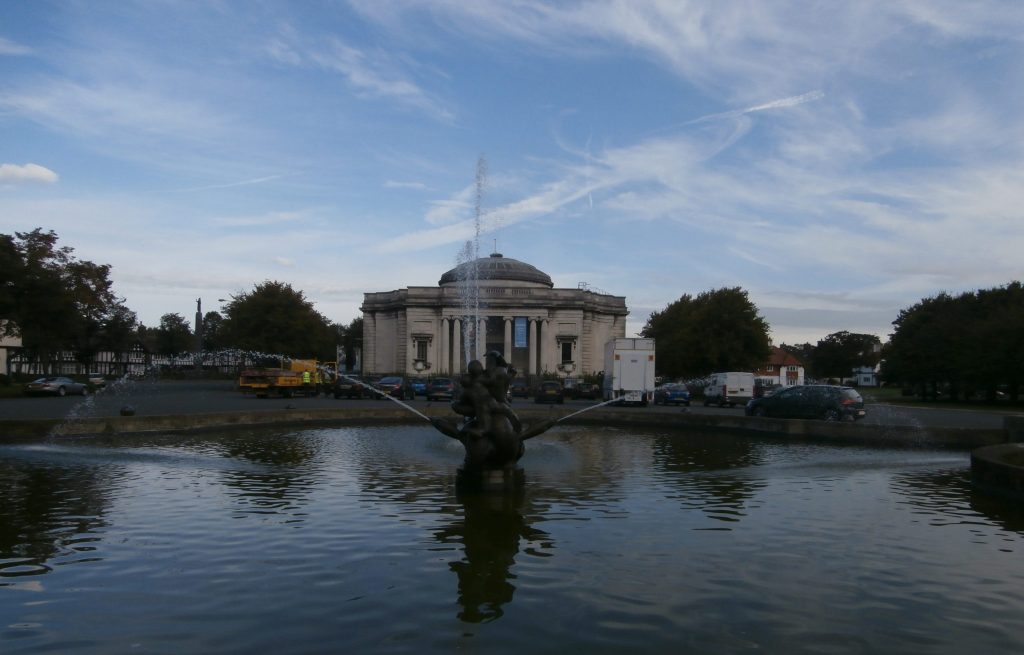
Above – model village of Port Sunlight
Now the poor heirs have to make do with only 11,000 acres or 11 times the size of our Stanley Park here in Vancouver.
So, you can see that there was a lot of money running through the till back then. Unfettered profiteering in the new world allowed for the construction of countless mansions, many with a view over to Liverpool where they could keep an eye on their trading ships filled with cotton one way and slaves the other.
Now, I didn’t know any of this history when I was growing up in the northeast side of Birkenhead, all we knew was survival and all we knew of the Deeside of things was that it was posh and wealthy. I was happy in my ignorance until a week or two ago when I visited my sister in Birkenhead and took a few lengthy walks with my brother-in-law who is an absolute font of knowledge for the western half.
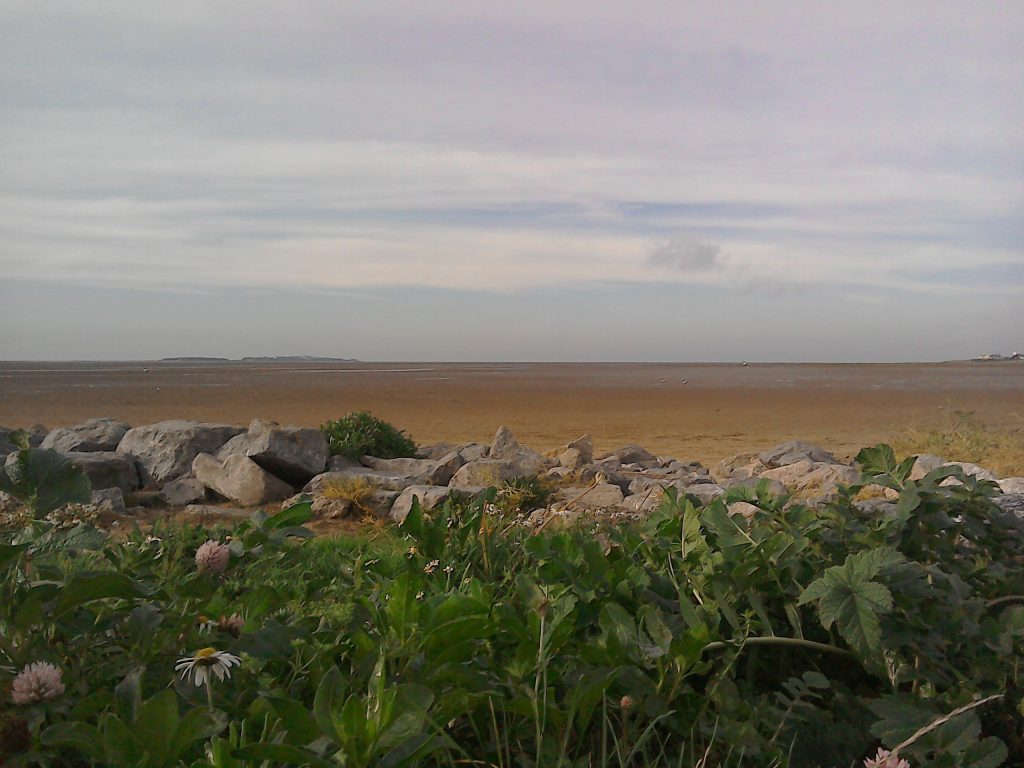
Above, West Kirby beach, Dee estuary and Hilbre island beyond
The western half I’m talking about consists mainly of West Kirby (where Selwyn Lloyd had a mansion) Hoylake (home of the Royal Liverpool Golf Club and the place Cynthia Lennon came from… in fact I visited the Church where she and John Lennon were married)) Heswall and Parkgate (where Paul McCartney has a home).
By way of background my brother in law was born in West Kirby but he’s not one of the wealth stock. He’s a lovely guy and has an easy smile.
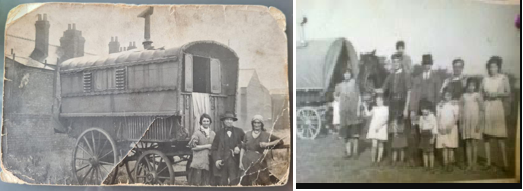
In fact his Mom was a gypsy and they grew up in a caravan leading an itinerant lifestyle throughout Cheshire and North Wales although predominantly in West Kirby, where they were allowed to squat on farmland in exchange for labour services they provided.
His grandma had , can you believe it, THIRTEEN KIDS.
Here’s a photo I found of them
His youth then, was a story of finding short cuts through the farmer’s fields (usually by way of public footpaths which the gentry was forced to allow) and he knew every secret pathway and hideout that there was.
Vacations don’t usually get this good but every day we went hiking along trails that took us as close to the mansions as you could get without going in. We found hidden meadows and watercourses that I had no clue existed and yet he had spent his childhood fishing at them.
The mansions signified that the Lord of the Manor was inconceivably rich, all of the estates were protected by miles and miles of sandstone brick walls and we actually visited the quarry where most of them came from, it must have been an enormous operation in its day!
The Lord of the Manor owned all of the wildlife, the produce, the minerals, the trees and, in effect, all of the serfs on his estate. He also had the dubious right to be the first one nail any of the farmer’s daughters who came to his attention.
If you poached or stole, you could get your hand chopped off.
No wonder there was a revolution.
I don’t know who owns these places now as successive governments have made them almost impossibly expensive to keep and maintain but it’s a funny thing . . . you can tell just by looking at the residents in the area that they are a cut above the hoi polloi.
Their hair is more stylish, their skin is fresher, their clothes have a much better cut and they drive fancier cars. Quite a few of the superstar soccer players have homes in the area because most of the expensive properties give you a privacy that’s not easily obtained elsewhere.
But the people are still wonderfully polite when you bump into them on the footpaths and it’s easy to fall into a conversation with just about anybody you meet. That’s the calling card of the entire Wirral
None of this I knew until two weeks ago, despite growing up not a stone’s throw away from it all.
Where to put all of this information into this crowded old brain of mine?