Woman Complains of Post-Traumatic Stress after Setting Male Friend on Fire
By Janice Fiamengo
An Australian woman, Corbie Jean Walpole, who burned 23-year-old Jake Loader almost to death because she didn’t like his teasing, is appealing the sentence she received in May. That sentence was for seven years and six months, with a non-parole minimum of four years and six months.
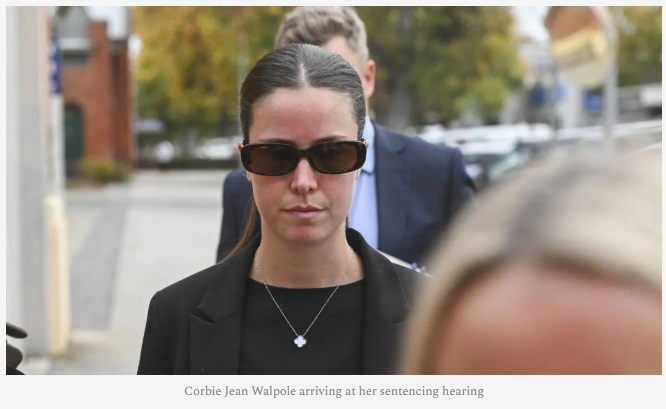
Is it possible that a different judge will give Walpole something closer to the 25-year maximum?
News reports about Walpole’s sentence have not shown pictures of her victim’s burns. Jake Loader suffered third-degree burns to 55% of his body over his back, chest, arms, legs, and face, and had to undergo 10 surgeries after Corbie Walpole deliberately set him on fire.
After eight days in an induced coma and months in hospital, he is now unable to be in the sun and has trouble regulating his body temperature because his sweat glands were burned off in the attack. He can no longer carry on his work of mustering cattle in the Queensland outback. His financial future is uncertain, and his emotional as well as physical suffering have been immense.
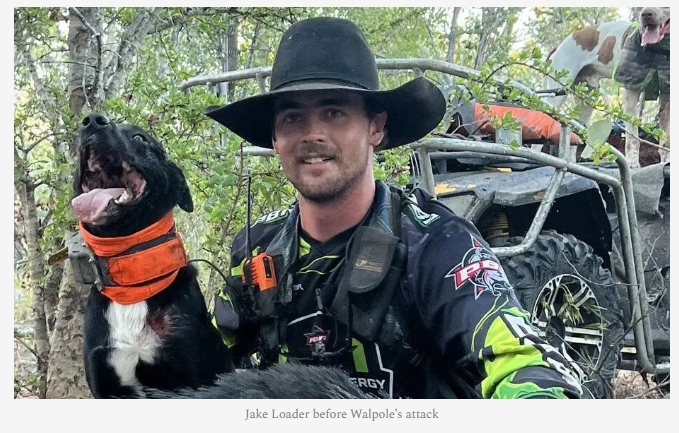
What did Loader do that caused Walpole to pour a can of petrol over him and set it ablaze? He told her, while partying with friends at her house, that she would be better off in the kitchen making scones than drinking and drugging with the boys.
Because of that allegedly “misogynistic” remark (a silly term used by nearly every news site covering the story), Walpole was overcome with fury, which she described at her pre-sentencing hearing as feminine helplessness. “I was feeling overwhelmed by his presence and I didn’t know what to do,” she is reported to have said in explanation of her assault. “He was antagonizing me. He told me to go to the kitchen where I belong because I’m a girl. I gave it back to him and called him a misogynist.”
Here is a woman well tutored in womanly rage. Feminists have lectured us for years that men’s words directed at women can rightly be understood as “violence,” especially when they purportedly humiliate, objectify, or sexualize. In self-defense, then, Walpole poured a jerry can of fuel over her erstwhile friend and held her cigarette lighter near; when he challenged her to carry out her threat, she lit the inferno.
She then watched as other friends dragged the screaming man into a swimming pool to extinguish the flames. “What the f— have I done, he just wouldn’t stop,” she reportedly said at the time, still engaged in self-justification. If Loader’s fate had been in her hands, the man would almost certainly be dead, and Walpole would still be playing the victim, claiming, as she did at her hearing, that she had meant no harm.
Now she hopes to avoid further prison time. A hearing date for her appeal to shorten her sentence has not yet been announced.
**
We’ve long known that women are given significantly lighter sentences than men for criminal wrongdoing. Law professor Sonja Starr published a definitive study in 2012, which found “large gender gaps favoring women” in such punishments. Women’s sentences are on average more than 60% less severe than men’s for the same types of crimes. As Starr demonstrated, women were also “significantly likelier to avoid charges and convictions entirely, and twice as likely to avoid incarceration if convicted.”
Our society’s far greater empathy for women causes female wrongdoers to be viewed as victims rather than perpetrators, more deserving of compassion, less responsible for bad deeds, less of a danger to society, and more likely to be rehabilitated than men.
Starr codified what many had already observed: that women expect to get away with deviant behavior, and often do.
In his 1913 book The Fraud of Feminism, British barrister Ernest Belfort Bax told how frequently juries and judges responded with leniency to women’s transgressions. In the case of murder, he alleged that “The evidence even to secure conviction in the case of a woman must be many times stronger than that which would suffice to hang a man. Should a conviction be obtained, the death penalty, though pronounced, is not given effect to, the female prisoner being almost invariably reprieved. In most cases where there is a conviction at all, it is for manslaughter and not for murder, when a light or almost nominal sentence is passed” (p. 37).
Bax described the women themselves as full of defiance and self-exoneration: “Female criminals are surrounded by a halo of injured innocence,” he quipped, “convinced of the maliciousness of [their] accusers” and of their own lack of responsibility (p. 51-52).
**
Walpole’s case perfectly fits the patterns Bax identified, in which violent women justify themselves and are rewarded with sympathy. At Walpole’s pre-sentencing hearing, inordinate emphasis was placed on her mental suffering, almost as if she were one of the innocent injured. She produced plenty of tears in court, portraying herself as dealing with depression at the time of her attack, answering “I wasn’t thinking” to many of the questions, and claiming she didn’t know that a cigarette lighter would be enough to set a petrol-soaked man ablaze.
Her legal representative went so far as to argue that jail time was inappropriate because she had been “provoked” by her old friend and because she was remorseful (though it’s difficult to find evidence that pity for her victim came near to competing with pity for herself).
The judge heard that Walpole continues to relive the horror of what happened, having developed post-traumatic stress disorder and an aversion to the smell of gasoline. She is allegedly haunted by the bewildered look on her victim’s face when he got out of the pool covered in burns.
(In fact, Walpole sent a tone-deaf text message to Loader’s girlfriend on the afternoon after the “mistake,” in which she seemed hardly worried about what had happened, saying she had “made a really stupid decision and I own that” and hoping Jake was “okay.”)
Judge Jennifer English did not accept the defense argument for a non-custodial sentence, but she did, ludicrously, characterize Walpole as one of those harmed in the tragedy, saying “This is a tragic case in so many ways for the victim and his family and for the offender and her family.” She also expressed her sorrow at having to incarcerate Walpole. “It’s never easy to send a young person, particularly a young woman, to jail,” she stated regretfully before giving Walpole a sentence that would make her eligible for parole by November of 2029.
Why was the judge reluctant? Walpole is a vicious adult who was unable or unwilling to control a murderous temper in response to teasing. Her statements of alleged remorse did not sound particularly contrite. “I find it very hard to believe the injuries that were caused were from my doing,” she is quoted as saying. She doesn’t seem to have recognized her responsibility for the attack or to have moved past shock and self-sorrow into genuine empathy and repentance.
It is also significant that Walpole’s horrific act (why wasn’t she charged with attempted murder?) is not her first assault. In 2021, news reports note, she was convicted of assault causing bodily harm in an attack on a (female) bouncer. Overall, she is a woman prone to violence and perhaps encouraged in it by the softness she has thus far encountered.
It goes without saying that if a man had hideously attacked a young woman, “provoked” by nothing more than cheeky jibes, absolutely no one would be interested in hearing about his PTSD, and the judge would not have had any second thoughts or regrets about putting him behind bars. His violence would have been widely reported—probably as a misogynistic hate crime (why was Walpole not charged with one? Stupid question)—and he would have been given significant prison time, especially if he had had a previous conviction for assault.
Feminist advocates would have seized on the story as evidence of the random terror men unleash on women to keep them in a state of fear. About Walpole’s violence, of course, feminists have nothing to say. No advocacy group is outraged at her lenient sentence or keen to express support for her victim. Some feminists have even used the case as a springboard to highlight sexual violence against women by sarcastically commenting that Jake Loader must have “asked” for the violence (get it?).
I hope that Jake Loader will sue Walpole in civil court over the financial and other hardship he and his family have suffered as a result of her brutality.
In an ideal world, the judge who openly admitted that she prefers not to put young women in prison should also be sanctioned, having impugned her own capacity for fairness.
For decades, feminist advocates have ignored or even encouraged female violence against men and boys by pretending that only men are violent and that a world with fewer men would be peaceful and just.
In a 1982 anthology of writings on women and non-violence (Reweaving the Web of Life), radical lesbian-feminist academic Sally Miller Gearhart recommended a gradual reduction in men’s numbers, through new reproductive technologies, to 10% of the human population (“The Future—If There Is One—Is Female,” p. 280), firm in her belief that with men reduced to a small minority, women would live together in harmony. Philosophy Professor Mary Daly, asked about Gearhart’s notion in interview, said it was “not a bad idea at all,” alleging that a “decontamination” of the earth would necessarily involve a “drastic reduction of the population of males.”
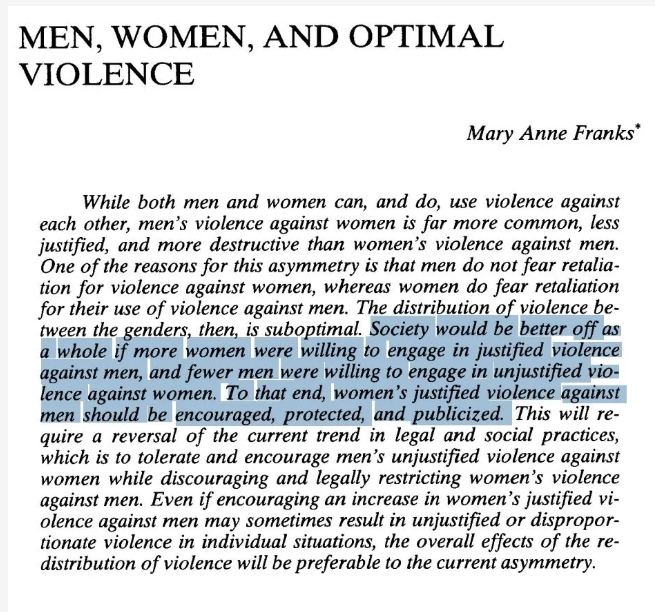
Recently, Professor of Law Mary Anne Franks has explicitly called for an increase in women’s (“justified”) violence against men in order to counteract an alleged gender imbalance. Law enforcement agencies, courts, civil authorities, and media should all support women’s quest for “optimal violence” (read the article if you can stomach it). Both the hypocritical double standards and the bloodlust are on vivid display.
These women are not twisted oddballs, reviled outcasts, penning their hate-filled screeds in dank basements on the margins of society. These are university professors and thought leaders, esteemed individuals holding prestigious positions that enable them to influence thousands. Mary Daly taught her unashamed female supremacism for over three decades at Boston College. Mary Anne Franks is a conference speaker and published academic. As feminist ideologues, they are not only allowed to argue for the literal worthlessness of male lives, but are paid to do so.
What do feminists want: recognition of women’s equal or superior moral capacity, or special exemptions when they break the law? Both, of course.
As Ernest Belfort Bax noted, “While what we have termed Political Feminism vehemently asserts its favorite dogma, the intellectual and moral equality of the sexes—that the woman is as good as the man if not better—Sentimental Feminism as vehemently seeks to exonerate every female criminal, and protests against any punishment being meted out to her approaching in severity that which would be awarded a man in a similar case” (The Fraud of Feminism, p. 46).
No one should be surprised at the result: violent women as self-absorbed and remorseless as Corbie Jean Walpole, who think the sickening gift of a four and a half year minimum sentence is too harsh and who fully expect, undoubtedly with an attorney’s blessing and perhaps some ego-stroking by family and friends, to have it reduced. Perhaps she imagines a future book deal and lecture tour about how valiantly she turned her life around following her (“tragic”) prank-gone-wrong. Perhaps she will discover a history of sexual and other abuse to explain her frenzied attack and secure her legal innocence.
It is to be hoped that Australian men will save themselves from her future temper tantrums by giving her a wide berth.
First published in the Fiamengo Files