By Walter E. Block and Oded J.K. Faran (May 2026)
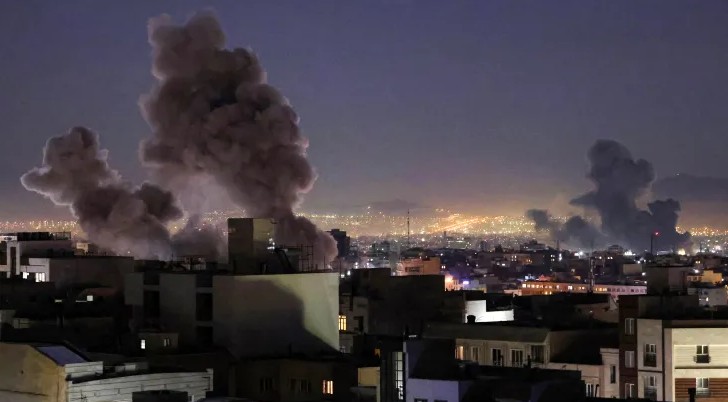
The US strikes on Iran have ignited a predictable storm of criticism from the usual quarters. Democrats have reacted with vitriol, while a smattering of libertarians and isolationist Republicans have joined in from the other flank. But when one examines the actual record of Iran’s conduct, the legal framework that governs presidential war powers, and the humanitarian catastrophe unfolding inside Iran, the critics’ case collapses under its own weight.
Start with the political opposition. Sen. Chuck Schumer (D-N.Y.) declared that “President Trump’s fitful cycles of lashing out and risking wider conflict are not a viable strategy.” One wonders whether Mr. Schumer applied such exacting standards to Bill Clinton’s unilateral bombing of Yugoslavia in 1999 or Barack Obama’s kinetic action in Libya in 2011, both undertaken without a formal declaration of war and both sold to the public on far shakier humanitarian grounds than those now at stake in Iran. Sen. Ruben Gallego (D-Ariz.) argued that “we can support the democracy movement and the Iranian people without sending our troops to die.” A noble sentiment. But the overwhelming toll of casualties in this operation has fallen on the Iranian regime’s military apparatus, not American soldiers. Rep. Jim Himes (D-Conn.) called the action “a war of choice with no strategic endgame.” Regime change, it seems, is not a sufficiently clear endgame for the House Intelligence Committee’s top Democrat.
The cross-partisan criticism is more interesting, if no more persuasive. Rep. Thomas Massie (R-Ky.) called the strikes “acts of war unauthorized by Congress,” and Sen. Rand Paul (R-Ky.) announced his opposition to “another presidential war.” Even the Libertarian Party weighed in, condemning the operation as yielding “no discernible benefit to the American people.” These are familiar arguments, and they deserve a fair hearing. But they are ultimately unconvincing.
The Constitutional and Legal Framework
It is perfectly true that under Article I, Section 8 of the US Constitution, the power to declare war belongs to Congress, not the President. The last formal declaration of war was issued in 1942, against Bulgaria, Hungary, and Romania. Every major military engagement since then, from Korea to Vietnam to the Gulf War to the interventions in Somalia, Bosnia, Afghanistan, and Iraq, has proceeded without one. Critics who invoke congressional war powers exclusively in connection with President Trump are engaging in selective memory rather than constitutional principle.
More to the point: the War Powers Resolution of 1973, whatever its constitutional ambiguities, has de facto governed presidential military authority for over half a century. That act requires the President to notify Congress within 48 hours of committing forces to hostilities, and bars the deployment from exceeding 60 days without congressional authorization. The notification requirement had not expired at the time of the first strikes. The 60-day clock has scarcely begun to run. Criticisms of procedural illegality, at this stage, are at best premature and at worst disingenuous.
One should also note that the Authorization for Use of Military Force (AUMF) enacted in the wake of September 11, 2001 has been used to justify military operations across the broader Middle East for more than two decades. Presidents of both parties have invoked it expansively. Those who raise the AUMF now as a cudgel against Trump would do well to remember their silence when it was stretched to cover operations in Syria, Yemen, and beyond.
The Nuclear Threat Was Real and Imminent
The strategic heart of the case for action is the Iranian nuclear program, and here the facts are damning. By May 2025, according to the International Atomic Energy Agency, Iran had accumulated over 8,400 kilograms of enriched uranium, with 408 kilograms enriched to 60 percent purity, just a technical step away from weapons-grade material. The IAEA explicitly noted that Iran was “the only non-nuclear-weapon state in the world” producing and stockpiling uranium at this level, calling the situation “a serious concern.” The Defense Intelligence Agency assessed that Iran could produce enough weapons-grade highly enriched uranium for a single nuclear device in “probably less than one week.” Trump’s own envoy, Steve Witkoff, told Fox News days before the February strikes that Iran was “probably a week away from having industrial-grade bomb-making material.”
The diplomatic record further weakens the critics’ position. Washington held five rounds of talks with Tehran in 2025 and offered Iran a place in a regional nuclear consortium that would have supplied fuel for civilian reactors while removing indigenous enrichment capability. Tehran rejected it. On June 12, 2025, the IAEA Board of Governors found Iran in formal noncompliance with its nuclear obligations for the first time in twenty years, whereupon Tehran responded by announcing it would open a third enrichment facility. Iran’s rulers had been offered every reasonable offramp. They declined each one.
Those who insist that threats of “Death to America” are merely rhetorical and not to be taken seriously should consider who is making them. These are not fringe voices or street-level agitators. Supreme Leader Ali Khamenei has openly endorsed the slogan, and Iranian parliamentarians chanted it on the floor of the Majles. The defense minister threatened to strike US bases across the region if conflict came. Iran’s foreign minister, following the January 2026 massacre of thousands of protesters, warned that Iran would fire “with everything we have” if attacked again. This is a government that translates rhetoric into action: it funds and arms the Houthis who have struck commercial shipping throughout the Red Sea, it backs Hezbollah’s missile arsenal. The less we say about Hamas and October 7, 2023, the better. Further, this country supplied the drones that Russia used against Ukrainian cities. The pattern of behavior, not merely the words, establishes a credible and serious threat.
The Humanitarian Case Is Overwhelming
The critics focus almost entirely on procedural and strategic objections, rarely dwelling on what the Iranian regime has done to its own citizens. The record is one of systematic murder. In the Mahsa Amini protests of 2022, at least 551 protesters were killed by security forces. In 2019, between 300 and 1,500 demonstrators were gunned down in a matter of days. When nationwide protests erupted again in December 2025 and January 2026, the scale of the slaughter was unprecedented in the Islamic Republic’s history. The regime imposed a near-total internet blackout, then deployed the Islamic Revolutionary Guard Corps alongside foreign Shia militias imported from the “Axis of Resistance”. Amnesty International called January 2026 “the deadliest period of repression by the Iranian authorities in decades of research.” The Iranian government’s own admitted death toll was 3,117 civilians and security personnel. Independent estimates, including those cited by Iran International and corroborated by an IRGC intelligence document, placed the figure at over 12,000, with some credible estimates reaching 36,500. President Trump acknowledged 32,000 deaths during his State of the Union address. Reports from medical personnel documented wounded protesters being shot in the head inside hospitals, and bodies returned to families with signs of torture.
President Trump was explicit: the military operation is directed not at the Iranian people but at the regime that has been murdering them. The distinction matters morally and strategically. The people of Iran have repeatedly, at enormous personal cost, demonstrated their desire to be free of clerical rule. Regime change in Tehran is not an act of imperialism imposed upon an unwilling population. For tens of millions of Iranians, it is the only exit from a system that shoots unarmed protesters in the street.
The Alliance with Israel Is a Strategic Asset, Not a Liability
Critics who invoke the old Washingtonian warning against entangling alliances misapply a piece of advice that was tailored to the geopolitical circumstances of 1796, not 2026. The United States has treaty-bound allies on every inhabited continent. The question is not whether to have allies but which alliances serve American interests. Israel, by any objective measure, is among the most valuable.
According to Global Firepower’s 2023 index, Israel maintains the fourth most powerful military on earth relative to its size and technological sophistication. Unlike many NATO members whom Vice President Vance has publicly called to account over defense spending, Israel meets and exceeds its own defense obligations without placing financial burdens on the American taxpayer. Israel’s comparative advantage lies not in troop numbers but in high-technology intelligence, cybersecurity, missile defense, and precision-strike capability. The Arrow and Iron Dome systems that have protected Israeli civilians from thousands of Iranian and Hezbollah missiles represent collaborative achievements with direct application to American defense. The IDF has operated alongside US forces in this campaign not as a client dependent on American protection but as a full partner bringing capabilities that Washington values and cannot easily replicate.
A Minor Caveat
Has Mr. Trump made any misstep in this affair? One. He used the word “war.” The legal and political complications that word introduces are unnecessary. The operation is a targeted military action in pursuit of defined objectives: denying Iran a nuclear weapon and removing a government that has been massacring its own citizens. Those objectives are achievable, and they do not require the rhetorical and legislative weight of a formal declaration of war to justify. But apart from that verbal miscalculation, the President has acted with strategic clarity, humanitarian purpose, and a sober appreciation of the threat that a nuclear-armed Islamic Republic would pose to the United States, to Israel, and to the broader stability of the Middle East. The critics, for all their noise, have failed to reckon with any of those considerations.
Right on, Donald.
Sources
ABC News. “Sen. Rand Paul warns bombing Iran ‘not the answer’ to protests against regime.”
Al Jazeera. “US lawmakers condemn Trump for ‘unconstitutional’ attack on Iran.” June 22, 2025.
Libertarian National Committee. Statement by LNC Chair Steven Nekhaila on U.S./Israel joint military operations in Iran (“Operation Epic Fury”). March 1, 2026. [Statement archived at lp.org]
Libertarian Party of Texas. “Resolution Condemning the Unconstitutional U.S. Act of War Against Iran and Reaffirming Libertarian Non-Interventionism.” February 2026.
Politico. “Iran strikes: Congress, lawmakers react to Trump.” February 28, 2026.
Rep. Thomas Massie (@RepThomasMassie). Statement on Iran strikes as “acts of war unauthorized by Congress.” X (Twitter), February 28, 2026.
MSN/Reuters. “Trump’s Iran gamble has begun and he looks increasingly desperate.” February 28, 2026.
Staff, ToI. “Israel ranks among 10 most powerful countries in annual list; 4th strongest military.” Times of Israel, January 2023.
The Guardian. “Iran attack: US political reaction.” February 28, 2026.
US Constitution, Article I, Section 8.
War Powers Resolution of 1973, 50 U.S.C. §§ 1541–1548.
Amnesty International and Human Rights Watch. “Iran: Deaths and Injuries Rise Amid Authorities’ Renewed Cycle of Protest Bloodshed.” January 8, 2026.
Amnesty International. “What Happened at the Protests in Iran?” January 26, 2026.
Bulletin of the Atomic Scientists. “A Simple Timeline of Iran’s Nuclear Program.” Updated July 2025.
Center for Arms Control and Non-Proliferation. “Fact Sheet: The Iran Deal, Then and Now.” Updated June 2025.
Congressional Research Service. “Iran and Nuclear Weapons Production.” IF12106.
Council on Foreign Relations. “What Are Iran’s Nuclear and Missile Capabilities?” Updated February 6, 2026.
Critical Threats Project / AEI-ISW. “Iran Update, January 29, 2026.”
House of Commons Library. “Israel-Iran 2025: Developments in Iran’s Nuclear Programme and Military Action.” CBP-10284, March 1, 2026.
Human Rights Watch. “Iran: Human Rights Situation Spirals Deeper into Crisis.” World Report 2026, February 4, 2026.
IAEA Board of Governors. “Verification and Monitoring in the Islamic Republic of Iran.” GOV/2025/24, May 31, 2025.
INSS (Institute for National Security Studies). “The Deadlock Surrounding Iran’s Nuclear Program.” INSS Insight No. 2069, December 9, 2025.
Iran International. “Khamenei Says Iranians Have Courage to Chant ‘Death to America.’” February 2, 2025.
Iran International. “Iran Protest Crackdown Toll May Top 20,000, UN Rapporteur Says.” January 22, 2026.
Iran International. “Over 36,500 Killed in Iran’s Deadliest Massacre.” January 25, 2026.
Iran Watch / Wisconsin Project. “Iran’s Nuclear Milestones.”
Iran Watch / Wisconsin Project. “Iran’s Nuclear Timetable: The Weapon Potential.” Updated May 2025.
NPR. “Deaths from Iran’s Crackdown on Protests Pass 2,500.” January 14, 2026.
PBS NewsHour. “A Timeline of Tensions over Iran’s Nuclear Program as Talks with U.S. Approach.” February 2026.
PBS NewsHour. “Iran Says 3,117 Killed in Recent Protests.” January 21, 2026.
Table of Contents
Oded J. K. Faran holds LL.B. and LL.M. degrees in law from Sha’arei Mishpat College in Israel. He is the General Director of Faran & Co. International Translations Ltd. and lives in Tbilisi, Georgia.
Walter E. Block is Harold E. Wirth Endowed Chair and Professor of Economics, College of Business, Loyola University New Orleans, and senior fellow at the Mises Institute. He earned his PhD in economics at Columbia University in 1972. He has taught at Rutgers, SUNY Stony Brook, Baruch CUNY, Holy Cross and the University of Central Arkansas. He is the author of more than 600 refereed articles in professional journals, three dozen books, and thousands of op eds (including the New York Times, the Wall Street Journal and numerous others). He lectures widely on college campuses, delivers seminars around the world and appears regularly on television and radio shows. He is the Schlarbaum Laureate, Mises Institute, 2011; and has won the Loyola University Research Award (2005, 2008) and the Mises Institute’s Rothbard Medal of Freedom, 2005; and the Dux Academicus award, Loyola University, 2007. Prof. Block counts among his friends Ron Paul and Murray Rothbard. He was converted to libertarianism by Ayn Rand. Block is old enough to have played chess with Friedrich Hayek and once met Ludwig von Mises, and shook his hand. Block has never washed that hand since. So, if you shake his hand (it’s pretty dirty, but what the heck) you channel Mises.
Follow NER on Twitter @NERIconoclast






One Response
What rules of conflict are ‘legal’ in case of the massive home invasion by Hamas of Israel?
Hamas violated all existing lsws in their muderous iñcursion.
What treatment are they now due?