by Larry McCloskey (December 2025)
I’m nostalgic, especially about Christmas. I realize that nostalgia can distort memory, the efficacy being the lack of nostalgia others might feel about shared experience. With six siblings it can happen that a familial memory shared decades later evokes seven different responses. It isn’t just that there is potential for exaggeration, it can happen that embellishment enters into the realm of fiction. At least that is what I tell my six narrative rivals.
Still, we need memories, shared memories, to give us meaning. Mindfulness is important, but we also need a past in order to have context, to know who we are. We need the prospect of a future to give us hope. Sure, let’s stay in the present, but equally so, let’s not deny that our lives are book-ended between a past and future, unfashionable as that concept may be.
Including our parents, we were a large brood living cheek by jowl in a bungalow of approximately 1000 square feet. Unlike Macauley Culkin in “Home Alone,” the concept of having one’s own space, or experiencing holidays alone, did not exist. I don’t remember feeling that I wanted to be home alone. Home was home precisely for being shared.
What I do remember is people—friends, cousins, uncles, aunts—casually dropping in throughout the Christmas holidays into the new year. I remember searching the well- worn Eaton’s, Simpson Sears, and Hudson’s Bay Christmas catalogues weeks before the big day, without expectation that items pondered and discussed might grace our Christmas tree. I remember that buying, setting up and decorating the Christmas tree was a thrill, even if the same feeling was not necessarily shared by Dad. We, wee ones hovered on the periphery, sprang into action if needed, and tried to regulate enthusiastic outbursts if not. If Dad was occasionally harsh, he was greatly outnumbered, such that enthusiasm ruled the day. Mom’s placid good nature mitigated peace without saying a word.
Even though I faked learning the Latin required to be an altar boy, I managed to join their ranks. We were told it was a privilege to serve 7:30 a.m. weekday mass with our parish priest or, with greater privilege, Monseigneur Bambrick. At least that was Dad’s dictate. Same for serving 7 a.m. mass at the cloistered convent near St. George’s church. The convent was a beautiful, medieval-looking stone building, which in Canada can mean it is less than 100 years old. Breathing in cold winter air, walking to the sound of winter boots crunching on snow, and seeing the outline of the stone edifice against the blackened sky, was a portrait in fear for a ten-year-old boy. During mass, silent silhouettes moved across a bamboo screen separating nuns from priest and altar boy, mysterious and frightful. Exiting convent darkness into clear morning light was a revelation and reprieve from privilege. Then as now whenever I hear the word “privilege,” I think its opposite.
Monseigneur Bambrick was severe, was very upset at this newfangled development in the 1960’s Catholic Church called mixed marriages. As a measure of change, these disparaged unions were nothing more than a Catholic and a baptized Protestant marrying in a Catholic Church. Despite the requirement that future children be raised Catholic, Monseigneur Bambrick ranted, and we altar boys cowered. Luckily for me, my mostly fake Latin mutterings went unnoticed.
Still, my fraudulent altar boy qualifications qualified me to stay up for midnight mass, and that was a perennial Christmas highlight. Christmas Eve was exciting, with even adults in an upbeat mood (no doubt assisted by rye and coke), while we kids anticipated the late night to follow. Mom made us lie down in the evening, where we joked and tickled our way through an hour that never resulted in sleep.
The church was standing room only, with a rumor that some people standing did not want a seat and—most scandalous—only half-attended church at Christmas. We found that scandal oddly comforting.
We had to be at the church early to dress in our altar boy digs, after which we gazed out at people filling the pews. When I was maybe 11, I was plucked from the choir I did not want to join, and thrust into singing solo. Concerts were bad enough, but one year I was coerced into singing solo at Midnight mass. Most distressing, I was to lead the procession of priests and altar boys that snaked its way through the crowd, up and down aisles of the church. Part of my lead role was to carry the baby Jesus on a pillow, and place the plastic replica into the manger at the end of the procession. Problem was, balancing and not dropping the baby Jesus required I not look up, which made way-finding difficult for procession leading. Head bent, I sang the refrain from ‘Oh Come All Ye Faithful,’ managed to get through it, and was soon on the verge of forgetting about it, when one of my brothers said no one could hear me. I died a thousand deaths, and knew that Sister Mary Claire would tell me she was not pleased in the new year.
We had a family tradition after midnight mass that even topped the pinnacle of midnight mass. It was my dad’s innovation—which in itself was rare and precious—and although we always felt it was a natural Christmas tradition, in retrospect, it stands out as a bit odd.
After midnight mass, we drove all the way downtown to a Chinese restaurant for takeout food. We were excited but, once again, we had to curb our enthusiasm because dad was not a talker, and we didn’t want to do anything to compromise the Chinese food “tradition.” In our minds anything two years running became a valued tradition to be lobbied and fought for. We had our standards, and had yet to be exposed to the throw-away mentality of modernity.
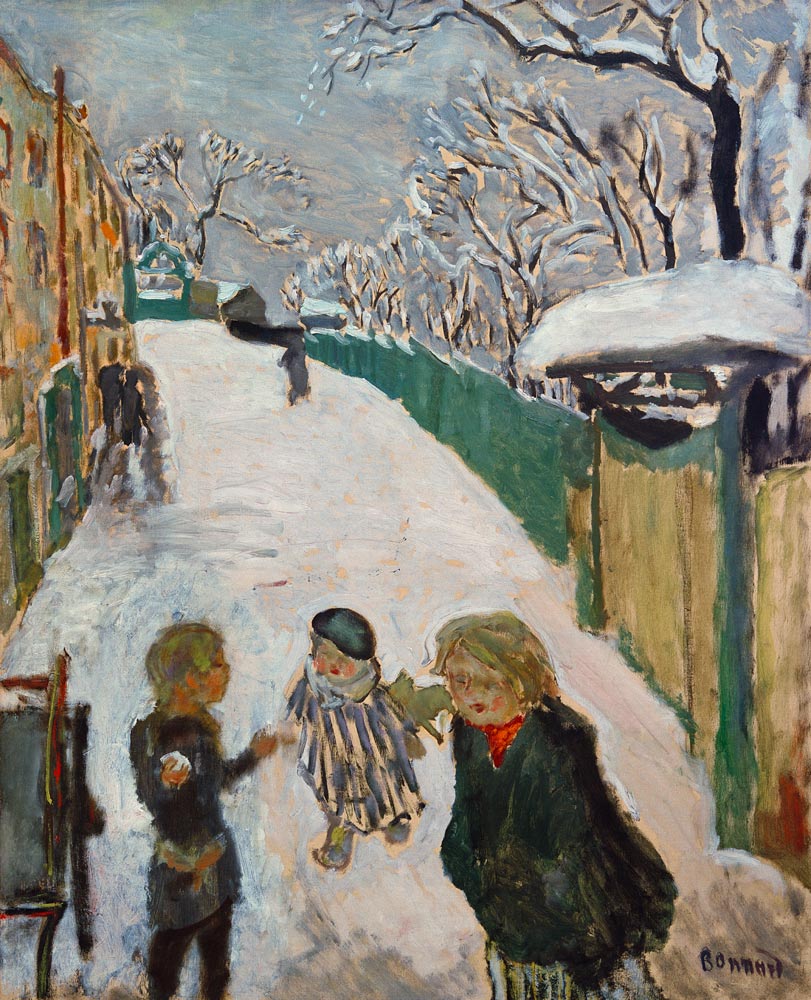
I remember driving along snowy streets without any other cars in sight, without any sound in the universe, just two or maybe three boys in the back seat wondering what Dad was thinking. I wonder still these 45 years after his early death.
I came to some understanding of Dad decades after his death; and strangely, profoundly, perhaps surreptitiously, I realize somewhere in the great beyond, he may understand me better than I understand myself. Quantum physics lends itself to a scientific explanation of life and of the universe that is quite different than our understanding as lived. Which, if true—and it is—lends itself to a strong argument that the physical world has little reality, again contrary to general understanding, belief, and lived experience. Which may leave consciousness as the most real property in the universe, which is hair’s breath away from concluding that transcendence or to use a very unpopular word, “God,” is the most real aspect of our lives despite our pervasive angst and resistance.
These were not my thoughts eating egg rolls at 3 a.m. on Christmas morning. Exhausted, but never admitting to being the least bit sleepy, we went to bed happy, waking up four hours later to a house of excitement. Anticipation was the currency of Christmas, a reality that opening presents could not match. Which explains why we did not sweat a comparison between extensive Christmas catalogue scrutiny and the scarcity of gifts received. It was never about presents —there are advantages to scarcity—disappointment was always about time, of slipping past the demarcation of anticipation, to Christmas being over.
Christmas evening my parents visited friends and relatives, and a melancholy mood displaced the excitement and longing for Christmas of previous weeks. Before bed we experienced a reprieve from Christmas ending with the traditional showing of Bing Crosby’s White Christmas on our black and white television. As the film ended with everyone singing “White Christmas” at the fictitious Inn in fictitious Pine Tree, Vermont, Christmas melancholy became imprinted for later recall as a stylized, present-day version of nostalgia. In life we are least able to hold onto what matters most, which begs the question, how do we cope? My nostalgia affliction has a history.
My Christmas recollections are not exceptional, may be difficult for people to relate to, particularly those of a younger age. For many, the magic persists, but for many more we haven’t sufficient faith for Christmas to raise us up as it once did. For all the gains of modernity, what is missing most and hardly missed, is belonging. Then again, I may be hopelessly naive.
Stripped of its magic, Christmas is increasingly regarded as a relic from our naive, unprogressive past. Worse, modernity by-passes naive faith in God while genuflecting to the altar of AI, to rule, to achieve consciousness, to act as a technological proxy for God. Perhaps Nietzsche was wrong. God did not die; he just went into slumber mode until we could figure a way to resurrect him into digital life.
Recent polling indicates Millennials prefer Halloween over Christmas by a slight margin, and in Britain it is the clear favorite. Why believe the naïveté of the nativity when you can marinate in the fear of video game horrors? It raises a serious question about meaning. In his famous 1973 book, The Denial of Death, Ernest Becker shows that humans, as the only species with foreknowledge of death, go to extraordinary lengths to deny death’s inevitability.
Halloween, like horror movies and video games, allow for the pretense of alleviation from fear by embracing the very thing that keeps us awake at night. Denial of real while role playing its malevolent shadow, does not create resilient mental health.
For Becker, the psychological route to resilience coincides with an essential premise of faith; that is, to admit to and embrace transcendence. Becker comes to this conclusion based on the empirical evidence in psychology, and not as an adherent of blind faith in God. If belief in God leaves some uncertainty, if anxiety over AI creates great uncertainty, certain knowledge of death leaves us hopeless and alone. Life without some uncertainty is not possible; life without possibility of an afterlife is to die, with certainty, twice.
There is no mystery to death as certain end. If there is no afterlife, we are merely cells that live and die, no more mysterious and tragic than autumn leaves swirling in November winds. And, if we believe this, why the crushing sense of loss over our eminent death as well as for everyone we have ever loved? Is it possible our, call it instinct or fear-based impulse, exists for a reason? Could it be—human-centric that I am—we humanoids are more than swirling November leaves?
Moderns’ loss of faith exists in direct proportion to excessive faith in our perceptions, technologies, ourselves. Primitive peoples achieved wisdom by learning what they didn’t know, while understanding that much can never be known. We negate the possibility of wisdom for being so smart, so knowing, for concluding all can be known.
Nostalgia for childhood Christmas is born of continued wonderment for the bounty of what this life has to offer. Uncertainty is excitement, not knowing anticipates discovery, but our tolerance for both is diminishing even as hubris leaves us hopeless.
Modernity makes it easy to be fearful, cynical, to lose faith. To my everlasting regret, my mother as the harbinger of faith, had seven children who did not share her version or conviction. In retrospect, everything she ever believed turned out to be true, so why doubt her version of faith?
Each Christmas—long after my parents are dead and sibling dispersed—I gratefully allow myself to be pulled back into a childhood version of Christmas. Having children and grandchildren helps to conjure the immature adult within. (Mature adults think I wear immaturity permanently, and wish I could conjure an unlikely mature version from within). I don’t question this regression, don’t know and don’t want to know why it works for fear that knowing more will end the state of unknowing that is the magic. Turns out, Santa Claus is real.
Table of Contents
Larry McCloskey has had eight books published, six young adult as well as two recent non-fiction books. Lament for Spilt Porter and Inarticulate Speech of the Heart (2018 & 2020 respectively) won national Word Guild awards. Inarticulate won best Canadian manuscript in 2020 and recently won a second Word Guild Award as a published work. He recently retired as Director of the Paul Menton Centre for Students with Disabilities, Carleton University. Since then, he has written a satirical novel entitled The University of Lost Causes (Castle Quay Books, June, 2024), and has qualified as a Social Work Psychotherapist. He lives in Canada with his three daughters, two dogs, and last, but far from least, one wife. His website is larrymccloskeywriter.com.
Follow NER on Twitter @NERIconoclast







4 Responses
A very enjoyable, often humorous article, about the very real nostagia and sparks of magic that Christmas brings!
Merry Christmas!
Good get, Larry, from another altar veteran. I fell asleep at my first and last midnight mass, up front as they say. I didn’t get excommunicated from the church, but I was struck from the roles of those who got a free trip to Coney island every summer. Bronx Catholicism is a tough row to hoe. Cheers for the new year.
Ha! As you know the Jesuits said give me the boy until 12 and he is mine for life — of course that later earned sinister connotation with the scandals of last decade.
And things have to be pretty bad to feel nostalgic for that world—but I do and I suspect in a way you do too