by Petr Chylek (January 2026)
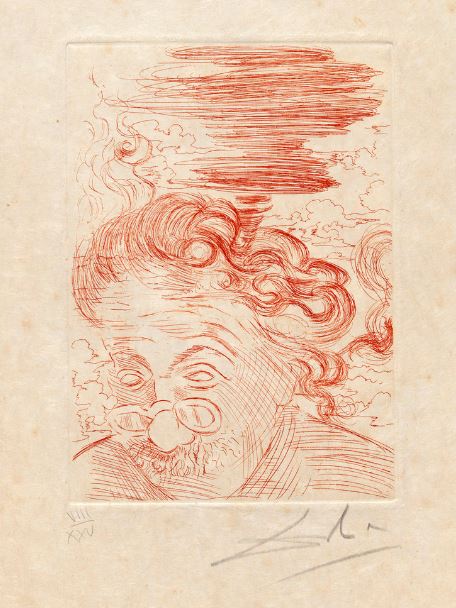
In 1929, Rabbi Herbert Goldstein asked Einstein a question: “Do you believe in God?” Albert Einstein (1879-1955) responded[1]: “I believe in Spinoza’s God who reveals Himself in the orderly harmony of what exists, not in a God who concerns Himself with the fates and actions of human beings.” Many religious followers interpreted this answer as indicating that Einstein believed in God. To understand Einstein’s response, one must understand the meaning of Spinoza’s God.
Baruch Spinoza (1632-1677) was a Jewish philosopher living in Amsterdam. At a young age, he was excommunicated from the Jewish community for his views on religion and God, which were deemed heretical. Spinoza did not believe in a God who punishes or rewards, to whom people pray, and who responds to their prayers. Instead, as Spinoza said[2], he believed in a God whose wisdom is reflected in the beauty and harmony of nature and the universe. After his excommunication, Spinoza spent his life in isolation, making a living as a lens maker.
Einstein clarified his religious views in 1954, about a year before he died. Eric Gutkind (1877-1965) was a German-born writer and philosopher who lived in Israel. In 1953, he sent his book[3] Choose Life: The Biblical Call to Revolt to Einstein. After several reminders from a friend, Einstein eventually read at least part of the book. In his reply to Gutkind, known as the God Letter, Einstein briefly but clearly expressed his opinions on God, religion, the scriptures, and the selective nature of Jews.
The word God is for me nothing more than the expression and product of human weaknesses, the Bible a collection of honorable but still primitive legends which are nevertheless pretty childish. No interpretation, no matter how subtle, can change this for me.
The Torah is traditionally interpreted on four levels. However, the literal interpretation, at the simplest level, serves as the foundation for all readers. He continued:
For me, the Jewish religion, like all other religions, is an incarnation of the most childish superstition. And the Jewish people to whom I gladly belong, and whose mentality I have a deep affinity for, have no different quality for me than all other people. As far as my experience goes, they are also no better than other human groups, although they are protected from the worst cancers by a lack of power. Otherwise, I cannot see anything “chosen” about them. In general, I find it painful that you claim a privileged position and try to defend it by two walls of pride, an external one as a man and an internal one as a Jew. With such walls, we can only attain a certain self-deception, but our moral efforts are not furthered by them. On the contrary.
Einstein described himself as “a deeply religious unbeliever.” He clearly rejects the idea of a personal God who watches over people. He dismisses the notion of a God who listens to individuals, rewards obedience, and punishes disobedience. For Einstein, God’s wisdom is reflected in the beauty of the laws of physics and other natural laws that govern the universe. The claim of a privileged position leads to self-deception. Einstein’s claim that Jews are protected from the worst cancers by a ‘lack of power’ is probably no longer accurate today.
Although Einstein was sympathetic to vegetarianism for a long time, he became a vegetarian only toward the end of his life. He wrote:
Besides agreeing with the aims of vegetarianism for aesthetic and moral reasons, it is my view that a vegetarian manner of living by its purely physical effect on the human temperament would most beneficially influence the lot of mankind.
…
Nothing will benefit human health and increase the chances for survival of life on Earth as much as the evolution to a vegetarian diet.
Einstein believed that “a purely physical effect of a non-meat diet on human temperament would reduce human violence, both as individuals and in wars between nations. His perspective on a vegetarian diet was consistent with that of Mahatma Gandhi (1869-1948) and Rabbi Kook (1865-1935), the first Chief Rabbi of Palestine.
Albert Einstein’s life wasn’t always smooth or happy. In 1896, he applied to the ETH[4] in Zurich. Although he did well in mathematics and physics, he failed the admissions tests in other subjects and was asked to reapply the following year. The following year, he was admitted to the ETH, where he enrolled in the four-year diploma program for teaching mathematics and physics.
The group of students in that program included five other males and one female, Serbian, Mileva Marich. Einstein became friendly with Mileva; he wrote that he enjoyed studying with her more than reading books alone. This put him in a dangerous situation, and Mileva became pregnant. She returned to her parents’ house in 1901 and gave birth to a daughter. What happened to the daughter is unclear; knowledgeable people write that she either died or was put up for adoption.
At European universities, attendance at lectures was not mandatory. Students were required only to pass the final exam. Since Einstein skipped many lectures, most professors did not know him personally. As a result, after graduating in 1900 and seeking a teaching position, he had difficulty finding professors who knew him well enough to write a strong letter of recommendation. For two years after earning his degree from ETH, he was unable to secure employment. He believed this was due to a less-than-strong recommendation he received from some professors.
Finally, a friend’s father helped him secure a job as an examiner of patent applications at the Swiss Patent Office in Bern. After that, despite his parents’ opposition, he married Mileva in 1903.
The year 1905 is often regarded as pivotal for Einstein. Apparently, he did not waste the years spent unemployed. It appears that his period of unemployment was a blessing. Also, a fresh new marriage to Mileva contributed to Einstein’s peace and happiness. In 1905, four of Einstein’s fundamental papers were published. Papers on the photoelectric effect, Brownian motion, the special theory of relativity, and the one showing that energy and mass are related by E=mc2 as a consequence of the special theory of relativity. As a result of his publications, Einstein obtained a temporary position at the University of Zurich, followed by an appointment at Charles University in Prague, and finally a permanent position at the University of Berlin.
Einstein’s marriage to Mileva was unhappy. In his correspondence, he expressed regret for missing the opportunity to have a joyful family. In 1912, he found another love in his cousin Elsa, separated from Mileva in 1914, and divorced in 1919. In the same year, he married his cousin, Elsa. As part of his divorce from Mileva, he promised that, if he won the Nobel Prize, the money would be left to Mileva to support their two children. A few years later, Einstein was awarded the Nobel Prize in Physics (1921) for his work on the photoelectric effect, not for the general theory of relativity, as he expected.
The most significant development in physics, quantum mechanics, occurred in the 1920s and 1930s. The main contributors to this movement included Max Planck, Erwin Schrödinger, Niels Bohr, Paul Dirac, and Werner Heisenberg. Einstein never fully accepted quantum mechanics, which is statistical in nature, and claimed that “God does not play dice.” It is ironic that, in opposing quantum mechanics, Einstein discovered what is now called quantum entanglement[5] and used it as an argument against it.
In 1935, Einstein, Podolsky, and Rosen published a paper[6] showing that in the case of entangled particles, particles that were part of one system and are now separated, measurement on one particle determines the state of the other particle, regardless of how far apart they are. Einstein considered this incorrect and argued that the quantum theory is incomplete. Three physicists, Aspect, Clauser, and Zeilin, were awarded the Nobel Prize in Physics in 2022 for experimental verification of the existence of entangled states.
In 1933, Einstein moved to the US in response to the political situation in Germany. He accepted a position at the Institute for Advanced Study at Princeton University with no teaching duties.
During the last few decades of his life, Einstein spent his time trying to derive a theory that would combine general relativity and electromagnetic forces. He did not succeed, and similarly, other physicists have failed to do so to this day.
In 1952, Israel’s ambassador Abba Eban, speaking on behalf of Prime Minister David Ben-Gurion, offered Einstein the position of President of Israel. Einstein was honored but could not accept. The peace and freedom to work as he pleased at Princeton University apparently outweighed a busy schedule of ceremonial duties.
Einstein died in 1955, about a year after writing the God Letter. He suffered a rupture of an abdominal aortic aneurysm. He declined surgery, saying:
“I want to go when I want … I have done my share; it is time to go.”
The next morning at Princeton Hospital, Einstein passed away. Many articles have speculated about why Einstein declined medical treatment and died[7].
Einstein was one of the greatest scientists of the 20th century. Although he spent considerable time and energy disputing quantum physics, his dissent led him to the discovery of quantum entanglement, which he called “a spooky action at a distance.”
It seems that Einstein did not believe in God as represented by major Western religions. Did God believe in Einstein? We don’t know. What is sure is that God granted him peace (SHALOM) in 1905 (special theory of relativity published), but not in 1915 (general theory of relativity published).
Notes
[1] New York Times, April 25, 1929, Page 30
[2] M. Angel, Maimonides, Spinoza and Us, Jewish Lights Publishing, Woodstock, Vermont, 2010
[3] E. Gutkind: Choose Life: The Biblical Call to Revolt, Andesite Press, 2005
[4] ETH stands for the German translation of the Swiss Institute of Technology
[5] R. Horodecki, et al., Quantum Entanglement, Reviews of Modern Physics 81 (2), 2006
[6] Einstein, Podolsky, and Rosen, Can Quantum-Mechanical Description of Physical Reality Be Considered Complete? Physical Review 47 (10), 1935
[7] My mother was 88 when she was diagnosed with cancer of the esophagus. When a doctor explained to her all the possible surgeries, her answer was: “I have been here long enough, it is time to go”. It seems that one need not be a great physicist or philosopher to decide they have had enough
Table of Contents
Petr Chylek is a theoretical physicist. He was a professor of physics and atmospheric science at several US and Canadian universities. He has authored over 150 publications in scientific journals. He thanks Lily A. Chylek for her support of his writing.
Follow NER on Twitter @NERIconoclast








4 Responses
Umm… a couple of points of disagreement if I may. Firstly, it should be obvious that the question of whether God exists is completely separate from the question of whether human understanding of His purposes in creating us is adequate. These are two totally different questions. The former may well be true while the latter may not be true. That Einstein stuck to the latter position is by no means a proof that he did not hold the former position too, at the very same time.
As to Einstein’s role in quantum mechanics. Far be it from me to argue the point of history of science with a physics professor, but from what I read it was Einstein who turned the idea of quanta from Planck’s purely theoretical proposal — or rather, a mathematical gimmick used to describe black-body radiation — to an actual physical cause behind photoelectric effect, thus contributing to quantum theory not just as a skeptic, but as an early — and key — affirmer of it…
Some of America’s Founding Fathers were Deists. Deists believe that God created the universe and then that was that.
“A deist is a person who believes in a supreme being (God) as the creator of the universe but rejects divine revelation, miracles, and organized religion, asserting that God does not interfere in worldly affairs, with reason and observation of nature being the sole paths to understanding divinity. Deism flourished during the Enlightenment (17th-18th centuries) and emphasizes a “clockmaker God” who set the universe in motion and then left it to run by natural laws, a perspective prominent among some American Founding Fathers like Benjamin Franklin and Thomas Jefferson.”
I believe the Deists are correct because I keep praying that Islam and Communism disappear and that my in-laws stop being lunatics, but no such luck – at least so far.
John, thanks for pointing out the Deists. Yes, I would incline to classify Einstein as close to them. I am also sorry for your in-laws.
Yes, Einstein stated that he believed in Spinoza’s God. Later, just one year before his death, he made it clear that he did not believe in God as presented by organized Western religions.
Yes, Einstein supported Planck’s 1900 suggestion of quantized radiation. For his 1905 papers, Einstein received the Nobel Prize for the year 1921. However, he rejected the statistical interpretation of quantum mechanics (God does not play dice), developed in the 1920s-1930s by Erwin Schrödinger, Niels Bohr, and other physicists.