by Terry Scambray (June 2026)
The renowned physicist Freeman Dyson once said, “The more I examine the universe and study the details of its architecture, the more evidence I find that the universe in some sense must have known we were coming.” Or as Yogi Berra put it, “That’s too coincidental to be a coincidence.”
And is it a coincidence that in our age of “scientific materialism” that the evidence for a metaphysical world, for the existence of another realm that leads to God—and specifically to Jehovah and Jesus—is so abundant?

Michel-Yves Bollore, a computer engineer with a master’s in science and a doctorate in business, is an entrepreneur and investor. Olivier Bonnassies, educated in Paris in science and theology has also started various businesses. In God, The Science, The Evidence: The Dawn of a Revolution they make a case for a metaphysical world, and they do so with clarity and overwhelming evidence from the hard sciences as well as evidence from the Bible, and from logical and philosophical arguments and also from extraordinary events like the Virgin Mary’s appearances at Fatima. That this evidence threatened atheist regimes in Russia, Germany, and Portugal also makes a persuasive case for its revolutionary power.
What these co-authors refer to as “The Great Reversal,” is pictured on the thick, fold-out inside cover of the book as a large half circle or perhaps, more positively, the extended mouth of a “smiley face” on which tiny photographs of scientists are shown who have had the greatest impact on the world view of their respective time.
At the beginning of the half circle on the top left is a small photo of Copernicus whose heliocentrism reduced our great big, beautiful Earth to the status of a mere satellite circling the Sun, a finding which supposedly eviscerated the self-esteem of us Earth bound huddled masses.
Descending further is another cameo of “the Enlightenment” polymath, Pierre Laplace. He famously—infamously? —said that once all the variables that make up the material universe could be accounted for, science would be able to explain everything! Thus, any need for a supposed Creator-God would be redundant. Put another way, Laplace envisioned a determinist universe without beginning and without end. Ahh-men!
In this way, Laplace offered an example of unabashed “scientism,” the arrogant, not to mention, unscientific view that only material explanations suffice for explaining nature, its origin, its forms, its complexity, its destiny. And though Laplace’s hubris may sound modern, he was an avatar for ancients like Democritus and Lucretius, the former speculating that the tiniest elements in the universe are atoms which whirl ’round & ’round and then congeal to form the material world; and the latter, Lucretius, who thought that the weeding out process of natural selection, given enough time, had made the cosmos just right for life.
Neither Democritus nor Lucretius, though their speculations are impressive for their time, had a microscope or a telescope and, therefore, had no empirical knowledge of the staggering complexity of the atomic, sub-atomic and celestial world revealed to scientists in the last 400 years.
Way down at the bottom of our co-author’s half circle—imagine the lowest level of Dante’s Inferno—are the three mandarins of modern materialism, Darwin, Marx, and Freud who provided the now collapsing foundation for scientific atheism.
But then The Great Reversal, The Revolution begins as the line curves upward, accompanied by cameos of these harbingers of “scientific theism” who, while showing that nature is necessary, also show that it is not sufficient to explain the origin and the complexity of the world.
The most prominent of these scientists is the Belgian, Catholic priest George Lemaitre who, in 1927, found that the cosmos began, not with a whimper, but a Big Bang, and from that fecund moment in time, everything else came forth.
Since as far as we know from science as well as common sense, everything that begins to exist has a cause, and since nature did not exist prior to the Big Bang, something outside of nature must have triggered it. For as our co-authors ask, “Is not an immaterial creator God located outside space and time the most natural explanation for the Big Bang?”
Then findings confirming Lemaitre’s thesis began to pile up. First was Edwin Hubble’s discovery in 1929 that galaxies are moving apart at a high rate of speed from what would appear to be some central point. So surprising was Hubble’s discovery that Einstein, originally a Big Bang skeptic, journeyed to Mt. Wilson in California to confirm the finding by looking through what was then the world’s largest telescope.
Next, Arno Penzias, Nobel Laureate, and Robert Wilson discovered microwave radiation remnants which further confirmed the Big Bang and validated the predictions of renowned physicists like George Gamow.
Further confirmation of a beginning of the universe is provided by the 2nd Law of Thermodynamics which explains why the expansion caused by the Big Bang will eventually slow down until finally the universe contracts and ends in a fiery heat death.
A notch higher on the ascending side of the half circle is Kurt Godel, the celebrated mathematician and “the greatest logician since Aristotle,” who said that certain statements made within any system of logic are not provable within that system. While not easy to understand, Godel’s point was that something outside of a system is necessary to sustain a system’s consistency.
Godel, like other mathematicians, including most notably those in attendance at the 1966 Wistar Conference in Philadelphia, did not think that time and chance alone can account for the appearance of life. As Messieurs Bollore & Bonnassies write, “Godel deconstructed the positivistic and reductionistic thesis the shaped what he called the ‘spirit of the time.'”
Next in the ascent toward scientific theism are James Watson and Francis Crick. In 1953, they found that DNA is the biochemical information system within each cell which gives form and structure to all life. This discovery led to the investigation of cellular life that continues as new layers of complexity continue to be discovered.
Just above Watson and Crick at the top of the half circle are cosmologists, Robert Dicke, Brandon Carter and Robert Feynman, pioneers in supporting the claim of “the fine tuning of the universe” which means that the billions of variables that make life possible are, as Goldilocks put it, “Ah, just right.”
For example, the universe depends on twenty parameters or constants which are fixed, such as the electromagnetic force, the strong & weak force, the velocity of the expansion of the universe, the cosmological constant and so on, all of which behave according to various mathematical formulae which themselves raise another question: Why is mathematics so astonishingly effective at describing the universe?
Three distinguished physicists offer their views on this question. One is Richard Feynman who said,” We use these numbers in all our theories, but we don’t understand them—what they are or where they come from.” And as physicist Paul Davies wrote: “The universe is put together with an ingenuity which is so astonishing that I cannot accept it merely as a brute fact.”
Even atheist Steven Weinberg, famous for his work on the unifying force between elementary particles, wrote, “Life as we know it would be impossible if any one of several physical quantities had slightly different values.” Interestingly, when I heard Weinberg give a talk, he said that individuals who think the world is designed are motivated to think this way because of their fear that life is meaningless. Clearly though, it would have been better had he stuck to his day job as a physicist reporting on verifiable entities than to moonlight as a psychologist, sounding off about people’s motives which he had no access to. Furthermore, Weinberg commits the genetic fallacy by discrediting an argument because of its alleged source.
Supporting Bollore’s and Bonnassies’ claim is the biochemist and medical doctor, Michael Denton, who calculates the probability of making an organic cell to be comparable to 100 proteins appearing simultaneously in one place, an occurrence by chance that he calculates to be 1 in 102000, which equates to 1 with 2,000 zeroes behind it. To illustrate by comparison, the total number of indivisible or, as they are called, “elementary” particles in the visible universe is 1086. As Denton concludes, the claim that time and chance produced life “is one of the most daring claims in all of science. But it is also one of the least substantiated. No one has ever produced any proof that the designs in nature are within the reach of chance.”
And not only does life exist on a razor’s edge, but we, earthlings, are in the right place at the right time to know that this is the case. This is the thesis of The Privileged Plant: How Our Place in the Cosmos is Designed for Discovery by Guillermo Gonzalez, an astronomer, and Jay Richards, a philosopher. Though not mentioned by our co-authors, this book provides additional compelling evidence for a Goldilocks’ universe.
However, after the publication of this book, Professor Gonzalez was dismissed from his position at the University of Iowa. Other rationales were offered for his dismissal, to be sure; but it seems clear that his dismissal was due to his findings which threaten the materialist narrative dominate in the universities.
That such anti materialist findings appear threatening in our presumably Judaic Christian civilization, consider how threatening they are to totalitarian regimes who are propped up by lies which are backed up by force—and not by an appeal to self evident truths.
In Marxist Russia, the lies propagated with the imprimatur of science have a history. The best known example is of agronomist Trofim Lysenko, who fabricated the notion that characteristics acquired during an organism’s life are heritable, thus, giving credence to the myth of “the New Soviet Man” to replace the fallen Adam of the Bible. A lesser-known example is Ilya Ivanov, a veterinarian, who artificially inseminated female chimpanzees with human sperm in what was a failed attempt to make chimps cousins to humans, thus knocking humans off their pedestal.
But these perversions of science are the tip of the iceberg in the politically and geographically frigid atmosphere of Stalin’s Russia. For the brutal extremes that the twin totalitarians, Marxism & fascism will go to deny the Truth are shown in a revealing chapter titled, “The Big Bang, A Noir Thriller.”
So, as expected, the discovery of a beginning to the universe with all its attributes of fine tuning was immediately seen as a threat to a regime built on the idea that, “The cosmos is all that is or ever was and ever will be,” as the American astronomer, atheist and activist, Carl Sagan, put it. Thus, any scientist who suggested otherwise was jailed, exiled, tortured or shot. Or all three.
Nonetheless, in packed lecture halls, the distinguished Russian mathematician, Alexander Friedman, was greeted with thunderous applause each time he uttered in a hushed voice: “Gentlemen, we have demonstrated the Universe has not existed forever. It had a beginning.” Word of his statements spread, leading to clashes between police and Friedman’s students. And by 1931, Russian scientists “were resolved to open a conversation on these ideas, but the Soviet empire’s new masters—Stalin, Molotov, Bukharin, Beria—were now hostile to Western science,” as our co-authors write. And, indeed, the book grimly recounts the names of the many physicists who were persecuted for defying their new masters.
The nihilist Nazi regime was also terrified of the implications of the Big Bang which combined with their antisemitism led to the same brutality directed toward enlightened scientists. For example, in 1933, the physicist, Max Planck, met with Hitler, hoping to stop his destructive anti-science policies. But “Hitler shouted, ‘Jewish science is perverted thinking about the Universe and is trying to convince us that it has not existed forever!’ Planck was forced to beat a hasty retreat.”
The second half of the book is devoted to presenting evidence for “The Great Reversal From Outside The Sciences,” which begins by showing how the Bible, an ancient book, presents a vision in harmony with modern cosmology.
For, while modern science pines for A Theory of Everything, ancient Jewish monotheism offered one. That is, the God of the Jews demythologized nature, making it an object of study, in contrast to polytheists who anthropomorphized nature, seeing it as populated by an assortment of spirits. And though demythologizing nature permitted science to sometimes abuse nature, the Israelites were preservationists in that they “rested” their fields every seven years, resulting in more productivity as we see in the Joseph story in Genesis.
Speaking of Genesis, it shows that the universe had a beginning which modern science has now gotten around to confirming. Additionally, that mankind descended from a single pair of ancestors is now the prevailing scientific view which conforms with the Adam & Eve narrative.
Is it, once again, a coincidence that a specific ancient tribe, the Jews, came up with truths that modern science is just now discovering? For as Arno Penzias wrote, “The best data we have are exactly what I would have predicted, had I had nothing to go on but the five books of Moses and the rest of the Bible.”
The most important of the concluding chapters of the book is “Fatima: Illusion, Deception , or Miracle?” In it, Messieurs Bollore and Bonnassies answer their question by offering unequivocal evidence that the Virgin Mary’s appearance at Fatima, Portugal, was a miracle.
On May 23, 1917, three children, Lucia, Francisco and Jacinta, shepherding their flocks in a field just outside Fatima, claimed to have had a vision of the Blessed Virgin Mary who subsequently told them that on October 13, she would perform a miracle.
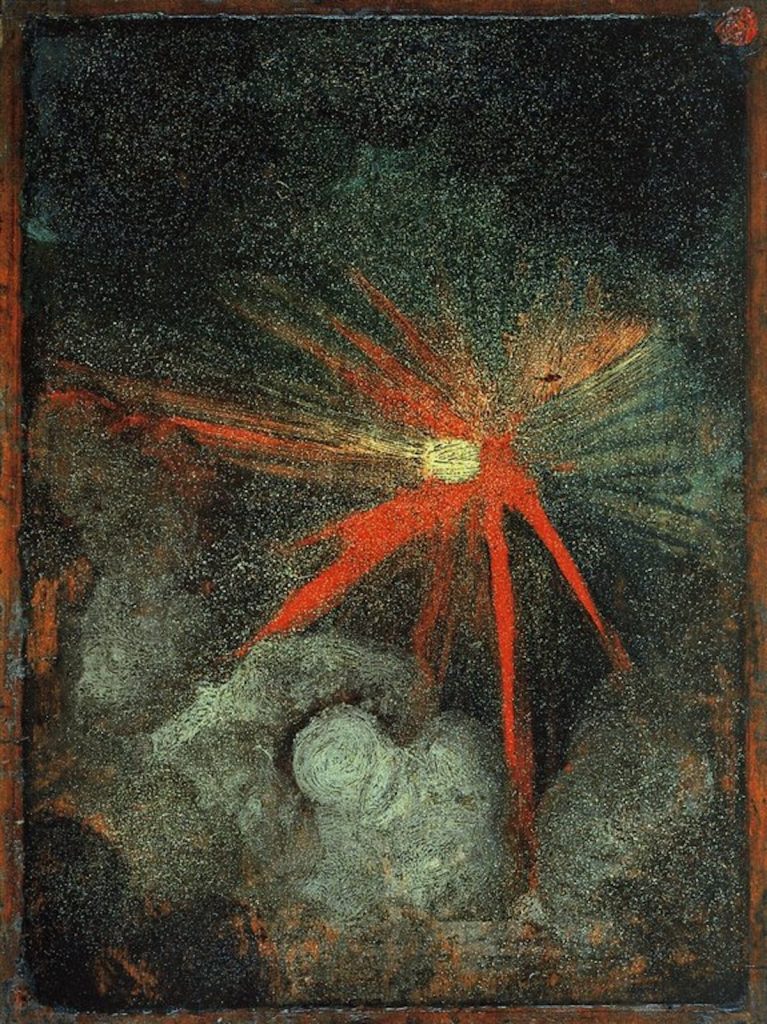
Indeed, October 13, 1917, proved to be a truly incredible day. Thousands of people gathered at the field near Fatima from early in the morning despite the continuing rain. Suddenly the rain stopped, the sky cleared and the sun appeared like a silver disc that could be looked at directly without eye strain— “and all at once it begins to turn like a wheel of fire. Shooting sprays of light in all directions, changing color several times. The sky, the earth, the trees, the rocks, and the group of visionaries, and the great crowd are successively colored yellow, blue, purple… ” as a French writer who was there described the event.
The crowd of thousands was, by turns, ecstatic, breathless, then terrorized as the sun appeared to be falling to earth! Everyone there, atheists, believers, saw the same thing. People miles away also saw the same events. Finally, the people there realized that they and their clothes were dry though they had been soaked earlier by the rain.
Skeptics point to the fact that no astronomical sites in Lisbon and elsewhere detected the phenomena. Others called it a scam, a Jesuit trick, a hoax, a collective hallucination. Nonetheless, none of the skeptics from the big news outlets and elsewhere ever falsified the event by coming up with proof of a scam by tracing a money trail or finding evidence of Jesuitical chicanery. Besides that, collective hallucinations are a discredited category in social science for the commonsense reason that, while the desire to conform is strong among people, enough individuals will always report accurately what they see. In other words, this is akin to trying to confine a secret, a conspiracy, to a limited group of people. It invariably fails.
Worth mentioning is the celebrated polymath and Benedictine priest, Stanley Jaki, who assiduously studied Fatima and concluded that while the celestial events that took place there can be accounted for naturalistically, nonetheless, he called this convergence of events “a miracle.”
Messieurs Bollore and Bonnassies conclude that the miracle at Fatima took place so that people might believe in God.
The rest of this long, though never tedious, accessible book is taken up with proofs for the Resurrection, philosophic proofs for theism and a primer on the inerrancy of the Bible. And more.
Bollore and Bonnassies have presented a monumental case for how modern science has validated God. As true as that is, it also reinforces the historical fact that science began in the medieval, European university with its reliance on the metaphysical foundation that a rational God had made the world.
In effect, therefore, this book is a call for a return to the medieval vision of a rational God who created rational creatures equipped to discover the verities of nature. In other words, to do science. Thus, science and God are not merely compatible, they are inseparable. For without the Christian vision of God, science would not exist.
–
Table of Contents
Terry Scambray taught English at Fresno City College in California and has published in The New Oxford Review, Touchstone, The Chesterton Review, American Thinker, Victor Davis Hanson’s Private Papers, Faith & Reason, Commonweal, and elsewhere.
Follow NER on Twitter @NERIconoclast









3 Responses
When you visit truly religious countries, countries like India or Thailand or Sri Lanka ( and I’m not talking of the straight jacketed Muslim world), you get more of a sense of the spiritual meaning of life (or of THIS life to be more accurate). You get the feeling that the people accept the limits of science as a tool box for the mechanics of life, and that this tool box is the purview of Gods that are very real to them.
In the conversations I had with the Buddhists and the Hindus I found that they generally believe that science has no answers at all for the spiritual world. The reason you are here and the path your life takes has nothing to do with science but everything to do with the whims of the many, many gods they worship. The big bang theory has no traction at all with them.
I find it easy to accept this belief system , easy because science has never been able to answer the ultimate question ” Why are we here?”
The lack of this religious touchstone in the majority of the Western world has led us to an “anything goes” culture and if the system believes we have no destination, then why bother with self improvement?
Maybe religion will make a comeback in day to day society. Just which one will predominate is as much of a mystery as life itself.
Thank you. I arrived at the same conclusion as a result of both personal experiences and re-evaluating the science.
The fine tuning argument never quite cut it for me, although I see that it does for others. It seems to pre-suppose some pre-existing permutation space in which physical constants just land, as in a roulette wheel, with a uniform distribution. It “feels” (not being scientific) to me that there was no need for some pre-existing permutation space. Rather the constants are the values that they are because there was no other way they could be.
The arguments of David Layzer are what do it for me. The universe is dumping information into itself by means of the expansion of space/time. This implies a mind. It also kills the idea of a deterministic universe, and is it what has gives rise the stars, planets and all things living.
Fine tuning all the way down: Atheists pooh-pooh fine tuning by trying to downplay its omnipresence. But it is clearly present in every single aspect of existence. The Big Bang happened. There is something rather than nothing, and that something was enormous enough to form stars and the universe. Time and three dimensional space are just what they needed to be. The incredibly detailed laws of nature “somehow” came into existence, and are just what they needed to be. The sun is just right. The Earth is just right, including the presence of liquid water and the collision creating the moon. The laws of chemistry led to the presence of molecules sloshing around in the oceans, which somehow coalesced over time to give us the first bacterium. This bacterium eventually evolved into vertebrates. One of these vertebrates eventually evolved a brain so complex and powerful that it has been termed “the most complex structure on the universe.” – Atheists look at all this, and proclaim, “Well, as unlikely as it was to happen, it did apparently happen, so please shut up.”