by Kenneth Francis (March 2026)
From classical music to popular songs, it is hard to avoid God in both lyrics and melody. Music, like most of the Arts, is theologically marinated in existential narratives, featuring idolatry, sin, love, pathos and meaning. And what better religion to focus on than Christianity for such themes, from the soul-music classics of the 1960/’70s, to the Top 100 Billboard hits of the same eras.
Christianity is a metaphorical umbrella, under which lies a multiple ensemble of ribs (Genesis 2:21-22) reaching into and placing spiritual concepts and emotions encompassing the roots and culture of mostly Western civilisation and beyond, whether it be pro- or anti-Christianity, its profound grip on Mankind is inescapable.
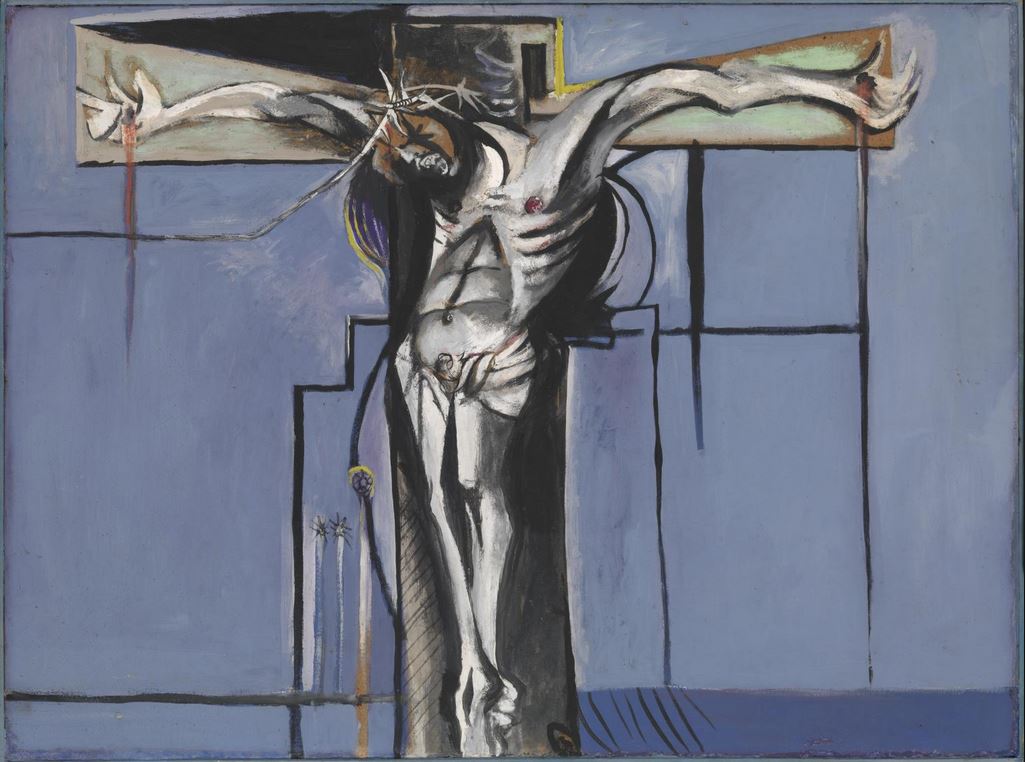
We see this first-hand in the existential plight of homo sapiens, whose lives’ (intermittently) experience mirror that of a crucified Christ atop of Mount Calvary. It permeates our dreams, desires, and quest for meaning in life. No other religion touches the human spirit quite like Christianity, that promises those who are redeemed an afterlife of eternal bliss beyond the grave.
For Christians, it is the glue that holds us together, just like the biological cross-shaped molecule, the laminin, the fingerprints of our Creator, written across our hearts, which is a vital biological protein for our existence while living on the Earth.
Many artists worldwide get their inspiration from Christianity, especially in music. On Naturalism, there is no profound inspiration infused with beauty. Grown-up worms don’t serenade other worms, according to the hidden grammar of Darwinian theory (no disrespect to the wonderful creatures of the Animal Kingdom). In a nutshell: the Bible tells us that humans are made in God’s image (Genesis 1:26-28).
The singer/songwriter, Nick Cave, regularly reads the Bible. He once said in his recorded lecturers, that any true love song is a song for God, and ascribed the mellowing of his music to a shift in focus from the Old Testament to the New Testament.
When asked if he had interest in religions outside of Christianity, Cave said that he had a passing, sceptical interest but was a “hammer-and-nails kind of guy.” Even the idiom, “nailed it,” with its sentiments of The Crucifixion, refers to a Truth (Logos) statement or something done perfectly.
There are lots of other famous singers like Cave, as their music has one thing in common with the Australian singer: A Christian tapestry is woven into the themes of their songs, whether they be about love, hate, suffering, joy, happiness, loneliness, heartbreak, grief, guilt, remorse, or righteous indignation, good, evil, Heaven or Hell. Even the Prince of Darkness is an entity in Christianity.
Bob Dylan, at one point in his career, became a Christian, but it is unclear what his beliefs are now. In an interview on 60 Minutes in 2004 with Ed Bradley, Dylan said why he doesn’t retire is because he made a deal to “get where I am now.” He added: “It all goes back to the destiny thing. I made a bargain with it a long time ago, and I’m holding up my end.” When asked who he made a deal with, Dylan said: “With the Chief Commander of this earth and the world we can’t see.”
To many, this suggests a troubling parallel to a Faustian pact, as the idea of a ‘bargain’ sits uncomfortably alongside traditional faith. While one hopes this isn’t the case for Dylan, he is far from the only figure to allude to such a spiritual compromise. Many contemporary pop stars make similar claims in interviews[*], and their stage performances are often overtly marinated in Satanic imagery.
In the music industry, many, if not all, songwriters are unwitting theologians of one kind or another. If Christ Jesus is The Logos, then there is no escaping the logic in the narrative, even if violating it, when expressing themes in music, film, theatre, literature, and many other genres in the Arts.
Testament to this are the lyrics in the songs of Johnny Cash, Elvis Presley, Ray Charles, Al Green, Van Morrison, and a vast host of the world’s biggest music male and female stars of the 20th century. In my opinion, there have been no classic songs post-1980s. The best music ever written was from the 1950s/’60s and ’70s, even if classics like “Me and Mrs Jones” was about breaking of the Seventh Commandment. Similarly, the Rolling Stones’ “Sympathy for the Devil” is steeped in Christian themes, acknowledging the existence of the devil and the crucifixion of Jesus.
As for the existence of the ‘Chief Commander in the world we cannot see’: The band Queen’s monster classic hit back in 1975, was “Bohemian Rhapsody”, a song marinated in theological themes. There are many theories about the meaning of this song, including Freddie Mercury’s way of coming out as a gay man.
Speaking in Germany in 1985, Mercury joked about his own death, in footage for a documentary, called The Show Must Go On: The Queen + Adam Lambert Story. Regarding his death in the future, and if he would like to go to Heaven, he said: “No, I don’t want to. Hell is much better. Look at the interesting people you are going to meet down there.”
“Bohemian Rhapsody” fades out with the following lyrics:
Nothing really matters to me
Any way the wind blows.
Mercury died of Aids-related complications in 1991. The old saying, ‘Be careful what you wish for’ comes to mind. Say a prayer that this gifted singer/musician made his peace with God, whose presence is hard to avoid in every great song.
___________________________
[*] Katy Perry. In a widely cited early interview, Perry stated that she originally wanted to be a gospel singer like Amy Grant, but when that path didn’t work out, she “sold [her] soul to the devil” to achieve pop success.
Kanye West. He has explicitly mentioned selling his soul for fame in multiple songs and clips. In his song “Power,” he raps about making a “crappy deal” that at least came with “a few toys like a happy meal.”
Eminem. His lyrics frequently reference Faustian bargains and demonic conversations. In songs like “Say Goodbye Hollywood” and “My Darling,” he describes the spiritual struggle of “selling out” and losing his soul to the industry.
Snoop Dogg. Beyond his 1994 song “Murder Was the Case,” which narrates a literal deal with the devil for a second chance at life, he has also joked in interviews about having made a pact for his long-lasting stardom.
–
Table of Contents
Kenneth Francis is a Contributing Editor at New English Review. For the past 30 years, he has worked as an editor in various publications, as well as a university lecturer in journalism. He also holds an MA in Theology and is the author of The Little Book of God, Mind, Cosmos and Truth, The Terror of Existence: From Ecclesiastes to Theatre of the Absurd (with Theodore Dalrymple), and Neither Trumpets Nor Violins (with Theodore Dalrymple and Samuel Hux). His most recent books are Theology in Music: How Christian Themes Permeate Classic Songs, Theology in Film: How Christian Themes Permeate Classic Movies, and Cities of the Absurd: Strange Tales from the Dark Metropolis.
Follow NER on Twitter @NERIconoclast