by Arthur Davis (May 2026)
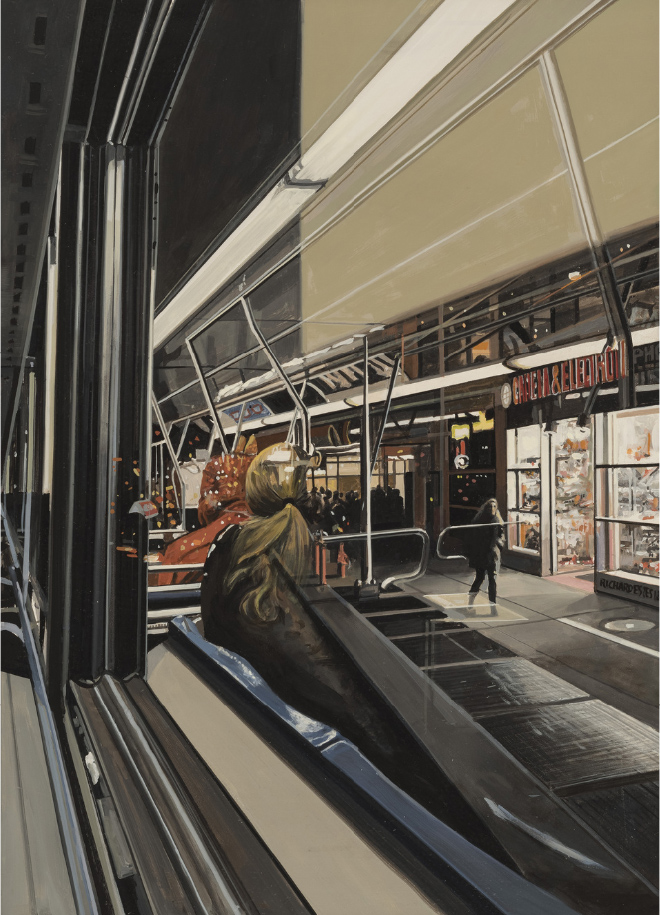
I completed my Rhodes scholarship on my eighteenth birthday and spent another three years getting a doctorate in theoretical physics while authoring two well-received papers: one on Quark Unity Fields and one on Quantum Entanglement
In the last two years I’ve worked on projects with teams from MIT and Johns Hopkins and co-authored another two papers. I’m working on grants funded by the DOE and DOD, and yesterday I almost got killed on a New York City bus.
And now, saturated with pain medication and tied to an IV, I had to pee.
***
“Gentlemen,” my father stood and said in a hospital conference room filled with doubt, curiosity, and two of New York City’s finest. “We agreed to a brief, informal meeting to help your investigation regarding what happened on the crosstown bus yesterday. To be clear, this is not about my son’s favorite color.”
My father sat back down next to Harvey Bennett, his law school roommate and one of the most aggressive criminal attorneys in the city. Both prepared me for a meeting that could turn into an interrogation. Something they would not let happen.
My mother and my sister Caroline sat nearby.
As a surgical resident at Johns Hopkins, Caroline remained cold with resolve. She was a medical volunteer serving Doctors Without Borders for a year and another year in a Cambodian hospital, tending to sick children before entering medical school. I adored her. And with three years separating us, she always referred to me as “Michael, my horrible baby brother.”
Ally sat between two empty chairs in stone silence. Having railed earlier at Bennett’s agreeing to the interrogation before Michael was home, she was vibrating between anger and disbelief.
***
Detective Charles Sweeney and Detective Richard Thomas sat across the table. I wasn’t impressed.
“Doctor Wayne, what you did yesterday was remarkable. You put yourself in harm’s way, saved the life of the wounded bus driver, and held off the gunman from possibly killing many of the remaining passengers.”
“If I may,” Harvey Bennett said, “am I correct in thinking you have interviewed all the passengers who witnessed the incident on the bus yesterday?”
“Yes,” Detective Sweeney said. “Passengers on the bus, as well as those standing outside the bus with a clear view of what happened.”
“Everyone,” Detective Thomas added.
“Then, Doctor Wayne,” Detective Sweeny said, “if you will.”
***
“I got on the crosstown 79th Street bus at the Broadway stop on the West Side at about eleven a.m. I was going to meet a friend for lunch. The bus drove east through Central Park and stopped for passengers at the Fifth Avenue and 79th Street stops. I was standing, reading in the front of the bus. I believe there were two other passengers occupying the front seats. I heard the faint sound of sirens, and seconds later the bus was jolted sideways. Passengers boarding at the front of the bus fell backwards into the street. There was yelling and screaming. A man in his sixties ran around the front of the bus, shoved away passengers trying to get on, and shot the driver at point-blank range.”
“Excuse me, gentlemen,” Dr. Steven Rappaport, the attending resident interjected, “Doctor Wayne, you’re slumping to the right. Are you in pain?”
I vaguely remembered Rappaport from the ICU yesterday. He was speaking with a surgeon. Then another surgeon. He seemed to always be at my side. Rappaport got on his cell and called for medication. I wanted to get this over with. Overnight, the incident on the bus had gone from local to everywhere.
Between those near the bus on Fifth Avenue and the crowd and staff outside and inside the ER, the internet exploded with an avalanche of photos of me shirtless and splattered with blood, hunched over the wounded, unconscious driver.
Le Monde, France’s leading newspaper, got hold of a video from an apartment building’s security camera of the gunman getting on the bus and shooting the driver. As I learned later, the newspaper patched that video sequence together with one taken by a hospital intern outside the ER when the ambulance pulled up. Because he worked for the hospital, the guards let him enter with the two officers still holding me in place over the driver. It looked polished and compelling.
Everyone in the country, except me, wanted to know who I was. Believing you could accomplish more in life flying under the radar made this exposure viscerally threatening.
My cell and those of my family were overwhelmed with friends reaching out to help and a tidal wave of offers for lucrative book deals, appearances on nationally recognized talk shows, an incessant blur of financial opportunities, including one from a rancher in Argentina who needed funding to jumpstart an alpaca farm.
“Does that feel better?” Dr. Rappaport said, realigning the sling over my right shoulder as I tried to adjust my position on my wheelchair.
I nodded. This couldn’t be happening. None of this shit could be happening. Except it was and, in a twisted turn of fate, allowed me to exorcise a festering evil that had haunted me since childhood.
Ally stood, nervously trying to exorcise the demons of what could have been a far worse incident.
“Let us know when you need a break,” Detective Thomas suggested.
“This all happened in seconds,” I continued. “The gunman boarded the bus and shot the driver and came up to me. I was still reading, purposely ignoring the threat. He jammed the muzzle of his gun into my face and said, ‘You think I wouldn’t kill you too?’”
My father reached over and held my mother’s hand.
***
“‘Of course you’re going to kill me,’ I said, quickly shifting my glance back over his shoulder and let go of the book from my right hand at the same time. The glance and my book dropping away caught him off guard. I turned my head away from the muzzle, reached up with my left hand, twisted the gun from his grasp, and hit him twice as hard as I could.”
Detective Sweeney was taking notes.
“He slumped to the floor. I grabbed the gun, released the magazine, cleared the chamber, and tossed the gun toward the back of the bus. I shoved the magazine into my pocket.
“‘YOU two,’ I barked at the two closest male passengers. ‘Sit on him. Move!’
“I switched off the engine, pulled the driver down from his seat, and tore away his shirt. The open chest wound was about ten centimeters to the left of his heart. I pulled off my shirt and applied pressure to the wound. It wasn’t working. I shifted my weight until my body was high over his chest and carefully inserted my index finger into the wound, past the bottom of a ragged notch of rib the bullet must have struck. Pressing still harder I felt the jagged slug pulsating against his pericardium.”
I knew what my parents, sister, and everybody were thinking. From the time the bus was struck, to attending to the bus driver, to how I spoke to the ER surgeon, to how I moved about as though I was a trained professional, it would be impossible for anyone who saw me to think otherwise. Dozens of witnesses who would come to the same conclusion.
“You may hear things said about me you never knew. Most will be false. A few will be an exaggeration though partially true. They’re going to have questions. I may not answer all of them,” I had told my parents and Caroline earlier. I prepared Ally with more detail.
***
“‘Okay, we can take it from here,’ one of the three paramedics said, who boarded the bus along with a legion of cops.
“‘My finger is separating the shattered bullet from his heart.”
“‘That’s okay,’ one of them said.
“‘Look, I’m a doctor. We need to secure him to a long spine board or extrication board and get him off the bus without compromising the position of my hand. If I let go or he slips out of my control, the shard of lead could lacerate his heart.”
“A Fire Department ambulance arrived seconds later. They secured the driver to a spine board, threw a tarp over the both of us, and smashed the bus’s front glass window after the growing crowd was moved to safety.
“My entire body was locked in place. My right hand was tightly secured onto the spine board while my left index finger tried to keep the shard from killing the driver. With the help of a half dozen policemen, the both of us were moved into the ambulance. Two officers followed us; their arms locked under my chest and over my back while the paramedics worked to stabilize the bus driver.”
***
Harvey Bennett stood. “Okay, that’s it. We’re done here.”
“He’s not finished,” Detective Thomas said.
I wasn’t.
“We agreed to this initial interview because it was broadly limited to what happened on the bus. That’s been covered. Unless what my client said contradicts the witnesses’ testimony, this meeting is over. Doctor Rappaport, will you help get Doctor Wayne back to his room.”
“Doctor Wayne gave his statement, but that doesn’t mean we don’t have questions,” Thomas said.
Bennett looked at his watch. “Sure. Let’s do it.”
My father nodded. Both knew there would be questions. Bennett just wanted to assert his authority. He’s a litigator. It’s what he does.
***
“The details, your account of the incident, are very helpful. I can’t imagine what was going through your mind when the gunman shot the driver and jammed his gun into your face.”
“It was a first.”
“Yes. Of course. But just for a moment,” he said, nodding off to Bennett, “some background might be helpful. The police were in pursuit of a Carl Longin after he robbed a grocery store uptown and shot and killed a woman, then drove off in her car. The police gave chase for almost two miles down Fifth Avenue. They established a roadblock across 78th and Fifth Avenue, which made him swerve into your bus on 79th.”
His name wasn’t Carl Longin. I knew instantly who he was when he turned on me. An inch-long, faded scar over his right eyebrow caught my attention. That’s where I hit him a lifetime ago.
He was as tall as I remembered but older now. Withered. Gaunt. His beard was outgrown. His thinning hair was in an ashen disarray. He was so close and crazed I could smell the stink on his breath. His eyes were blank, dark, deadened. Shark eyes.
***
A nurse entered the conference room with a cup of water and meds. Her name was Elisha. How fitting, I thought. With little recall of my Bible studies, Elisha was of Hebrew origin, meaning “God is my salvation.”
About forty, quietly pretty, and from what little feedback I had, not a favorite of the rest of the staff on this well-secured floor. She was the only nurse who constantly assured me that the bus driver was awake and “doing well.”
With her back to the rest of the players in the room, she broke a smile you wouldn’t normally expect from a trained professional. I learned she magically appeared an hour after I was admitted and was immediately assigned to the nursing staff. She was a contract professional, which made her an outsider and suspect.
A gift from the clown, I was certain.
This morning Elisha mentioned that other patients on the floor were complaining about my presence. They were getting calls from family and friends about who I was and had they met me. Strangers, as well as unauthorized hospital employees, were getting off at the security floor and distracting nurses and doctors. The hospital was forced to ratchet up security. Now, you practically had to show a driver’s license, passport, and give a urine sample to get past the guard at the nurses’ station.
“In case you haven’t heard, most of the get-well cards, personal letters, flowers, and gifts are from women,” Elisha added.
Great. Sensational. I don’t want to be around when Ally reads that bon mot online.
***
“Doctor Wayne, as I understand, you lied to the EMS team in the bus as well as the ER surgeon you, we’re talking to from the ambulance.”
“I told them I was a doctor. That’s true.”
“Just not a medical doctor,” Detective Sweeney clarified.
“Is that a problem here?” Bennett said.
“I did what was needed at the time. If that’s an issue with the NYPD, feel free to press charges.”
“What was really impressive was how you described the wound to the ER surgeon.”
From the looks of my parents, sister, and Ally, this again was painfully revealing. No matter how much I warned them, no matter the depth of their love for me, they were going to leave this room thinking I had led them on a lifetime of lies.
I’ve been blessed by a strong, loving family who accepts me for what I am. Sometimes I don’t understand who I am. Mostly, I think they deserve better.
Ally got a text, “You’re so hot!” I sent while everyone was debating who I was. She stuck her tongue out at me.
“You told the ER surgeon that the magazine was in your pocket and to remove a bullet from one of the cartridges and weigh it against the fragment,” Sweeney continued. “You added that there was no way to quickly determine if the fragment touching your finger was whole.”
No one asked how I knew about the pericardium or the name of the surgical probe and forceps best suited to remove the bullet. I didn’t look but knew Caroline, the real brains in our family, was about to explode with questions. Maybe I should have let that asshole shoot me.
If Chuck Donavan were here, the crazy fucker would have a shit fit and filled the conference room with a torrent of intemperate laughter.
The two detectives huddled over their notes. “By the way, just curious, have you ever had any military or police training?” Detective Sweeney asked.
My father jumped from his chair, with Lawrence Bennett right behind him. “That’s enough,” my father insisted. “My son is not on trial.”
“You’re crossing the line,” Bennett added. “And I wouldn’t have it.”
“Not at all. And give me a moment.”
“No. None at all,” I said. “Why?”
“Eighteen bystanders in and around the bus witnessed every detail of your bravery, placing yourself in the line of fire to give passengers a chance to get off the bus. Two of them in the bus and one who was on the street described what you did only someone with training could do. Muscle memory was mentioned several times.”
“And?” I answered before Bennett could.
“It just seems odd,” Sweeney continued.
“That I took the only chance I had to save my life? To avoid getting my head blown off. You’re fishing, detectives. You two that desperate to get on the six o’clock news?” I said sucking the air out of the conference room. “What would either of you have done if you were my age and about to be killed?”
My life had changed forever in the last twenty-four hours. And in that moment, I had a flashback of Father Joseph, gun in hand, fighting his way through the crowd around the front of the bus before firing at the driver. In that split second, I reached into my pants pocket and pressed my thumb against the raised clown’s head, sliding it a fraction of an inch to the right, knowing that it was already too late for Harrison Golden to help.
Detective Thomas moved his chair closer. “Doctor Wayne, one last question, if you please.”
Caroline and Ally stood. If their fists weren’t clenched, I knew their hearts were.
“Your hospital room. Very fancy. A VIP room. Lots of security. They accommodate high-profile patients like dignitaries, celebrities. The very rich or influential. You’re a hero to be sure, but why here? On this floor?”
“From what I understand they anticipated a flood of the curious and reporters trying to cover the incident,” my father said.
“Yes. Of course,” Thomas added, ignoring the fact that the streets around the hospital were already crawling with reporters, film crews, and the curious.
“What’s your fucking point, detective?” I had had enough bullshit, and now I really had to pee.
“Do you know a Charlie Donavan, a Chris Wallace, or Jonathan Perry?”
“You don’t have to answer that,” my father insisted. “Are you two detectives familiar with a Patrick Cummings? No? Cummings is the Administrative Chief of the New York City Police Department. The second highest-ranking uniformed position in the department? Still, no? I’ve played poker with his brother every month for the last eight years. I’ve met Chief Cummings on several informal occasions. We get along.”
“Understood,” Sweeny answered. “We also know that Charlie Donavan, as well as Chris Wallace and Jonathan Perry, are with DEVGRU.”
Bennett and my father didn’t flinch. I had already briefed them. I had to prevent them from getting blindsided. I had briefed Bennett earlier, years ago, when I returned from Langley. I told him everything and handed him a sealed envelope.
“What’s this?”
“I don’t have a will and that’s the best I can do on short notice.”
Bennett leaned back in chair and relit his cigar. “Are you telling me everything?”
“Eight of us are being dropped from a plane at three a.m. site time.”
“Site?”
“Eastern European country. I can’t tell you where, but it’s an extraction, and I’m the expert they’re using to determine if it’s a trap and the guy is a phony in which he gets dead, and we fight our way out.”
“They didn’t mention why they were suspect of the scientist. All this time with locals and drones and they’re still uncertain? They’re using you like a canary in a cave to figure out if he’s legit.”
“Something like that.” I had seen photos of the physicist bearded and clean shaven. Nothing special. In a strange way I was excited for the opportunity.
“How can I help?”
“Just be available. You may have to deliver that envelope to my parents yourself.”
***
“What’s a DEVGRU?” Caroline asked as though it was something she should already know.
“They paid your brother a visit late last night, well after visiting hours,” Thomas added.
“Charlie Donavan, Chris Wallace, and Jonathan Perry are Doctor Wayne’s closest childhood friends. They grew up together. Every year they donate blood together. They share the same favorite color and hate avocados and steamed broccoli. They’re all left-handed and prefer squash over tennis and believe in UFOs. Is that helpful detective?” Bennett barked from his chair with relished sarcasm.
When Detective Thomas first contacted my father and suggested a brief meeting, my father called Bennett, who jumped at the opportunity. “We need to get ahead of the story. Who Michael is. What he did to save the passengers and the driver. Once we establish what happened, it becomes our truth. We need to define who your son is before the press and public does.”
My pants, blood-soaked shirt with my wallet and key chain from which my beeper was attached remained tucked away in my hospital room. The beeper, a gift from Colonel Harrison Golden, Deputy Intelligence Officer at the CIA. Silent expression of appreciation for my services at a time when I was the best fit for an urgent mission.
“If you slide the clown’s face to the right, you wouldn’t be alone for long,” Golden had instructed, then mentioned that he had been goalie and Captain of the Lacrosse team at Princeton. “About a hundred years before you showed up.”
Walking me through the details of how the beeper worked, I looked down at the silly, faded, red-cheeked face of a clown raised in the middle of what was a secure beeper the size of a book of matches. It was heavier than it looked and badly scratched and dented. Purposely, I imagined.
***
I got a call several years back and was down at Langley the next day. Colonel Harrison Golden and David Gentry, his aide, described the mission, the urgency, and why I was chosen. Golden was in command of the CIA Special Activities Division (SAD) / Special Operations Group. This mission was classified as Top Secret.
They had screened the best at Caltech, MIT, Stanford, Harvard, and the University of Chicago. I was the second-best fit. The first best fit was Phillip Warren Nelson, a genius with a PhD in Theoretical Physics and another in Applied Mathematics from Caltech, who I knew just had his appendix removed.
Nelson had breezed through Math 55, an undergraduate mathematics course and considered the hardest math class at Harvard. The two-semester course covers four years of mathematics in a condensed format. The course was known for its insane workload, accelerated pace, and significant attrition rate. I wanted nothing to do with it despite Nelson’s constant egging me on.
However, when it came to quarks, leptons, and gluons, I would be first author on the paper we were working on.
Nelson, a world-class skirt chaser, played a wicked guitar and, with a chess rating at 2350, played both Etienne Bacrot and Jeffrey Xiong to a dead draw last year.
“He recommended you. Said you were brilliant. One of the most insightful physicists he knew. He said you have a wicked sense of humor. I spoke with him twice. Your friend is every bit a smartass.”
Harrison closed the folder he was referring to and looked up. Captain Gentry hadn’t moved an inch in the last half hour. Maybe he was dead.
“This mission is simple, though not risk free. You’re going to extract a physicist from a heavily guarded Eastern European research lab. Photos aside, you’re along to make sure he is who he says he is. We did a quick in-depth on family and friends. You’re not having a wife and family was an early consideration.”
“A wife and family must have excluded Nelson in about ten seconds.”
“We were aware of his, shall we say, robust carnal proclivities.”
“Colonel, if your search was thorough, you would know I have no friends or family. I don’t like people, and they don’t like me. I don’t get along with anyone. I’m insufferably arrogant and impossible to work with. I was raised by wolves in a cave a kilometer north of the Abbey of Monte Cassino, a Catholic, Benedictine monastery in Italy, and I don’t speak a word of English.”
David Gentry’s head moved a fraction to his right. I guess he was alive.
The Colonel cracked a smile. “Yes, of course. You’re exactly as he described.”
I got up and moved toward his desk. “I’m in. Whatever you need.”
I took two weeks’ sick leave and headed for Virginia Beach, Virginia. A week later I was bailing out of a C-17 Globemaster transport plane with eight of the best of the best. The mission took two days longer than it should have. The physicist was heavily guarded, but apparently, we had detailed information where he would be on a certain night. Drones constantly tracked the physicist’s movements. His daily routing. The best time of the month to make the extraction.
Along with a CIA specialist we crafted eight probing questions. If he missed one question Charlie Donavan was going to put a bullet in his head. I didn’t mention that I was changing the order to hardest question first.
That’s where I met Charlie Donavan, Chris Wallace, and Jonathan Perry. That’s where they saved my life. I owed them everything.
***
“Gentlemen, I think we’re done here. Our patient needs to rest. Let me see you three out,” Dr. Rappaport insisted.
“It’s interesting. You two seem to be fixated on my brother’s past, which has nothing to do with his bravery,” Caroline said before they left. “How much time did you spend on Carl Longin’s past?”
“Ms. Wayne, Carl Longin—”
“It’s Doctor Caroline Wayne, Detective Thomas. I’m a fifth-year cardiothoracic surgical resident, and my father and counsel have been very generous letting you go well beyond the boundaries of our original agreement. “My apology.”
“So?”
“So far, we know Mr. Longin has a somewhat checkered past. And Longin isn’t his real name. He was a minister in Allentown, then Columbus, Ohio, for most of his early life. He went off the rails several years ago, we suspect because of his addiction to alcohol and drugs. We believe Longin getting on the bus was an opportunistic decision to take the passengers hostage.”
“No matter what you find, he wouldn’t help your investigation,” Caroline said.
Sweeney and Thomas paused thoughtfully.
“I met with the attending neurosurgeon earlier this afternoon. He’s on life-support and unlikely to regain consciousness. Seems he was involved in an incident on a city bus yesterday.”
***
Ally came to my side, kissed me, and wiped the sweat from my forehead. My parents moved closer. My mother had a million questions, and she wasn’t going to put up with my evasive bullshit. My back was killing me. Elisha’s meds weren’t working, and I was so tired I couldn’t keep my eyes open.
I had badly wrenched and contorted my back to keep my balance and secure the position of my index finger. I was told the damaged muscles and ligaments would need three to four months of physical therapy. I didn’t have months. I was part of a team assigned for three weeks every quarter to the large hadron collider at CERN testing for high-energy erosion of their superconducting electromagnets. I was reviewing my notes from my last trip just yesterday. We were leaving in twenty-seven days, something else I neglected to remind my family, including Ally.
The European Organization for Nuclear Research, known as CERN, operates the largest particle physics laboratory in the world. The laboratory, with their massive, purpose-built accelerators and detectors, sat astride the Franco-Swiss border near CERN’s main site in Meyrin, Switzerland, looking toward the French border.
I’m just guessing, but there had to be a descent physical therapist somewhere in Switzerland.
***
And for much of the questioning, I was thinking how improbable it was that I would ever face Father Joseph again, and this time have an opportunity to kill him? That’s why I hit him a second time. With decades of stored anger, I struck hard, just above his cheek, connecting with the soft side of his temple. When he fell at my feet, my first instinct was to hit him again. And again. And again.
Bennett huddled with the police for a few minutes and stopped by my room to update everyone as I eased from the wheelchair to my freshly made-up bed.
I felt old. Ancient. Empty and exhausted beyond measure. I guess a side effect of almost being killed and saving your own life and taking the life of a monster that had been shadowing you forever. And saving the life of a bus driver who demanded to visit me yesterday while in the ICU.
“You did great, kid. Just perfect,” Bennett said, embracing me.
I loved the guy. No wonder he and my father were thick as thieves.
“And you were right. Why the hell were they assigned to a case that had so quickly caught the public’s attention is a mystery.”
“Are we done with it?” my mother asked.
“There will be more questions, and a few days of routine police follow up. More senior detectives will want to interview Michael,” Bennett advised. “I have friends down at One Police Plaza. Now I can call in some favors and find out what’s next.”
I never mentioned that I had no conscious memory after entering the hospital. Nothing. My brain had shut down someplace between getting off the ambulance and into the elevator. Too much stress. I vaguely remember hovering over the bus driver, probe in hand, then nothing. I woke in the ICU. I had no recall of those final minutes before four men, I was told, hoisted me off the gurney, I leaned against a wall and collapsed.
***
The impact on my family and friends would increase as curiosity fed the insatiable hunger of notoriety.
Too many people inside and outside the scientific community were going to ask the obvious, “Who the hell is Michael Paul Wayne?” Too many of my family and friends were going to question my parents and sister.
While I was surprised and glad to see them, Charlie Donavan, Chris Wallace, and Jonathan Perry’s cover was blown. I understood why they had to see me. I understood why I wanted to see them. I learned that they contacted Colonel Golden who, at first, was not thrilled with them showing up at my bedside but finally relented. One call from his office at Langley and they marched through the hospital’s security staff like Moses parting the Red Sea.
With my world exposed and spinning out of control, I cautiously counseled myself that “no good deed goes unpunished.”
***
“Patrick Cummings?” my mother asked her husband. “Really?”
“Dad?” Caroline questioned.
“What about this Patrick Cummings?” my mother asked. “You hate card games. Including poker.”
“You’re right. I forgot.”
“So,” my mother insisted.
“So, you’re saying I don’t play poker with Patrick Cummings’ brother every month?”
“That’s exactly what we’re saying,” my mother answered. “Jesus, you’re worse than Michael.”
Caroline shook her head despairingly.
My father frowned. “Who’s Michael?”
“Yeah, who’s Michael?” I asked, fist bumping my father.
“Yeah, who’s Michael?” Ally added and tightened her embrace of me.
Table of Contents
Arthur Davis is a retired management consultant who has been quoted in The New York Times and in Crain’s New York Business, taught at The New School and interviewed on New York TV News Channel 1. He was featured in a collection, nominated for a Pushcart Prize, received the 2018 Write Well Award for excellence in short fiction and, twice nominated, received Honorable Mention in The Best American Mystery Stories 2017. Additional background at www.TalesofOurTime.com, the Poets & Writers Directory, and Amazon Author Central.
Follow NER on Twitter @NERIconoclast