by John McGee (September 2025)
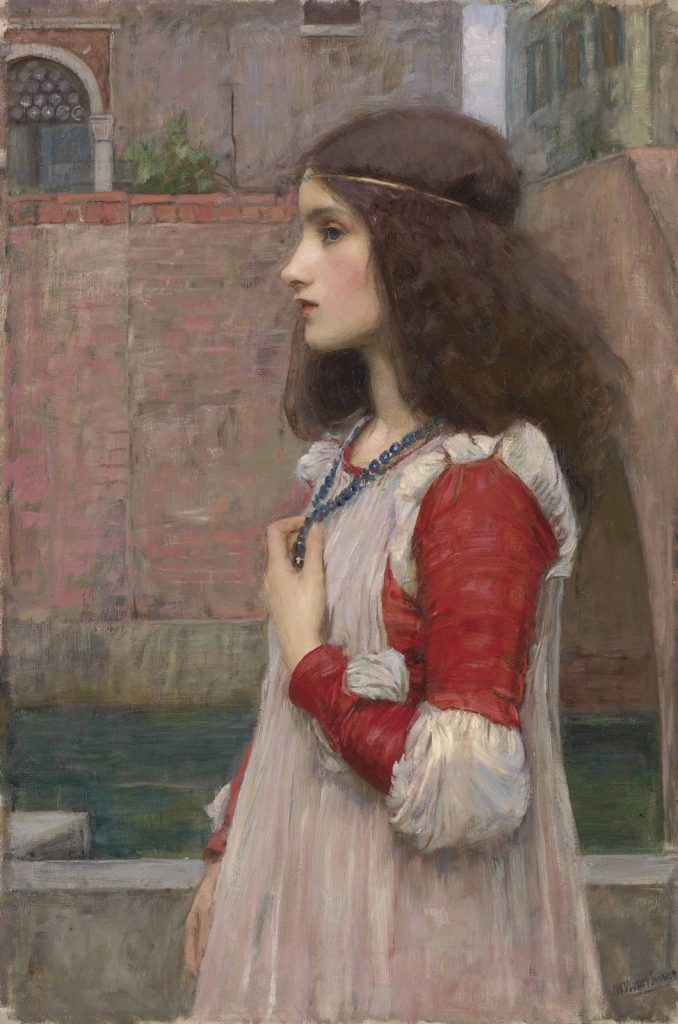
When Shakespeare’s contemporary and kindred spirit Robert Burton (1577-1640) read Romeo & Juliet, he didn’t call it a story of love. In fact, he didn’t romanticize it one bit. Instead, he called it a tale of amor insanus and grouped it together with many other stories of love-engendered insanity, including Pyramus & Thisbe, Dido & Aeneas and Anthony & Cleopatra.
And it’s not hard to see why, given some of the basic facts of the story, including that Romeo is responsible for or tied to seven or eight deaths—in four days; that Juliet, at thirteen years old, is a literal child (the Chorus calls her “tender Juliet”); that the play’s own built-in commenters—the Chorus, Friar Laurence and Mercutio—all say Romeo seeks but his own carnal gratification; that the culminating event takes place in a ghastly subterranean “vault” filled with bodily remains, including the “bloody” corpses of Romeo’s victims, Tybalt and Paris; and that the story wasn’t Shakespeare’s to begin with but a century-old Italian soap opera.
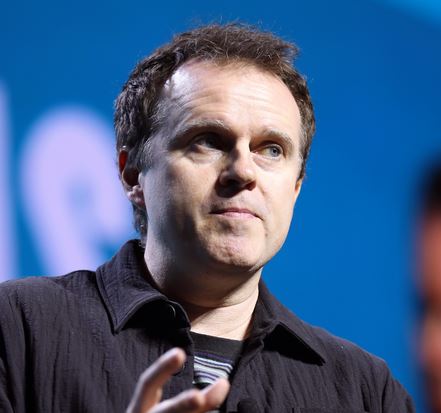
These are some of the text-based reasons to doubt the romantic view—some of the dozens, no exaggeration. But in Andrew Doyle’s lecture on the play in his course The Shakespearean Tragedies for Jordan Peterson’s online university, Peterson Academy, you don’t learn any of this. Instead, you learn what pop culture taught you: Romeo & Juliet is the ultimate love story.
Many critics romanticize the lovers. Doyle rhapsodizes them. In his view, their love isn’t just “true” but “transcendent,” a term he repeats half a dozen times. There is how Mercutio sees love—that it’s all about sex. “Then,” says Doyle, “we have true, transcendental, celestial love, as depicted so beautifully in the relationship of Romeo and Juliet.” “The love is not transactional; it is not conditional,” he says, “it is rather a glimpse of the numinous, a transcendental experience.” “Shakespeare is dealing with transcendental love, the transcendental heights of love,” he goes on to say, “and when you are in love, Shakespeare seems to say, nothing else matters.”
As evidence, Doyle quotes Juliet’s words to Romeo at her window. “My bounty is as boundless as the sea, my love as deep,” she tells the boy who shows up uninvited outside her bedroom window, “The more I give to thee, the more I have, for both are infinite.” Doyle comments,
There’s a reason that is so famous. Could you change a single syllable in that and improve it? It’s not possible. It is a kind of perfect articulation. It can’t be paraphrased. If it is paraphrased, it becomes denuded of its power.
Doyle reads Juliet’s lines aloud not once but twice. For him, they evidently say everything. Indeed, in calling their love “celestial” and “transcendent,” it’s apparent Doyle is paraphrasing and re-paraphrasing Juliet’s lines, believing they constitute the quintessence of Shakespeare’s message about this innocent if doomed teenage love.
But the problems with this view are many. To start with, Juliet’s statement doesn’t convey what Doyle thinks it conveys. In Shakespeare’s time, bounty meant “liberality.” Thus, in calling her bounty “boundless,” Juliet says, in effect, I recognize no behavioral constraints, no norms of deportment but will do whatever I please. And that’s exactly what happens, the thirteen-year-old proceeding to wed and bed a boy within twenty-four hours of meeting him, radically flouting Elizabethan marital norms, like involving family and friends in your choice of a spouse and marrying in your twenties, not your tweens.
In context, Juliet calling her love “deep” is ironic many times over. It isn’t only that she’s just met Romeo. Isn’t only that she’s just been “dwelling on [his] form,” including the “part” that defines him as a “man.” Isn’t only that she’s so obviously a victim of seduction, Romeo touching and kissing her within seconds of meeting her—eyebrow-raising conduct even in the modern world let alone the early modern one. Isn’t only that her desire for him is, again and again, overtly, even eye-poppingly sexual (see “Hood my unmanned blood with thy black mantle,” etc.).
It’s that in succumbing so swiftly to Romeo’s advances, Juliet fulfills earlier foreshadowing she’ll hop unhesitatingly into bed with the first boy who propositions her! Indeed, while no one ever talks about them, the play’s opening scenes are replete with jokes about Juliet’s, um, well, easiness. The jokes start the first time she’s mentioned. Calling for Juliet, the Nurse cries, “What, lamb! What, ladybird! God forbid.” The Nurse adds “God forbid” because “ladybird” is slang for a wanton.
Twenty lines later, in an anecdote about Juliet as an infant, the Nurse tells how she fell and hit her brow, producing a phallic protuberance on her forehead. “Yea,” asks the Nurse’s husband, “dost thou fall upon thy face? / Thou wilt fall backward when thou hast more wit.” Laughing heartily, he repeats, “Thou wilt fall backward when thou comest to age.” With this, he anticipates the action (no pun intended) that follows, where Romeo propositions Juliet one night and she welcomes him to her bed the next. But perhaps the funniest and most telling line is the Nurse’s “To see now how a jest shall come about!” According to the foreshadowing, Romeo’s same-night—excuse me, next-night—bedding of Juliet doesn’t represent the advent of true love. It represents a bawdy joke brought to life, a punchline lived out in reality.
Later, near the end of the Capulet party, the Nurse whispers in Romeo’s ear, “I tell you, he that can lay hold of her / Shall have the chinks.” That is, this girl, she’ll give you everything you want and then some sexually. Accost her, grab her and kiss her, jump her parents’ wall, show up this same night outside her bedroom window, ask her outright to “satisfy” you, be as bold or brazen as you like—and she’ll give up the goods.
As for Romeo, Doyle claims he “journeys from adolescent lust to a higher form of love.” But this too appears deeply at odds with the text. For example, when the Chorus—the most dispassionate voice in the play—comments on the lovers’ first meeting, it neither calls Romeo changed nor differentiates his second love (Juliet) from his first (Rosaline). Just the opposite! The Chorus calls Romeo shallow and irrational (“bewitched by the charm of looks”), emphatically equates his two loves, and in a series of bawdy puns, including one on “groaning and dying” and another on “tempering extremities,” suggests Romeo was and is seeking his own sensual gratification, and that alone.
Like other critics, Doyle seems to assume Romeo is peerless, his speech and conduct without precedent or parallel in the Shakespeare canon. In fact, in the Bard’s contemporary poems and plays—including Venus & Adonis, The Rape of Lucrece, A Midsummer Night’s Dream, and Love’s Labor’s Lost—Romeo has peers aplenty, and these peers say everything about him. They include a rapist (Tarquin), a narcissist (Venus), a sophist (Berowne), a fantasist (Armado), a madman (Lysander) and an ass (Bottom as Pyramus). The similarities are many. They’re precise. They’re illuminating—like nothing else. And in Doyle’s talk, they go unmentioned.
For example, when Romeo dumps Rosaline suddenly for Juliet, then justifies his change of heart by calling the second a dove, the first a crow—“So shows a snowy dove trooping with crows, / As yonder lady o’er her fellows shows”—he is the exact parallel of Lysander, a young man who, upon dumping Hermia for Helena, employs the very same black-and-white bird analogy (“Not Hermia but Helena I love, / Who will not change a raven for a dove?”). Similarly, in embarking upon a certain-to-be-fatal sea-voyage with blind Cupid at the helm, Romeo is the parallel of Tarquin, as I discuss in my 2014 article, “Piloted by Desire: The Nautical Theme in Romeo and Juliet.” These and other parallels between Romeo and the most dubious “lovers” in Shakespeare’s canon suggest he was up to something not sentimental but satirical.
In idealizing the lovers, the Peterson lecturer is far from alone, and thus to conclude this critique I want to zoom out from his talk to discuss the play’s critical status quo, including its near-universal romanticization by scholars and the single biggest problem with that view. Surprising as it may sound, most scholars understand the play romantically, including the biggest names in the field. For example, Sir Stanley Wells calls the play “perhaps the greatest of all expressions of romantic love.” Similarly, Stephen Greenblatt calls it “one of the greatest love stories in Western literature.” Thus, in dealing with the romantic conception, we’re dealing with an orthodoxy, one of the most intractable and longstanding in the field of English literature.
What’s the foremost reason to doubt this view? Shakespeare’s changes to the original story. For it wasn’t his to start with. It was an Italian tale, or rather, an Italian melodrama, one that had been told and retold across the continent of Europe for more than a century, and one that, in 16th century England itself, had already appeared on both the page and stage. It wasn’t new, wasn’t original, wouldn’t have left his audience in awe. Shakespeare wasn’t telling but retelling the Romeo & Juliet story, and that may be the single most important fact about it.
Specifically, Shakespeare adapted Arthur Brooke’s Romeus & Juliet (1562), a 3000-line poem published about thirty years before his own. While this isn’t the place for an in-depth discussion of the Bard’s departures and innovations, they include lowering Juliet’s age from eighteen or sixteen to thirteen, or ten plus years younger than the typical Elizabethan bride; making Romeo far more violent, including stabbing and killing Count Paris just 50 lines before he kills himself and threatening to “tear” apart his servant Balthazar “joint by joint”; having Romeo bribe a “bawd” or procures to arrange his one (and only) night with Juliet; having the lovers liken their suicides to self-inflicted shipwrecks; having the surrounding characters (the Friar, Chorus and Mercutio) all deride rather than endorse their love; and having the lovers “remain” forever in the hellish, corpse-filled Capulet tomb rather than ascend to and reunite in heaven.
To judge by these and other changes, Shakespeare didn’t seek to romanticize (or re-romanticize) the young Italian couple. Rather, he retold their tale precisely in order to satirize it—an argument I made in my PhD thesis, Anti-Petrarchism in Early Shakespeare, and one I’m in the process of remaking for a nonspecialist audience on my Substack, Shakespeare Reconstructed (johnmcgee.substack.com).
There’s what Shakespeare changes in terms of plot. Then there’s what he changes in terms of import, in terms of the very meaning of the story—and here too there is a great deal that is new. Indeed, Shakespeare weaves in at least three major, never-before-seen ideas, including Mercutio’s intimation that Romeo is a walking, talking parody of the Petrarchan lover; the Friar’s intimation that Romeo’s “death” signifies the triumph of “rude will” over “grace” on the battlefield of his heart; and the Chorus’ intimation that the lovers “continue” rather than transcend the “rage” of their parents, the violence they inflict on themselves constituting a “continuance of their parents’ rage”—a play-on-words that, when I first saw it, gave me the chills.
According to the last of these, the story isn’t a tale about a circumstance-transcending love, as we’ve supposed now for centuries. It’s a generational saga about the parent-to-child passing-down of violent passions. And doesn’t that just make a million times more sense?
Table of Contents
John McGee is an independent Shakespeare scholar. He has articles in leading academic journals, including Shakespeare Survey, Shakespeare and English Studies, as well as the media, including The Epoch Times and Dappled Things (forthcoming). My Substack, Shakespeare Reconstructed, aims to expose Shakespeare’s unrecognized satires, including Romeo & Juliet, Love’s Labor’s Lost and Venus & Adonis.
Follow NER on Twitter @NERIconoclast



9 Responses
This is very good. The clarity of the argument is wonderful, the supporting facts superb. My eyes are opened.
Thank you Carl! Appreciate that
Bravo! My children, upon reading Romeo and Juliet, have all scoffed at the idea of its being an icon of romantic love. Their reactions have been an eye roll. But of course, as teens, they didn’t have the benefit of “scholarly tradition.”
Hahaha. Ex-act-ly! Thank you Kathy!
Shakespeare mentions the reconciliation of the families twice in the 14 lines of the Chorus’s opening. In the last scene there is a long speech by the Friar recounting what we have already seen. It is almost always cut these days, but its purpose is to allow for the reconciliation. This is necessary as a justification for suicide, then seen as a mortal sin. Without it the couple’s love is its own justification, a sentimental view.
An interesting point is that Rosaline is also a Capulet. Could it be that what Romeo wanted was not so much sensual gratification as some great difficulty?
Hi Mick. Thank you for sharing your thoughts! Suicide was a sin indeed – the ultimate one – and thus the question you’re asking is indeed important. But there are a couple problems with what you’re saying. First, the Friar’s final speech in no way functions to justify their suicides. For example, the Friar says of Juliet the day before, “Then comes she to me, And with wild looks bid me devise some mean / To rid her from this second marriage, / Or in my cell there would she kill herself.” This strongly implies her suicide at the end was also “wild,” ie supremely irrational. Furthermore, while the families do indeed reconcile, that reconciliation appears ironic for one specific reason: everyone’s dead! Montague loses his wife and only child. Capulet the same (his wife says she’s about to die).
The information justifies not the suicide, but the reconciliation. Without it, the reconciliation lacks motivation.
Your point implies, I think, that stage and film production of the play that romanticize what is more aptly seen as “crazy love“ also miss the point. But aren’t both covalent? The heady thrill of sexual infatuation may well seem to be “transcendental” to the teenybopper characters, even as their families deem it to be crazed.
The only production to have made an impression upon me that has lasted is the Zeffarelli film (1968); and if I recall correctly, both themes or aspects were of equal weight, with director presenting both arguments and relying upon the audience to decide.
Thank you for the comment, Richard! I wish that were true. But no, Zeffirelli romanticizes the lovers and sanitizes the text. For instance, he cuts Romeo’s murder of Paris at the Capulet tomb, a change Shakespeare added to the original story! He cuts many of the bawdy jokes, as well as the philosophical dimension, ie. Friar Laurence’s opening soliloquy. Overall, he actually cuts 2/3rds of the text! Therefore, he tells the story he wants to tell.