by David Solway (June 2026)
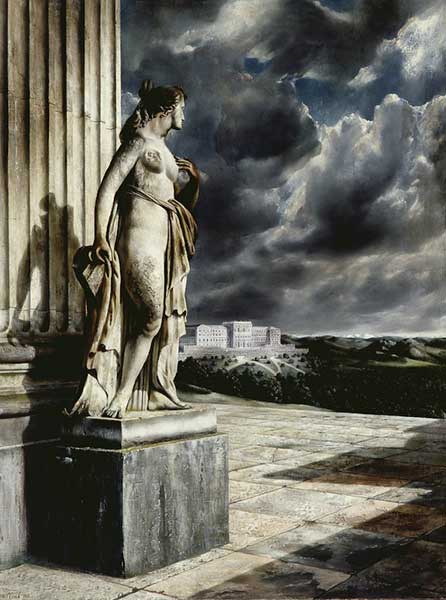
This is the Preface to David Solway’s new, soon-to-be-completed book, The Spider and the Bee: Essays for the Right Hand.
The Ancient vs. Modern literary controversy flaring in the 17th and 18th centuries was, according to scholar Ronald Paulson in Theme and Structure in Swift’s Tale of a Tub, a minor scrimmage in a much larger conflict. The intellectual battle raging at the time, which pitted a custodial and solicitous orientation toward literary and cultural life against an aggressively “progressive” attitude, was really, he contends, a struggle between opposed epistemological frames of reference, which came to be known as the clash between the “Ancient” and the “Modern,” the first laudatory, the second pejorative.
Every age, of course, permutes the terms of such engagement. Today we have, inter alia, neo-conservatives vs. liberal-leftists, populists vs. globalists, patriots vs. Wokesters, traditionalists vs. postmodernists. In the late-Renaissance, one view, summed up in the figure of John Locke, restricted the mental apparatus to the perception and ordering of sensible particulars as a prerequisite for judgment; the other, represented by René Descartes, stressed the intuitive infallibility of the individual mind. This dispute is familiar to philosophers as the systemic antipathy between British Empiricism and Continental Rationalism which, mutatis mutandis, is still going on today.
According to this scheme we would have to align the Ancients with the Lockean empiricists who emphasized a necessary and enriching symbiosis between experience and tradition, and the Moderns with the Cartesian wildlings who posited the self-sufficiency of the autonomous mind for which interpretation substitutes for verity.
T.S. Eliot’s influential essay, “Tradition and the Individual Talent,” is pertinent to our discussion here. Eliot begins by noting that the adjective “traditional” is usually applied disparagingly—a reaction, perhaps, to the potent medieval-type intoxications of the Romantic movement. He then proceeds to redefine the concept of “tradition” as something which cannot be merely inherited but also acquired with much labor. Its primary constituent is “the historical sense” which he tells us “involves a perception, not only of the pastness of the past, but of its presence.”
The traditionalist writes and thinks as if the whole of Western literature from the time of Homer composed “a simultaneous order,” an idea urged more recently by the great Canadian critic Northrop Frye. The historical sense, says Eliot, is “a sense of the timeless as well as of the temporal and of the timeless and of the temporal together.” Moreover, it is precisely this sense of historical concurrence that makes one “most acutely conscious of his contemporaneity.” Frye gives the idea a slight twist. As he writes in The Bush Garden, “In literature, it is the traditional that is the pioneer, like the settler who comes from elsewhere.” It is a species of “Tarzanism,” like Viscount Greystoke, I imagine, establishing his roots in the wilderness which he explores and civilizes.
What we have here is a specification of a perennial conflict between two antithetical points of view or imaginative predispositions which cut across national boundaries: the conservative temper which hallows precedent and usage, and the avant-garde or neoteric impulse, often compromised by narcissism, which takes its stand on often unfounded innovation in a “post-truth” world. The conflict may be denoted as archetypal, defined as a battle that is always being fought in the minds of men and on the fields of literature and history—and, as we will see in text, may even blur the outlines of the individual sensibility.
The attitude behind this book is largely Lockean and, in crucial respects, Eliotic—that is, inscribed by the right hand. It is, speaking metaphorically, a record of the bee’s sojourning among the flowers, not the spider’s gruesome appetite. But the issue is complicated.
The bee has been gathering pollen for intellectual honey in the philosophical and humanist garden long enough to turn him into a reputable conservative himself, producing sweetness and light even when the flora he moves among is sometimes foul to the taste. The bee is ultimately nimble, graceful, protean and humble enough to include himself within his own rhetorical loops and satiric divagations, to recognize his own insectal nature—that is, a double-jointed fabulist, the bee may also incorporate within his multiplex response to pedantry and self-exaltation a self-inflicted sting. He is not perfect and he knows it. There is a modesty about him. One recalls in this regard Bernard Mandeville’s pre-Ayn Rand moral philosophy, in the conclusion of The Grumbling Hive:
…they, that would revive
A Golden Age, must be free
For acorns, as for Honesty.
The conservative temper will often express itself in a nostalgic or penseroso desire for a secure and privileged region, whether mental or social, immune to the violence of arbitrary change. Eighteenth century diplomat and essayist Sir William Temple concludes his famous Essay upon the Ancient and Modern Learning with a moving tristesse: “That among so many things that are by men possessed or pursued, in the course of their lives, all the rest are baubles, besides old wood to burn, old wine to drink, old friends to converse with, and old books to read”—a sentiment echoed almost exactly in neoclassical playwright Oliver Goldsmith’s She Stoops to Conquer produced nearly a century later in 1773, in which Mr. Hardcastle enthuses: “I love everything that’s old: old friends, old times, old manners, old books, old wine; and, I believe, Dorothy, you’ll own I have been pretty fond of an old wife;” and again by the renowned Shakespearean scholar Richard Farmer who wrote at the beginning of the Romantic period that his principal passions were “old port, old clothes, and old books.”
William Hazlitt’s ostensible condemnation of everything old, in his fine essay “On the Pleasure of Hating,” is really an ironic affirmation of the identical sentiment: “We hate old friends: we hate old books: we hate old opinions; and at last we come to hate ourselves.” It is quite an exquisite satire.
Such an attitude or sentiment is really a simplification of a more complex and robust conservative argument. According to Paulson, the Ancients “built within a context of the wisdom of [their] predecessors, which guided men toward greatness.” Time is “acceptance and absorption into meaningfulness”—an Eliotic apothegm.
Naturally, the debate between the two opposing temperaments or cultural poles—what poet William Butler Yeats in A Vision referred to as the “primary” and “antithetical” masks—is complicated by all manner of extraneous factors: the clash of personalities, political considerations of a more local nature, and perhaps most importantly, the attitude to scientific advance and procedure. From our perspective, it is clear that one can find “antithetical” types, poetic and humanistic humble-bees, among the most brilliant and daring scientists: Richard Feynman dismissing the consoling thesis that the universe is intended to furnish a proscenium for the human drama by reflecting that “the stage is too big for the play,” or Steven Weinberg reconstructing the first three minutes after the Big Bang. It is no subjective spider who can write, as Weinberg does, “The effort to understand the universe is one of the very few things that lifts human life a little above the level of farce.”
It is also interesting to note that the impulse driving many of our cutting-edge cosmologists is actually a conservative one—the quest for a Unified Field Theory which involves the mathematical rediscovery of a lost symmetry between the four fundamental forces of nature as they were at the Big Bang. These scientists are not “newfangled,” postmodern, avant-garde, progressivist or what have you. They are absolutely dominated in their thinking by the search for this “lost” or “broken” symmetry, which allies them imaginatively with the Ancient personality type, the seekers after an anterior wholeness in the hope of restoring a larger continuity. In Cycles of Time, Nobelist Roger Penrose believes that Conformal Math, or Conformal Cyclic Cosmology, a complex mapping technique, may mathematically link the end of a previous universe to the beginning of our own, effectively extending time before the Singularity at the emergence of our world.
One ponders whether such intricate and beautiful equations as Paul Dirac’s coupled with Einstein’s 𝐺𝜇𝜈=8𝜋𝐺𝑇𝜇𝜈 give solutions for self-gravitating quantum systems that may account for the origin of the universe? Only, the past which so mesmerizes the attention of our cosmologists, a past when the four fundamental physical interactions were one, predates the classical period by some thirteen billion years or so. Now, this is really old.
Essentially, we are contrasting the relation of mind to the world—social, political, scientific, natural—as it is in its actual structure against facts spun out from the individual’s own mind. It is more satisfying to play the game than it is to theorize about the rules. One thinks of the difference between Tolkien and Hegel, Einstein and Marx, Adam Smith and John Maynard Keynes, John Wheeler and Lawrence Krauss, M. Scott Peck and Sigmund Freud, and so on. The conservative point of view rides to the races. It may not win on the track but it has a Locke on style and wisdom. It will not, as I am fond of saying, put Descartes before the horse.
–
Table of Contents
David Solway’s latest books are Profoundly Superficial: Observations on a Net-Zero Culture and Crossing the Jordan: On Judaism, Islam, and the West. A CD of his original songs, Partial to Cain, appeared in 2019.
Follow NER on Twitter @NERIconoclast