by Christopher Carson (June 2026)
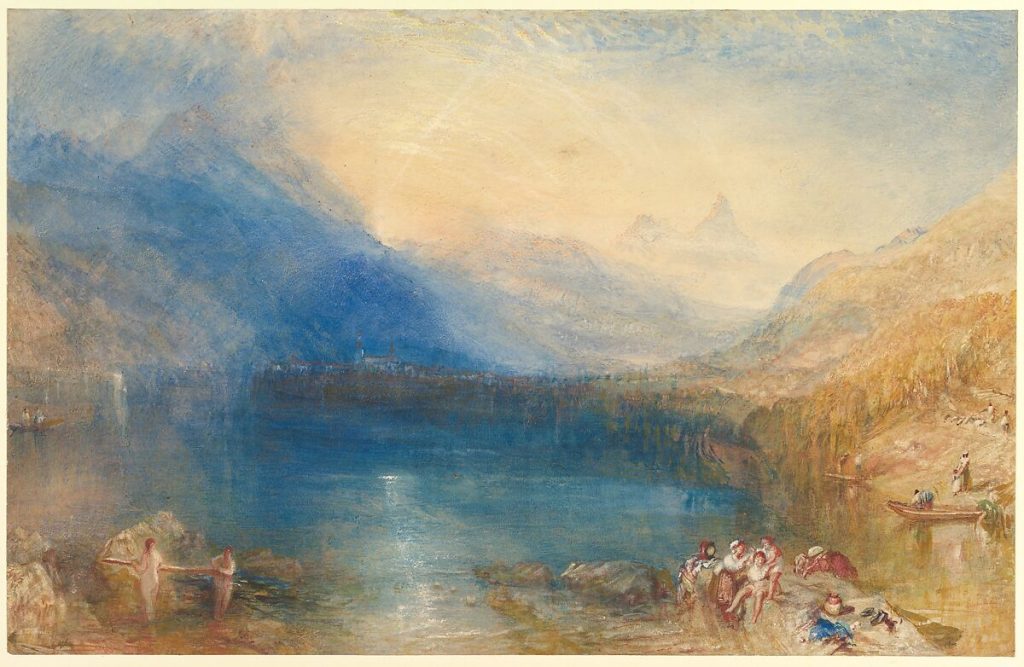
___________________ —Alfred, Lord Tennyson, The Princess (1847)
The first notes of The Ludlows rise as if they had already begun somewhere beyond the frame. What the ear receives is a sound already in motion, already freighted with distance, as if the line of melody had been traced across hills before reaching this room. In the peculiar temporal lag between origin and perception, something like memory is born. James Horner understood this with unusual clarity. His French horn creates the Montana landscape of Legends of the Fall as an auditory fact. Vastness, familial continuity, and the long ache of time are condensed into a timbre that seems always to be receding even as it unfolds. Tennyson’s “horns of Elfland faintly blowing” are not a literary ornament here. They are a description of an acoustic phenomenon that has outlived the Victorian imagination that named it.
The explanation for this effect does not reside in a single domain. It emerges from a convergence of physical acoustics, historical function, and a long sedimentation of cultural meaning, layers so thoroughly fused that separating them analytically requires a kind of violence against the experience they jointly produce. The French horn is an instrument designed for distance. Its conical bore produces a spectrum of overtones that radiate outward with unusual breadth, and its relatively soft attack avoids the sharp transient that would pin the sound to an immediate location. The ear, exquisitely attuned to reconstructing space from spectral cues, interprets this as remoteness. Even when the player stands a few feet away, the sound suggests a source that lies farther off, as if filtered through air and terrain. Work in auditory perception associated with figures such as Albert Bregman shows how the mind organizes sound into spatial scenes, grouping tones into objects and placing them within imagined environments. The horn’s envelope encourages the mind to place it beyond the immediate field. It is heard as a call across space.
That spatial illusion intersects with a deeper layer of human response. Research in music psychology, including the work of Patrik Juslin, has repeatedly shown that listeners map timbral qualities onto emotional categories with remarkable consistency. Low brass instruments with rounded attacks and rich overtone structures are perceived as noble, melancholic, and pastoral. The horn sits precisely in that region. Its tone resembles, in certain registers, the vowel-like resonance of the human voice, yet it lacks the intimacy of speech. It sounds like a voice that has been displaced, carried away, returned altered. Anthony Storr, in Music and the Mind (1992), observed that music possesses the capacity to put us in touch with emotions we have not previously felt, passions we did not know before. The horn’s peculiar timbre makes this function unusually accessible. It does not remind you of your past. It summons a past that feels as if it should have been yours, a prior life of greater spaciousness and weight. Storr notes the psychoanalytic insight that music can trigger acute longing associated with what he calls “the lost paradise” of a pre-verbal security: the horn arrives from elsewhere, and that elsewhere has the quality of something once inhabited and never recovered.
Nostalgia, as analyzed by Constantine Sedikides and others, is a mechanism of self-continuity, a way of binding the present to a perceived temporal horizon. A sound that already appears to come from elsewhere is uniquely suited to activate this mechanism. It arrives as if bearing the weight of time.
Before the instrument entered the concert hall, it was already bearing weight, the functional, topographical weight of distance signaled across terrain. The history of the horn is a history of communication where speech cannot carry. Animal horns, conch shells, and later metal instruments of progressively greater complexity were used across widely separated cultures to signal triumph, warning, assembly, or return. The point was always reach: the sound had to travel, to cut through wind and foliage, to bind dispersed individuals into a single auditory field.
The coiled hunting horn of seventeenth-century France did not abandon this founding purpose. The cor de chasse, heard in the outdoor spectacles associated with Jean-Baptiste Lully, who in 1665 wrote hunting horn calls into the pastoral comedy La princesse d’Elide for Molière, remained an instrument of terrain and topographical gesture. Its fanfares were information, each call naming an event in the hunt’s unfolding: the stag sighted, the quarry turned, the pursuit resumed, the kill. The codification of these fanfares reached its most systematic form through the work of the Marquis Marc-Antoine de Dampierre (1676–1756), royal horn player to Louis XV, whose collections were published posthumously in 1778 and standardized a repertoire still practiced today by French sonneurs de trompe. Dampierre’s fanfares are a grammar of space: each phrase maps a specific event at a specific location, and together they constitute an acoustic narrative of a landscape unfolding in time.
This is the source of the horn’s peculiar ability to make space into time. Its fanfares describe when as well as where. Weber grasped this with rare precision in Der Freischütz (1821), where hunting horn calls anchor Max’s world of forest and village against the invading supernatural. The opening fanfares establish a moral and temporal claim: this is the world of ordinary time, of inherited custom and the natural order. When that order is violated, when Max enters the Wolf’s Glen and the horn calls become distorted, their intervals corrupted, Weber makes the corruption of the instrument signal the corruption of the world. The horn calls of Der Freischütz are a moral register, and their authority derives entirely from the instrument’s pre-orchestral function as the voice of right conduct in the natural world.
Beethoven inherited this spatial semantics and pressed it further. In the Scherzo of the Eroica (Symphony No. 3, 1804), the Trio section opens with three horns in staggered triadic entries that seem to materialize from some imaginary hunting ground adjacent to the concert hall. Beethoven was working with natural horns, instruments without valves, capable only of the harmonic series available in their crook, and in the Trio he pushed that limitation into an expressive resource. The fanfare-like intervals of the three horns generate an openness that valved instruments would later domesticate away. The horns call to each other across a distance the music has invented. They answer without meeting.
Beethoven’s song cycle An die ferne Geliebte (1816) makes the spatial metaphor explicit. The cycle is addressed to a beloved who stands on a distant hill, visible but unreachable; the poems by Alois Jeitteles construct the distance as both geographical and existential. Beethoven’s setting uses the horn’s idiom, open intervals, long sustained phrases, melodies that breathe like calls across open terrain, to give the beloved’s absence an audible form. The voice sings to the distance; the horn sounds from it. The gap between the present self and the beloved elsewhere finds its acoustic shape. Wagner would inherit this insight and build a civilization upon it.
Wagner’s use of the horn across the Ring cycle is so architecturally extensive that any selection does it injustice, but two moments are essential. The Valhalla motif, first heard in the second scene of Das Rheingold, is given to Wagner tubas played by horn players and establishes the sonic world of the gods as horn-world: massive, ancient, breathing of an order that predates human time. In Siegfried, the Act II long call is the most consequential single horn solo in the repertoire. Siegfried, alone in the forest, attempts to speak to a woodbird in the bird’s own language, producing his hunting horn for an unaccompanied solo of devastating simplicity and force. The call lasts nearly two minutes. Wagner scores it in F major, the horn’s most natural key, and the solo rises through the harmonic series with a spontaneity that seems to emerge from the instrument’s own nature rather than from compositional design. Siegfried is speaking with the forest, and the forest, through the horn, speaks back.
What the call encodes, beyond its plot function, is an idea of the unfallen world. Siegfried knows nothing of fear; the Ring cycle is, among other things, a tragedy of knowledge, and the horn call stands for the moment before the hero knows what he will become, what he will lose. It is the voice of the world before the Curse, before the gods began their long decline. Wagner understood that the horn’s acoustic memory, its inheritance from the forest, from the hunt, from the outdoor life of pre-orchestral culture, could make this mythic innocence audible. When the horn returns in Brünnhilde’s final immolation, the echo is unbearable. The Forest Murmurs, earlier in the same act, organize the entire orchestral fabric around horn-related timbres, the shimmer of a world still breathing. In those passages, the horn is the world.
Brahms came to the horn by a different road, a personal, biographical road that is also the road of grief. His father was a double-bass player who taught him the Waldhorn as a boy. His mother, Christiane, died in February 1865; Brahms was not at her side. The Horn Trio in E-flat major, Op. 40, was composed that same year, in the Black Forest near Baden-Baden, where Brahms walked the wooded heights in the spring months following her death. A close friend recalled Brahms indicating the precise spot on the forested hillside where the Andante’s opening theme had come to him.
The work is unusual in every respect that matters. Brahms specifies the Waldhorn, the natural horn without valves, at a time when the valve horn had been standard for decades in German and Austrian orchestras. This was a deliberate reaching back toward the instrument’s archaic voice, its pre-modern timbre, its acoustic world of open harmonics and slight imperfection. The natural horn cannot play every pitch without stopping, the technique of inserting the hand into the bell to lower certain notes, producing a darker, more muffled tone that the virtuosic tradition treated as a flaw but that Brahms heard as honest, as continuous with the instrument’s nature. He wanted the horn that his father had played, the horn of his childhood and its irretrievable world.
The third movement, Adagio mesto (sorrowful Adagio), is among the most quietly devastating passages Brahms ever wrote. Near its close appears a dreaming variation on a folksong that, by most accounts, Brahms’s mother had sung to him in childhood. The horn carries this variation. The melody is inexact, its edges softened by the instrument’s particular resonance, present and already receding at the same moment. The trio ends with what the score marks as muted but deeply felt grief, which is also a fair description of the natural horn’s timbre in those registers, where the stopped notes acquire an interior quality, as if the sound is coming from inside a room whose door has just closed.
Brahms reached back to the Waldhorn because only the Waldhorn could speak from where his grief was located: in childhood, in the forest, in a world that could be felt but not re-entered.
Roger Scruton, in The Aesthetics of Music (1997), provides the most penetrating philosophical vocabulary for understanding why these effects are more than associations, cultural overlays applied to neutral acoustic events. His account begins with what he calls the “acousmatic” quality of sound: the fact that sound can be severed from its visible cause and heard as a pure event, a process existing in its own right rather than as the property of a physical object. As he writes in that book, “the acousmatic experience of sound is precisely what is exploited by the art of music.” When we listen to music, we do not hear organized vibrations; we hear tones, which exist in an imagined space of their own, a space with its own logic of movement, gravity, and direction.
In his essay “Effing the Ineffable,” Scruton characterizes this imagined space precisely: “the space of music, in a listening culture, is what I call an ‘acousmatic space’: it is a space full of movement and fields of force in which nothing actually moves, and of which we ourselves could never be a part.” Musical space is “a space in which things move with a singular freedom, precisely because it contains no obstacles, no part of it is occupied, in the way physical space is occupied, but all of it is open.” The horn’s distance, heard in this acousmatic space, is not a property of the physical instrument. It is a distance belonging to the tones themselves, a direction inscribed in their movement. Scruton’s sense that “listening is a kind of ‘moving with’” describes what the horn does in its most powerful moments: when Mahler’s posthorn sounds from offstage, we hear a movement toward that distance, a reaching, as if the tones are traveling in a direction we cannot follow.
Scruton also addresses what he calls, in Music as an Art, the I-Thou dimension of musical address: “sounds become music when they are organized in such a way as to invite acousmatic listening. Music is then heard to address the listener, I to you, and the listener responds with the overreaching attitudes that are the norm in interpersonal relations.” The horn is the orchestral instrument most persistently felt as a call, as an address from the known world to an unknown one. And because it addresses from beyond the immediate acoustic field, from the forest, from the mountain, from the distance built into its physical design, the address arrives already bearing the character of a message from elsewhere.
Mahler’s symphonic output is organized around the horn in a way that goes beyond conventional scoring. The Third Symphony is his most overt engagement with Des Knaben Wunderhorn, the collection of German folk poetry assembled by Achim von Arnim and Clemens Brentano between 1805 and 1808, from which Mahler drew texts and titles throughout the most productive decade of his life. The collection’s title, “The Youth’s Magic Horn,” already contains the instrument. The Wunderhorn is literally a magic horn that grants wishes; its magic, in the Romantic imagination, is the magic of recovered childhood, of the world before knowledge separated the self from nature. Mahler set dozens of its poems as songs during the years when the Third Symphony was taking shape, and the symphony’s entire emotional architecture is oriented by the Wunderhorn vision: the ascent from brute matter through nature, through the human world, toward divine love. The horn is the instrument of this journey at every stage.
The third movement’s posthorn solo, scored for a Flügelhorn directed to be played “in the manner of a posthorn” and usually performed offstage, is the locus classicus of distance as music. Mahler marks it wie aus weiter Ferne, “as if from far away.” The audience hears the solo as if through walls, through the kind of attenuation that separates actual distant sound from near sound. The orchestral movement surrounding it is a scherzo, a busy, almost comic piece of midnight animal life, processes in the dark, heedless of any further significance. Into this busyness the posthorn enters and stops everything. The solo is achingly simple: a few notes in a figure that implies more than it states, that arrives from a direction the listener cannot locate. When the orchestral world reasserts itself afterward, it is not the same world. Something has passed through it. Mahler understands that the distance the horn invokes in this moment is temporal. The posthorn sounds from the past, from a world that existed before the night’s confusion, and that will exist after.
Leonard Meyer’s Emotion and Meaning in Music (1956) provides a formal explanation for why this distance registers as feeling. Meyer’s central argument is that musical emotion arises when “an expectation, a tendency to respond, activated by the musical stimulus situation, is temporarily inhibited or permanently blocked.” The horn’s characteristic phrases tend toward open endings, calls that ascend and do not return, fanfares that announce but do not resolve. They are, in Meyer’s terms, permanently deferred. The listener reaches toward a resolution that the music withholds, and the reaching is the emotion. The horn does not feel distant because audiences have learned to associate it with distance. It feels distant because its musical behavior creates the felt structure of something unreachable, a goal the music keeps moving ahead of the listener’s grasp.
The twentieth century inherits this semantic field and translates it into the language of film. Composers draw on the horn’s established association with landscape and longing, and the medium of cinema intensifies the effect by pairing sound with image, allowing the horn to become the voice of a mythology that the image cannot alone sustain.
Howard Shore’s Rohan theme from The Lord of the Rings: The Two Towers (2002) is among the most precisely calculated deployments of the horn in cinema. Shore gave the Rohirrim a musical identity built on Anglo-Saxon pentatonic modes, performed on Celtic instruments, but anchored by French horn in the slower, more elegiac statements of the theme. When the Rohirrim are first shown in daylight, riding across the plains of Rohan, the horn enters alone and sustains a single note before the theme emerges. That suspended note fills the visual space with an auditory sense of horizon, of land stretching to a distance the camera cannot reach. Shore understood that Tolkien’s Rohan is a world defined by the distance between its riders and their home, by the Norse elegiac sense that every departure from the hall is a movement toward death. The horn gives this distance a sound.
James Horner’s score for Legends of the Fall (1994) is where the lineage I have been tracing reaches a kind of vernacular American summit, and The Ludlows in particular repays the close attention that critics rarely give it. What Horner does in that cue is not simply to write a horn theme. He writes a single melodic line and then passes it through a sequence of timbral lenses, each of which extracts a different emotional content from the same notes. The melody first emerges in the violins, soaring and immediate, the voice of grief and family love stated frontally; beneath the violins the horns are present but concealed, a low harmonic backstory, the way the land itself underlies a domestic scene. The line then migrates to the oboe, which narrows it, makes it interior, gives it the quality of a single person remembering. Other voices take it up and pass it forward. And then, at the moment Horner has been preparing all along, the French horns come into the open and carry the melody themselves. The effect is unmistakable. The same notes that had spoken of the Ludlow family’s loyalty and pain now speak of the Montana that contains them: the long mountains, the wind down the valleys, the scale against which the men are measured and to which their sorrow is finally proportioned. Horner has used his sequence of instruments to disclose, by stages, what the melody was always about. The horns reveal the epic register because only the horns can; the violins gave us the family, the oboe gave us the inward man, but Montana itself required the instrument that has always been able to sound from a distance the eye cannot reach. Horner’s score for Braveheart (1995), released the following year, employs the same logic in a different landscape: the main theme opens with a horn call over silence, doing exactly what the cor de chasse fanfares once did, announcing the presence of a particular world, mapping the space, placing the listener within it; and the film’s tragedy, the gap between William Wallace’s vision and his execution, finds its musical form in the horn’s repeated returns to that opening call, always at greater distance from melodic resolution, always suspended over a landscape that refuses to close.
The philosophical vocabulary for understanding why this matters with the force it does was articulated most fully, in the Western tradition, by Thomas Aquinas. In the Summa Theologica (I.39.8), Aquinas specifies three conditions that a thing must meet to be beautiful: integritas sive perfectio (wholeness or perfection), debita proportio sive consonantia(due proportion or harmony), and claritas (radiance). It is worth a moment’s care here, because Thomas’s three conditions appear in an article on the appropriation of beauty to the Son, where his interest is christological rather than aesthetic in the modern sense. The generalization of these conditions into a properly aesthetic doctrine is largely the work of later readers, above all Jacques Maritain, whose Art et scolastique (1920) made the three notes of beauty central to twentieth-century Catholic aesthetics, and James Joyce, whose Stephen Dedalus famously translates them in the fifth chapter of A Portrait of the Artist as a Young Man (1916) as integritas, consonantia, claritas, the wholeness, harmony, and radiance of an apprehended thing. Joyce learned the schema in his Jesuit education and gave it back to the world as the foundation of a modernist epiphany; Maritain gave it back as the foundation of a Catholic philosophy of art. Whether one approaches it through Maritain’s metaphysical seriousness or through Joyce’s vocational seriousness, the schema has come to stand on its own as a description of the conditions under which a thing becomes fully and intelligibly itself: the beautiful thing has fulfilled its form, its parts stand in right relation to one another, and its form shines through its matter with something Aquinas compares to light.
Claritas, the most theologically weighted of the three, is usually translated as “radiance” or “splendor.” In the Summa‘s discussion of the Word, Aquinas links it to the light and splendor of the intellect: the form shining through matter, making the object intelligible as itself. Scruton’s admiration for the Thomistic tradition is evident in his own music aesthetics: when he describes tonal music as a journey through tonal space in which we hear things moving with a force of their own, he is describing something close to what Aquinas means by form shining through matter. The tones are the form of musical meaning, made audible in the physical medium of vibration. To hear music as music, acousmatically in Scruton’s term, is to hear the form shining.
The horn exemplifies all three of Aquinas’s conditions.
Integritas appears in the continuity of the instrument’s function. From the earliest signaling devices to the modern orchestral horn, there persists a single governing idea: the sound must travel; it must bind distance. That continuity allows the contemporary listener to hear, however faintly, the archaic call within the symphonic phrase. The instrument is whole because it has not abandoned its origin. When Brahms writes for the Waldhorn in 1865, he is reaching for the instrument that has remained most fully itself across the centuries of its evolution.
Consonantia is evident in the horn’s harmonic behavior. It thrives in open intervals, in fifths and fourths that resist closure and suggest extension. When composers deploy the horn in these intervals, especially within slowly evolving textures, they construct an auditory space that feels proportioned to vastness. The harmony does not confine the sound; it releases it into a larger field. The proportions are right for the scale of what is being evoked: the sound fits the distance the way a bridge fits a river.
Claritas, the most elusive of the three, resides in the horn’s capacity to reveal by means of distance. The form shines through the matter: in the posthorn solo of Mahler’s Third, in the Waldhorn’s elegiac phrases in Brahms, in Horner’s opening call across the Montana hills, the form of longing itself becomes audible as a positive content. The horn makes the form of missing visible. It reveals the shape of what is not there, and in that revelation the listener apprehends something that no other means could convey.
The horn is addressed to you from elsewhere. Responding to it, you reach toward the elsewhere. And in that reaching, you apprehend the form of your own reaching, the shape of the distance inside you.
Within the American imagination, these qualities find a particularly vivid expression. The cultural memory of the West, with its long horizons and sparse habitation, provides a visual analogue for the horn’s acoustics. Aaron Copland, who had no interest in the hunting field or the symphonic forest of European tradition, heard in the horn’s open intervals and spacious textures something native to the land he was writing about: the distance between settlements on the prairie, the wind moving across a plain without interruption, the sense that the next human presence might be very far away. His use of the horn in Appalachian Spring and the Third Symphony draws on the same acoustic logic that had served Mahler and Wagner, but places it in a specifically American register, secular and unburdened by the European weight of myth. Film composers intensify this idiom, allowing the horn to stand as an emblem of a landscape that is as much temporal as geographical.
The French horn feels epic because it carries a grammar of distance that operates simultaneously in multiple registers. Its physics suggest space. Its pre-orchestral function encoded communication across terrain. Its cultural deployment, from the courts of Louis XV through the concert halls of Vienna to the film studios of Hollywood, aligns it with narratives that privilege scale, duration, and the persistence of longing across time. When these layers converge in a specific musical moment, the listener experiences the sound as a call that originates beyond the immediate horizon, a summons from the elsewhere that the horn has always been designed to reach.
Whether that elsewhere is the forest of the hunt, the mythic wilderness of Siegfried’s Germany, the Montana plains of Legends of the Fall, the Black Forest where Brahms walked his grief, or the starred distances of Howard Shore’s Middle-earth is of secondary importance. The structure of the experience remains constant: the sound arrives from beyond the visible field; it carries the impression of prior distance; it activates the listener’s reaching toward something that cannot be fully grasped.
The horn renders distance audible, and distance, once heard, becomes time. In that transformation, Aquinas would recognize claritas: the form shining through the matter, the shape of absence made present by the specific radiance of a sound that has never stopped belonging to the distance it crosses. Scruton would recognize the acousmatic address, the I-Thou of a tone that reaches across an imagined space to find you where you stand. And those who hear the Mahler posthorn fall silent backstage, or feel something shift when Horner’s horns finally emerge into the open air over the Montana hills, would recognize something prior to all theory: the sound of a world wider than the one they inhabit, calling them back toward a home they have never left and cannot return to, faintly, still.
Table of Contents
Christopher S. Carson, J.D., M.A., formerly of the American Enterprise Institute, is a criminal defense attorney in private practice in Milwaukee.
Follow NER on Twitter @NERIconoclast








One Response
This is a finely written essay elucidating a very elusive effect. Kudos