by Tidus Pinkham (March 2026)
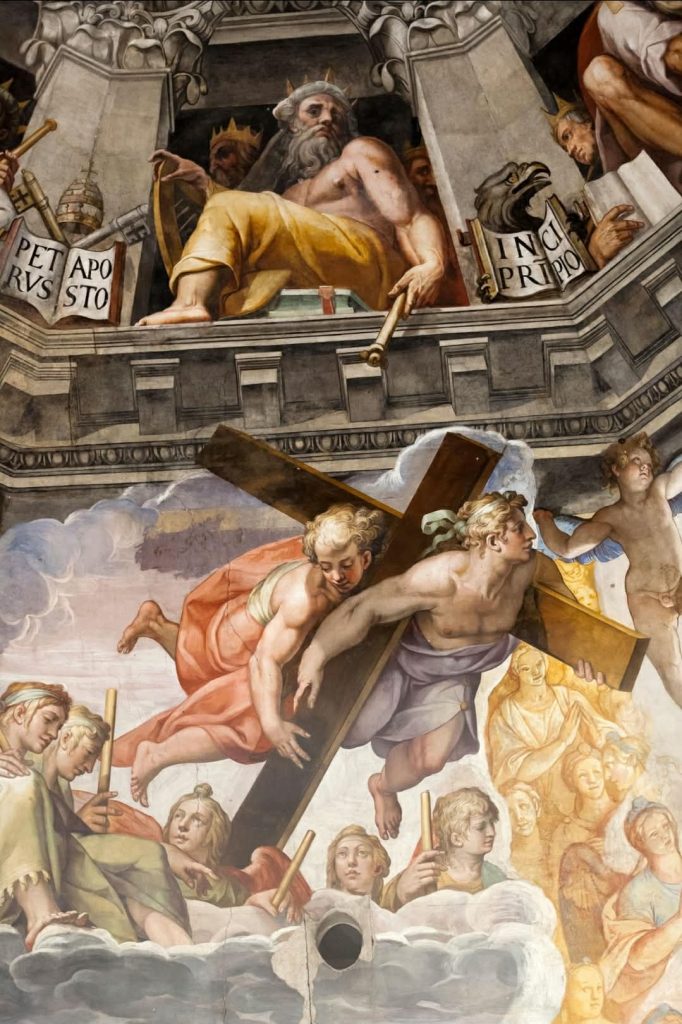
In the bright halls of heaven’s court, with its mighty pillars and many-arched ceiling, two archangels met in the middle of a path.
“How soon till the hearing?” Zoticus asked.
“It’s about to happen as we speak,” said Nebulus. “Shall we go together?”
“Gladly.”
Around them, countless other spirits, bright and glorious, marched through that colossal hall, down the many walkways, to the doors that opened into the heavenly courtroom.
As they walked, Zoticus and Nebulus fell into conversation.
“You are part of the division that carries souls here after their bodies have died on Earth,” said Zoticus. “Do you know the ones being judged today?”
Nebulus nodded, a grieved expression on his face. “Indeed, Zoticus,” he sighed. “Today will not be a day of glad reception. Today, the souls of those who suffered greatly in life, yet did not turn and seek after their Maker, will be condemned. Yet for all that, our Master, out of His abundant grace, will give each of them a chance to be heard before they are sent to their judgment. Each of them will have a chance to express their reasons why they did not believe and why they found fault with Him, to the point they refused to believe in Him till the day they died.”
Zoticus shook his head. “Even after thousands of years, I don’t think I will ever understand humans. To think such creatures, to whom God gives life, breath, and everything else, could so easily forget Him! Why do they strive with all their effort to put as many walls between them and Him as they possibly can? Why must they set themselves on paths that will lead to their own destruction, with such persistence? Again, Nebulus, I don’t think I will ever understand.”
Nebulus gave a heavy shrug of his shoulders. “Alas, Zoticus,” he replied. “The faults of humanity all spring from that same fatal choice from the beginning: To define good and evil on one’s own terms rather than God’s. To seek knowledge and meaning apart from Him. To become a god unto oneself.”
“But there must be more to it,” said Zoticus. “Surely, humans who suffered greatly in life would surrender to God once they heard of Him? Surely, they would rejoice, having found a happiness that lasts?”
Nebulus shook his head. “Humans are infernally complex, my friend. I have seen it after countless years of soul-carrying. Their experiences shape their perceptions of reality. Some of these suffer, and they eagerly seek for their Maker, desperate for a true hope they can’t find on Earth. But others try to solve their problems on their own. They reject the notion of God on certain premises. Often, they argue, He is not doing enough for them. A good God would certainly want to remove all the pain and suffering from the world. Yet all the pain and suffering hasn’t been removed. Therefore, He is either not all good if He does exist, or He doesn’t exist at all. Sadly, many humans are prone to believe one or the other of these, with no exception.”
Zoticus nodded. “Your insight serves you well,” he said. “And I think I will understand better once I have heard each of these souls during the hearing.”
“Perhaps all of us will better understand,” Nebulus agreed.
***
At once I was in the Spirit, and behold, a throne stood in heaven, with one seated on the throne. And he who sat there had the appearance of jasper and carnelian, and around the throne was a rainbow that had the appearance of an emerald. Around the throne were twenty-four thrones, and seated on the thrones were twenty-four elders, clothed in white garments, with golden crowns on their heads. From the throne came flashes of lightning, and rumblings and peals of thunder, and before the throne there was as it were a sea of glass, like crystal. —Revelation 4:2–6.
***
“Lady Catherine de Bourgh!” the herald archangel announced. Meanwhile, two angels in flashing white tunics and golden breastplates brought the first soul forward. They made their way across the vast, crystal sea to the foot of the mighty throne, surrounded by thick clouds and beams of light that pierced forth. But there was nothing more awesome and terrible in that throne room than the One who sat upon the throne. His figure pulsed with power, His face glowed with beauty and splendor, and His clothes and hair were white as snow.
Now, as the first soul was brought before Him, a look of utter sorrow passed across that ancient face. Meanwhile, she who stood before him in tangible form like a small gnat, could not even raise her eyes to her Maker.
Those in attendance—the assembly of spirits who beheld her—instantly understood from her tall height and strongly-marked features that she had once been a lady of noble standing in her time. This was she who had once been the ward of Rosings Park, one of the wealthiest, most powerful women in England during the early 19th century. She who had once given the grandest meals; adorned herself with luxury; had the whole world at her feet.
This was she who once scorned the lower classes, shuddered at the mere thought that those of different rank could be equals. She who sneered at the common, vulgar, weak, licentious crowd she rose above with her power, rank, and noble lineage. She who never suffered to be contradicted, never believed she was ever in the wrong, never believed in anything but keeping her own reputation at all costs. Even if it meant interfering in the lives of others to the point of intimidation.
And now here she stood at the end, robbed of all her money and power in one last breath on her deathbed, now subject to the infinite power of the One who reigned supreme, even over her. She stood there before the throne, wringing her hands, her face so contorted in sadness, bitterness, and anger, it was awful and pitiful to behold.
After a brief, tense silence, the voice of the Almighty roared overhead like thunder, yet passed through Lady Catherine’s mind like a gentle whisper.
“Speak, my daughter.”
For another few seconds, she remained silent. Then, drawing her mouth open, she hissed in a cracked and broken voice: “A plague on Collins, the daft, bumbling, old fool! This is all his fault! His incessant rambling in church! A lot of fluff. That was all it was. He never said anything that moved my soul in any particular direction.” She raised her head a little. “A plague on all the vicars of England, who prance across the pulpits and spew nonsense simply to please people’s ears! Who make lots of noise in church and then, in their spare time, turn their fancy to themselves and their own material gain!”
She snorted and went on in an even louder voice, her tone underlined with venom, her eyelids red with anger. “England!” she sneered. “Dear, precious, pious England. The almighty Christendom, with all her crosses and sculptures and stain-glass windows! Worthless! A most cruel and hideous facade! A facade I was willing to overlook for the honor I merited from the vicars and their congregations. From my point of view, I was simply following the example of my forebears. I attended the Parsonage every Sunday to keep my reputation. It was an effective means to keep the commoners in check. To see that they always stayed well-behaved as suited their rank. If I, with all my wealth and power and influence, could set an example, surely they would seek to emulate me! Me, who rose above them, and they, so low they could only ever look on me with reverence! It was the only use I found for the whole Sunday ritual. A tool, a means of cultural influence, designed to pacify the commoners and remind them of their place.
“And yet I see, at the end of all things, that I stand condemned before the throne of the real, living God for some reason! Which means I missed something. Something that was never made clear to me in all the years I attended church and listened to the vicars. Those men, who prattled on about earthly prosperity!” She raised her head to the space above her, a scowl of loathing on her face. “It is because of them that I stand accused and condemned!” She croaked. “It is because of them that I never saw the Scriptures as anything more than a societal influence; or that I never saw the church as anything more than a propitious ritual!”
After this, she fell silent for a few seconds, her face buried in her hands. When at last she raised her head again, a new light flickered in her eyes as a new thought dawned. “No,” she breathed. “No, there is even more to it than that. Something that runs far deeper.”
Her eyes narrowed. Her scowl deepened. “My parents,” she growled. “They made me like this! My father, who never looked on me with any sort of affection and only regarded me as one of his assets. Who had me married against my will for the sake of preserving the noble bloodline! My mother, who was so weak, she let him rule over her. She was powerless to overcome him, even with all her wealth! She desired his authority, yet he ruled over her. So it was with me and Lewis! When he finally passed, I was the sole mistress of Rosings! I held the power, and I would never let myself become as weak as my mother ever again! With Lewis gone, all I had left was my name and rank—the only tools of advantage I had in a society polluted by patriarchy! A system that only regarded women as equal, and even more superior to men, so long as they had a fortune and an honorable reputation!” She gritted her teeth and clenched her fists tight. Her chin began to tremble. “And now look at me!” she wailed. “I have finally met my end just like Lewis, just like my parents, and where are my name and rank now? Gone, gone like smoke! Gone, like everything else! Including my salvation!” At last, she slumped to her knees and pounded the crystal floor with her fists. “It’s all their fault, all their fault, all their fault!” she groaned. “A plague on them! A plague on all of them!”
As she continued to weep into the floor, it was clear to every last spirit in the assembly that this was a truly wretched woman, who, during her life on Earth, was only seen as valuable for her wealth and rank. All her life, people had taught her that, and all her life, she had believed it. Naturally, she believed more in herself and her rank than she ever believed in God, which was why she now stood condemned. But of course, it didn’t make the assembly pity her any less.
Yet Lady Catherine de Bourgh, even in her current position, wished for no pity. Not even from angels or her own Maker, who gazed on her in silence. His shining face was filled with sadness, a face she still couldn’t bring herself to look upon. Her shame was great, and she knew, despite her complaints, she had no excuse. Yet even then, the bitterness in her heart turned in a new direction, and this time, she directed it toward the figure on the throne. Though she could not look directly at Him, though she stared off to one side, her hot and venomous mouth opened against Him.
“You,” she hissed. “You, Almighty Lord and Savior, thou who art so fair and benevolent. How could you be so displeasing? How could you let such ninnies like Collins take the pulpit in my day? And how could you, the King of the Universe, allow men to treat women with such shameless tyranny? Cruel, heartless, unfeeling Deity! Am I to endure the disgrace and torment of fiery Hell when I was so utterly provoked to act and believe the way I did due to the conditions I was born into? The conditions you forced upon me?”
He who sat on the throne remained silent.
Now Lady Catherine rose to her full height, though she was still a gnat compared to the power and glory in front of her. “Tell me once and for all,” she shrieked, stamping her foot into the ground, “Why did you do this if you were so eager for me to turn and repent of my wicked, wicked ways? To clothe the poor, comfort the widows, feed the orphans? To finally see you for who you really were? To give you my love and devotion when those fools you put in charge of the church never once moved my soul? I demand to be satisfied! Tell me!”
He leaned forward. “Look at me.”
She hesitated, then, with great effort, looked.
He fixed her with His bright eyes, two deep pools of fire. “Come to me, all who labor and are heavy laden, and I will give you rest. Take my yoke upon you, and learn from me, for I am gentle and lowly in heart, and you will find rest for your souls. For my yoke is easy, and my burden is light.
“Ask, and it will be given to you; seek, and you will find; knock, and it will be opened to you. For everyone who asks receives, and to the one who knocks it will be opened.
“Beware of false prophets, who come to you in sheep’s clothing but inwardly are ravenous wolves. You will recognize them by their fruits. Are grapes gathered from thornbushes, or figs from thistles? So, every healthy tree bears good fruit, but the diseased tree bears bad fruit. A healthy tree cannot bear bad fruit, nor can a diseased tree bear good fruit. Every tree that does not bear good fruit is cut down and thrown into the fire. Thus you will recognize them by their fruits.”
Lady Catherine, her chin trembling, sank to both her knees again as these words poured from the mouth of the Maker. When at last she opened her mouth and uttered words, they sounded feeble and toneless. “What…what is this? What are you saying?”
He opened His mouth again. “If you abide in my word, you are truly my disciples, and you will know the truth, and the truth will set you free.”
Lady Catherine huffed. “Do you mean to say that if I had simply taken more time to read the Scriptures for myself with all due eagerness, whether or not I attended the Parsonage, I would have found you and then you would have made yourself known to me? Then I would have been happy? Then I would have changed, despite my circumstances?”
The only answer she received was silence, but the implied answer roared loud and clear in her mind. It called her out for her stubbornness, her pride, her refusal to give the Scriptures even a glance for herself. All because she was too focused on her mission to keep an honorable reputation in the eyes of her society.
The biting truth bore down upon Lady Catherine like a load of bricks, yet even at the end, she clenched her teeth and fixed the figure on the throne with a look of utter hatred. “What drivel!” she spat. “What useless, useless drivel! A lot of good your words will do me now! It’s already too late for me. Would that I had never even asked for an answer, and that you had never added to my torment with the answer you gave! Now I shall bear our separation with greater anguish, knowing for the rest of eternity what I missed and will therefore never have!”
She rose to her feet and gave a solemn nod. There was a resigned flicker in her eyes as she made her final word, even as the two angels came forward to take her away.
“There is only one thing left for me to do now. Something I have always been good at doing and shall always be good at doing from this day forward: Resent. I resent myself, I resent the world, I resent life, I resent truth, and I resent you. Now I shall have the due honor of resenting it all, every day, for as long as eternity lasts.” She turned her face away. “I take my leave of you.”
The Lord bowed His head. A tear trailed down His cheek as the angels carried His fallen daughter off to her judgment.
Most of the angels in the assembly bowed their heads as well. No one in heaven that day was happy. And the hearing had just begun.
***
“James!” the herald announced as the angels brought the second soul forward.
Upon first seeing him, the assembly immediately observed his tall, rugged features, his glistening eyes, and his tightly-pressed lips. This was a man who had seen and felt terrible things, a man who fought hard all his life to survive. Unlike the previous soul, this was a person who did not hesitate to look directly at the throne. There was a gleam of defiance in his eyes, a desperate passion in the stride of his step and the swing of his arms. When at last he arrived, it looked as if he could barely restrain the explosion that begged for release inside of him.
Then came the roar and the whisper. “Speak, my son.”
Intense and earnest, James, the one-time friend of Huckleberry Finn, with whom he had shared many perils on the Mississippi River while seeking to escape his chains, delivered his challenge. The whole time he spoke, he made wide, sweeping gestures, and every so often thrust a finger at the throne, his voice rising and falling in powerful, undulating tones.
“Where were you? Where were you? Where were you? Where were you? Where were you when they invaded our native land? Where were you when they killed our leaders, kidnapped our men, women, and children? Where were you when they dragged us on board their ships, carried us to a foreign land against our will, sold us like animals? Where were you? Where were you? Where were you? Where were you?
“Where were you when they deemed us inferior, physically and intellectually? When they used us as pawns instead of people? Removed our right to free speech? Removed our right to be educated? Removed our right to marry people of the other race? Removed our right to equality? Where were you? Where were you? Where were you? Where were you?
“Where were you when they used us for sport? Where were you when they painted their faces black, mocked us in their minstrel shows, jeered at us, laughed at us, made a joke out of us? Where were you when their preachers demonized us, called us accursed, labeled us as deserving of our situation? Where were you when they took advantage of us, took out their anger on us? Where were you when they screamed at us, spit on us, called us ‘nigger’? Where were you when they falsely accused us, beat us, whipped us to bloody pulp? Where were you when they hunted us down with their dogs, burned and lynched our men, raped our women, tore our families apart, again and again and again? Where were you? Where were you? Where were you? Where were you?
“Who are you? Are you a white God? Are you a black God? Are you something else? Why did you make whites masters and blacks slaves? Tell me on what grounds you find it necessary to throw me in Hell forever when I know countless others that deserve the same for what they did. What you let them get away with! So once again I ask you: Where were you? If you are the one true God, I hope you have a good damn explanation. And you’d better make it good, because from what I’ve seen, you haven’t done all that much for me and my people when we needed you most.” At last, he fell silent. His eyes burned with angry tears, his breath was heavy, and his shoulders rose and fell like tossing waves.
He who sat on the throne looked long and hard at the man who stood before Him. During the speech, He had listened with a calm, steady bearing. Now at last, He leaned forward and fixed His bright eyes upon the soul in front of Him before He opened His mouth.
“When the Son of Man comes in His glory, and all the angels with Him, then He will sit on his glorious throne. Before Him will be gathered all the nations, and He will separate people one from another as a shepherd separates the sheep from the goats. And He will place the sheep on His right, but the goats on the left. Then the King will say to those on His right, ‘Come, you who are blessed by my Father, inherit the kingdom prepared for you from the foundation of the world. For I was hungry and you gave me food, I was thirsty and you gave me drink, I was a stranger and you welcomed me, I was naked and you clothed me, I was sick and you visited me, I was in prison and you came to me.’ Then the righteous will answer Him, saying, ‘Lord, when did we see you hungry and feed you, or thirsty and give you drink? And when did we see you a stranger and welcome you, or naked and clothe you? And when did we see you sick or in prison and visit you?’ And the King will answer them, ‘Truly, I say to you, as you did it to one of the least of these my brothers, you did it to me.’
“Then He will say to those on His left, ‘Depart from me, you cursed, into the eternal fire prepared for the devil and his angels. For I was hungry and you gave me no food, I was thirsty and you gave me no drink, I was a stranger and you did not welcome me, naked and you did not clothe me, sick and in prison and you did not visit me.’ Then they also will answer, saying, ‘Lord, when did we see you hungry or thirsty or a stranger or naked or sick or in prison, and did not minister to you?’ Then He will answer them, saying, ‘Truly, I say to you, as you did not do it to one of the least of these, you did not do it to me.’ And these will go away into eternal punishment, but the righteous into eternal life.”
Here at last, He extended His arms with the palms facing up so James could have a good look at them: the deep, hollow punctures in both the Maker’s hands. A shadow of the past; a memory of the nails that once held Him pinned to a cross, exposed and naked; an object of mockery for both Jews and Gentiles as He bore the full brunt of their sin and shame that dreadful Friday, more than a thousand years ago. The next words that came passed over James like a cool breeze, full of empathy and understanding, but also edged with a grief that was unfathomable.
“Truly, I say to you, as surely as those people did all of those things to you and your people, they did them to me.”
James stared in silence for a minute or so, until at last, with a curt nod, he took a step back. “Now you tell me,” he said, less angry now, but bitter still. “Now you tell me, when it’s already too late. Why didn’t you ever make that clear to me when I was alive? Why did all the religious people of my day insist the Bible wholly favored their ideology? How did they find biblical grounds for justification if there was none?” He gave a dry snort. “They used it as a weapon to subdue us. How could I have possibly known you didn’t match up to their interpretation when that was all I ever heard or felt? Answer me that, and then maybe, just maybe I’ll understand.”
The Lord nodded and replied: “Not everyone who says to me, ‘Lord, Lord,’ will enter the kingdom of heaven, but the one who does the will of my Father who is in heaven. On that day many will say to me, ‘Lord, Lord, did we not prophesy in your name, and cast out demons in your name, and do many mighty works in your name?’ And then will I declare to them, ‘I never knew you; depart from me, you workers of lawlessness.’”
“But how could I have known?” James rasped. “How was I supposed to know you weren’t what they said you were?”
The Lord leaned forward again and repeated what He had told the soul before James.
“Ask, and it will be given to you; seek, and you will find; knock, and it will be opened to you. For everyone who asks receives, and to the one who knocks it will be opened.
“If you abide in my word, you are truly my disciples, and you will know the truth, and the truth will set you free.”
James nodded, but there was no joy in his face. “So you’re saying the reason I’m going to Hell is because I didn’t pick up the Bible and read it for myself to see if what they said about you was true or not? So I could believe in the real you? The you that didn’t tolerate slavery? Is that it?”
To this, the only answer the Lord gave was silence, though He eyed James with that same look, filled with grief for what His beloved son missed; what would have given him true life, true hope, and true purpose, even after all the horrors he endured.
James opened his mouth again as if he wanted to say more, then shut it. What else was there to say? Both of them had spoken and both had heard each other out. With downcast eyes, without another word or glance behind him, James turned his back and let the angels lead him out of the presence of his Maker forever.
As the angels led the man away, this time the Lord covered his face with both hands and wept openly on the throne, and many of the angels wept with Him.
***
“Prince Dakkar, alias Captain Nemo!”
The third soul they brought forward was tall with a broad forehead, straight nose, clearly-etched mouth, slender, tapered hands, and eyes spaced far apart. Although the expression on his face was solemn, there was no denying from the even stride in his step and the way he held his chin up that he had, at one time, been a man of singular cunning, courage, and creativity. This man who once commanded the mighty Nautilus, the underwater vessel he invented ahead of his time; who once traversed the utter depths of every ocean, knew their secrets, enjoyed their beauties, endured their terrors like no other.
This man who, after his homeland was conquered by the British Raj, swore never again to set foot on land where tyrants reigned supreme; who vowed to take vengeance on that world of the surface, destroyed every ship that crossed his path. Even those associated with, though not directly responsible for, the deaths of his family. He who vilified society, made it his mission to save the oppressed and punish the oppressor, and at the cost of many lives.
Now, the impassioned avenger stood small and meek before the throne of the One. His eyes, which in life conveyed a gleam of lofty ambition, now stared transfixed at his Maker, full of awe and terror. His chin quivered, his fists clenched tight. Here at last he stood before the Supreme Judge, who had total authority over him, unlike every last nation on Earth he once rejected.
A third time, the voice from the throne both roared and whispered. “Speak, my son.”
Still keeping his eyes on his Maker, Dakkar opened his hands in a gesture of reception. “Behold your servant, O Lord,” he declared, his strong voice coursing through the air like the song of a mighty whale. “Here I stand! I, your avenging angel, your minister of justice, your weapon of retribution! In my time, I was an advocate for those whom the nations oppressed! I did not keep my wealth to myself, but funded their revolutions with the treasures you delivered into my hands! To the crew with whom I shared my every venture on board the Nautilus, I treated as brothers. I tended your waters with care; I respected your creatures; I took full advantage of every resource you gave me. I forsook the world of the surface where sinful man reigns supreme; pursued a life of righteousness that might be pleasing in your eyes! With a willing heart, I devoted myself, both to the study of your waters and the judgment you’ve prepared for the shameless oppressor!
“What then have I done to incur your wrath, O sovereign Lord?” he cried, falling down on his knees. “Why do I stand condemned?” He gave a baffled laugh, even through his tears. “Are you not a God of justice? Of refuge and equity for all people? How have I caused you offense? What have I done that I did not already do for you? I assure you I acted according to my conscience! As did Moses when he killed the Egyptian, Samson when he slaughtered the Philistines, David when he slew Goliath! How am I any different from these, your chosen servants, who did you well by their acts of justice? Answer me, I beg of you!”
The Lord regarded Dakkar with a more severe expression than He had with the last two souls. He heaved a grievous sigh before leaning forward and giving His response.
“Judge not, that you be not judged. For with the judgment you pronounce you will be judged, and with the measure you use it will be measured to you. Why do you see the speck that is in your brother’s eye, but do not notice the log that is in your own eye? Or how can you say to your brother, ‘Let me take the speck out of your eye,’ when there is the log in your own eye? You hypocrite, first take the log out of your own eye, and then you will see clearly to take the speck out of your brother’s eye.”
Dakkar blinked, then shook his head, bewildered. “And who, pray tell, is my brother?” he demanded with a hint of indignation.
The Lord stared hard at him and replied: “You have heard that it was said, ‘You shall love your neighbor and hate your enemy.’ But I say to you, Love your enemies and pray for those who persecute you, so that you may be sons of your Father who is in heaven. For He makes His sun rise on the evil and on the good, and sends rain on the just and on the unjust. For if you love those who love you, what reward do you have? You therefore must be perfect, as your heavenly Father is perfect.”
Dakkar’s face turned crimson. For a moment, he could not speak. When at last he spoke, his voice trembled with pain and rage. “Is this why I am here then? Because I sunk the ships of my British oppressors? All men who serve that regime are corrupt. Their only fancy is power and conquest, and they will go to any lengths to secure that advantage, even if it means butchering the innocent!” His chin trembled as he went on, his voice growing louder, more agitated. “Do you have any idea what that nation did to me? What they did to my family? They murdered my parents, my wife and children! They treated them with the savagery of animals, and you expect me to believe that such men who serve the Imperialist enemy should be forgiven?”
The Lord remained silent.
Dakkar raised a shaking finger and thrust it at the throne. “You have no idea what I’ve been through!” he shrieked. “How easy for you to condemn me for my actions when you sit on the throne! Hold all the power in your grasp! Have nothing to fear from anyone!” He dared to take a step forward. “What did you do to stop them? While those men robbed me of everything I loved and cherished, you sat by and watched! You watched them tear my loved ones to pieces and you did nothing to stop it! NOTHING! How can you rebuke me so easily when I know thousands of others who deserve worse than I? My brothers are the oppressed — those whom society cast out; that hideous construct of violence, coercion, and control! Not my oppressors! My oppressors are my oppressors!”
He drew himself up and raised his head a little higher. “Since you did nothing to stop the oppression, I made it my own mission to stop it! For years I fought to correct oppression and bring justice to the powerless, against my own enemies and the enemies of my brothers.” He gave another baffled laugh. “And now you tell me that I should love such creatures? That they are just as much a family to me as my fellow victims? How could you be so unfeeling? So cold and condescending towards the man you allowed to suffer unlike any other?” His lip curled in hatred. “You,” he snarled. “You are just as tyrannical as the monsters you made! Those devils you suffered to bring such terror on the rest of us! If you claim to be so good, so logical, so loving, so compassionate, pray give me one good reason why I should heed any of the words you just used to make me out a hypocrite! Tell me, I beg of you!”
The Lord’s eyes filled with tears for the third time that day as He went on in an earnest tone: “I, I am he who comforts you; who are you that you are afraid of man who dies, of the son of man who is made like grass, and have forgotten the Lord, your Maker, who stretched out the heavens and laid the foundations of the earth, and you fear continually all the day because of the wrath of the oppressor?
“Have no fear of them, for nothing is covered that will not be revealed, or hidden that will not be known. What I tell you in the dark, say in the light, and what you hear whispered, proclaim on the housetops. And do not fear those who kill the body but cannot kill the soul. Rather fear Him who can destroy both soul and body in hell.
“You search the Scriptures because you think that in them you have eternal life; and it is they that bear witness about me, yet you refuse to come to me that you may have life.
“So everyone who acknowledges me before men, I also will acknowledge before my Father who is in heaven, but whoever denies me before men, I also will deny before my Father who is in heaven.
“Whoever loves father or mother more than me is not worthy of me, and whoever loves son or daughter more than me is not worthy of me. And whoever does not take his cross and follow me is not worthy of me. Whoever finds his life will lose it, and whoever loses his life for my sake will find it.
“Cease to do evil, learn to do good; seek justice, correct oppression; bring justice to the fatherless, plead the widow’s cause.
“What does the Lord require of you but to do justice, and to love kindness, and to walk humbly with your God? Is not this the fast that I choose: to loose the bonds of wickedness, to undo the straps of yoke, to let the oppressed go free, and break every yoke?
“Everyone then who hears these words of mine and does them will be like a wise man who built his house on the rock. And the rain fell, and the floods came, and the winds blew and beat on that house, but it did not fall, because it had been founded on the rock. And everyone who hears these words of mine and does not do them will be like a foolish man who built his house on the sand. And the rain fell, and the floods came, and the winds blew and beat against that house, and it fell, and great was the fall of it.”
Prince Dakkar, or Captain Nemo, who had no choice but to listen to this discourse, said nothing at first. A minute passed after the Lord finished, and though he opened his mouth, Nemo could not speak. Then at last, the dam burst and he collapsed to the ground in a miserable heap. His wails of agony carried through the halls of heaven, and the assembly watched in grave silence as they waited for the sobs to pass.
When at last he could open his mouth and form coherent words, Captain Nemo no longer raised his eyes to the throne. He remained on his knees and looked down at his hands, those hands that shed so much blood.
“Oh, foolish, foolish, foolish man that I am!” he cried. “In my eyes, I was the law! I was the tribunal! And because of that, I overlooked the justice of the true God! I overlooked His patience, His grace, His mercy, His forbearance! Had I but stuck to my task of aiding the other nations and not balanced these acts of generosity with self-centered revenge towards my own oppressors, had I but kept my eyes on my Lord, who will surely bring the truest justice to all nations at the end of all things, I might have been saved! Yet here I stand, as foul and guilty as the very men who took everything from me!
“Never once did I yield and give Him my burdens. Not even till the day I died! Once, perhaps, the day I parted with Pierre Aronnax, that man I abducted from the surface, who once attempted to stir my conscience, I might have felt the Spirit’s call. Yet even after I survived the maelstrom that separated me from Aronnax, even after I found peace in later days, I never forgave my oppressors. Never sought to bring justice according to my Maker’s example! I became a hateful, passionate man who loathed and despised every last man who lived on the surface, though I was just as wretched!”
Here at last, Captain Nemo staggered to his feet, and, with a painful grimace, turned his back on the throne. “And now I must pay the price for my vindictive nature—that nature that scorned mercy and sought reclusive vengeance. I shall embrace the distance between me and my Maker with a wretched willingness. Just as I embraced the distance between me and my fellow men from the day I first set foot on board the Nautilus; abandoned all hope that they could ever be pardoned for their sins. Even now in death, I shall sink into the utter darkness and never again resurface. Farewell.”
Thus did Captain Nemo, Prince Dakkar of East India, embrace the righteous judgment on his head.
***
“Sherlock Holmes!” the herald announced, and the final soul to be heard and judged that day was led forward.
The gaunt gentleman, with his hawk-like face and stoic demeanor, stood there in silence, staring expressionless at the One who sat on the throne, though his face was very pale. For the first time in his life, almost unnaturally, two tears sprang from his eyes and carved glistening lines in his thin, sunken cheeks.
Another minute passed, and the world’s greatest detective continued to stare. Then he spoke, sharp and sincere, though he could not suppress a rasp of emotion.
“Here at last have I met my match. What else can I say? You were the one mystery I refused to solve.
“Perhaps it came from my own distaste for religious communities,” he went on, pacing in circles before the heavenly assembly. “All pomp and swagger, with their bitter, frowning faces and often arrogant disposition. I have witnessed the dreadful aftermath of religious corruption, such as the Jefferson Hope case. Hope took vengeance on the two Mormon elders who stole his lady from him in the name of their own religion. They killed her father for not giving her up to a harem and coerced her to death. Quite literally, I might add.
“There were, I suppose, other religious circles in my own country who were good in their own way. Yet even among some of them, I recognized that same inclination to keep to themselves and push out the riffraff, which I found to be on par with Mormonism. It seemed to me both selfish and cowardly, and certainly gave me no cause to want to join myself to any such community.
“Not only that, but as I grew older and found my calling as a detective, I came to rely upon cold, hard logic and deduction. I regarded passionate love, romantic or otherwise, as a source of weakness in my field. Emotion would cloud my judgment, bias my perception. Those who went after religion were too emotional, too susceptible to bias in their views of the world. Therefore, I figured it was all the more to my advantage that I did not associate myself with any religion. Though now that I think back, I realize I often saw the world according to a Darwinian perception, and so believed in a religion of materialism.”
Here he paused, and for a few seconds held a fist to his mouth to choke back sobs that fought to escape. When at last he pulled himself together, he raised his eyes to the throne again.
“Yet here I am, overcome with emotion by what I have found to be true only in death!” he cried. “What a fool I’ve been! How could I have been so blind? How could I not have considered the implications of coming to a more truthful understanding of the world? That to find the truth should and will inevitably end with emotion? And not emotion in the basic sense, but emotion of the deepest, profoundest, most gratifying kind? The closest I ever came to it was when I sat in concert halls and, in my mind’s eye, drifted on warm, sweet currents of musical symphony!”
He laughed. “Music! The beauty and meaning were there, yet I never understood why to begin with. Having given up all hope of ever associating myself with any religion, I leaned on my materialist view of the world. I concluded that the human capacity to enjoy music naturally stemmed from our gradual, evolutionary development. The universe, I reckoned, was a sorry institution in which man could only escape by creating his own meaning and purpose.
“Yet to stand in the face of divine perfection wipes the slate clean! All my theories, all my knowledge, all my arguments, conclusions, and deductions came to nothing! All I had striven for in life to make the world a better place was little better than smoke. For I never set my mind to unravelling the greatest mystery of all time: The death and resurrection of Christ! I never even considered the fundamental nature of our reality. The world I lived in was testament enough to the existence of so beautiful and wise a Maker as this! I had everything I needed to find the truth. More than once, I felt a pang of curiosity. I will admit it. But I never pursued those small, eager whispers. I thought they would make me weak.”
With downcast eyes, he shook his head. “To my own shame, I say it,” he sighed. “And well I should hope that in the future, men and women will rise to the challenge I declined! Detectives of considerable brilliance, who will seek after truth and find it, even if they do it with the greatest reluctance! Open to every possibility and willing to pursue cold, hard logic, devoid of bias, that will lead them to the foot of the Savior’s cross and reward them with a joy greater than any other! A joy that I missed and shall never have the pleasure of partaking in, even in death. My hardened heart has condemned me to the shadows just as much as my greatest enemy’s.”
Sherlock Holmes raised his hands to his face and gave them a good stare. He then lowered his arms and examined his whole self from top to bottom. His eyes burning with tears of self-loathing, he opened his quivering mouth and said his final words before he was led off to his judgment.
“And yet, in the end, I realize my greatest enemy was not Professor Moriarty. My greatest enemy … was myself. A pity for those who lived in ignorance then, live in ignorance now, and will live in ignorance till their dying day. Only in death will they find the truth, and by then, it will already be too late. While they still have time, may human beings strive with all their efforts to find a joy that is true, good, and even more beautiful than Beethoven’s Fifth Symphony or Mozart’s Requiem! A joy that will last them forever into eternity! As of then, now, and ever onward, the game’s afoot!”
***
As the shining host filed out of the courtroom, the solemn expressions on the faces of both Zoticus and Nebulus conveyed the depth to which they reflected on that day’s hearing.
For some time, neither spoke, until at last, Zoticus turned to Nebulus. “Well, true to your word, I think we have both come away with better understanding. Not that this was the only hearing I’ve ever attended, but this particular one gave me great cause for reflection. Especially after that last soul. Even in death, his detective faculties led him to deduce his situation with accuracy.”
“He was quite the event,” said Nebulus with a smile. “But all four of them, I think, said something important.”
“In what way?”
Nebulus folded his arms behind his back. He was silent for a few seconds, and when he spoke, his tone was soft. “I think,” he said, “That while each of them certainly deserve to go to Hell for their stubborn rejection of their Maker, they also deserve our greatest pity. Here were four people from four different paths in life, who fought so hard to survive in a hostile world full of corruption. Like I told you once before: experience often shapes how humans perceive reality. Lady Catherine de Bourgh denied Christ because in her experience, Christianity was only so useful as a device to control and regulate society, and to avoid disgrace; not to mention her encounters with so-called ‘religious’ people like Collins did little to enlighten her. James refused to read the Scriptures because he believed that doing so meant bowing to the ideologies of his white oppressors. Prince Dakkar tricked himself into believing he was God’s righteous hand of retribution against all world oppression when, really, he was turning himself into an oppressor.”
After a pause, Nebulus gave a sad smile, shook his head, and went on. “Holmes is a different matter. He did not suffer in the same way as these others. Instead of coercion, family loss, or physical abuse, he endured an intellectual kind of suffering. His burden was the knowledge of evil, a knowledge that troubled him daily. What’s more, he recognized this same evil in the hearts of those who claimed to be religious, yet used their religion as more of a weapon than a source of truth and joy to a suffering world. To him, their errors outdid any action that reflected their Maker.”
Zoticus sighed. “More’s the pity.”
“More’s the pity, indeed,” said Nebulus, “When humans, religious or otherwise, look to themselves instead of the words of their Maker to reclaim paradise.”
–
Table of Contents
Tidus Pinkman is a senior at Biola University, pursuing a BA in English, and has made the Dean’s List seven times. His article titled “Did Gandalf the Grey Ever Use Narya, the Ring of Fire?” was published in Issue 84 of Leading Edge literary magazine.
Follow NER on Twitter @NERIconoclast








2 Responses
What a great story! Amazing use of scripture and a compassionate portrayal of the Maker!
Holmes is a perfect description of our materialist thinking in the west! Oh Father in heaven may there be revival back to the truth of the cross before it is too late
This is a very well written story! It is haunting in seeing them condemned—not as cartoon villains, but as tragically flawed versions of themselves—feels like watching beloved acquaintances choose isolation over offered mercy. All that was needed while they lived was to believe in the Savior and receive His gift of salvation by grace through faith.