By Glenn Harlan Reynolds
The Overton Window is moving. I remember a while back when calls to repeal the Seventeenth Amendment, which provides for popular election of Senators, were rare, the sort of thing a provocateur — Jim Bennett is one — might throw out at a cocktail party. Like a lot of Jim Bennett’s ideas — he started the first private rocket company, the American Rocket Company, back in the 1980s — it may have been ahead of its time. But maybe its time is coming.
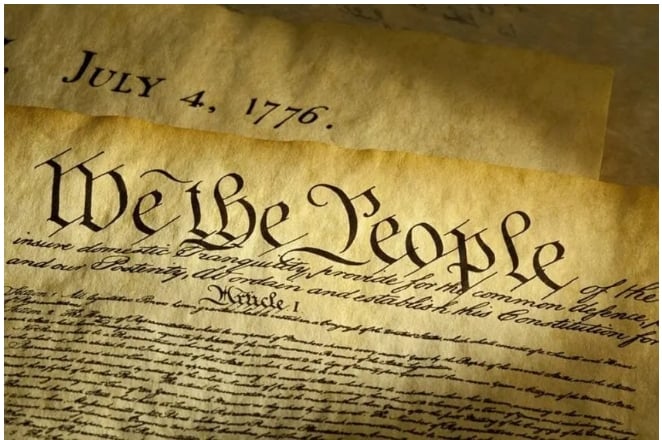
Just last week, Congressman Keith Self introduced a resolution to repeal the Seventeenth. And this time the idea doesn’t seem quite as crazy.
Background: When the Constitution was drafted, and for well over a century afterward, the Senate wasn’t popularly elected. The Constitution provided for the choice of Senators by state legislatures. One did not really campaign for a Senate seat, one lobbied. This was consistent with the Constitutional plan, in which the House of Representatives represented the people, while the Senate represented the states.
The Progressive movement didn’t much like this (a cynic might suggest that they thought it would be easier to demagogue the public than state legislatures made up of cynical politicians.) The 17th was also very much in keeping with the more democracy mood of the era. The franchise had been expanded from a minority of white men with property, to all white men, to all men, and was well on the way (just two amendments later!) to being extended to women.
Voters were impatient, and there was less appreciation of the careful structural compromises that had been made when the Constitution was drafted. By having a house of Congress that was responsive to the concerns of the states as states, the original design of the Senate served as a counterweight to federal ambition. Once the Senate was just a smaller version of the House with bigger districts, that changed. Public passions mattered more (vitiated only somewhat by the Senate’s longer terms) and Senators now had to campaign.
The effect was to make the Senate more, not less, dependent on special interests. Instead of lobbying legislators, now its members had to campaign and that costs money, especially when campaigning across a big state. The effect is beautifully captured in a story I heard from former Tennessee Governor Ned Ray McWherter when we were serving together on a state commission under Gov. Phil Bredesen. When Al Gore was elected Vice President, that left his Senate seat open, and left Ned Ray empowered to fill it for the remainder of the term. Ned Ray offered it to Rep. John Tanner, an old West Tennessee crony, who decline in (Ned Ray reported) these terms: “Oh Ned Ray, don’t make me go to the Senate. I have a nice safe House seat; if I go to the Senate I’ll be asking people for money 24/7.” Harlan Matthews got it as a caretaker, to be replaced by Fred Thompson two years later.
But John Tanner was very perceptive — Senators do have to ask people for money 24/7, something that’s a big departure from the pre-17th Amendment world. If you’re worried about the influence of special interest money, you should probably give a thought to repeal. Beyond that, State legislatures choosing senators would make senators more accountable to state interests, acting as a check against federal expansion, unfunded mandates, and overreach. This aligns with the Founders’ intent for vertical separation of powers. And the need to be asking for money 24/7 demonstrably discourages otherwise qualified people from seeking office.
What’s more, Senators chosen by legislatures would be less likely to support expansive federal programs (e.g., certain aspects of Obamacare or No Child Left Behind) that impose burdens on states, as they would prioritize state budgets and sovereignty.
Putting the confirmation of federal judges and cabinet officials in the hands of a body appointed by state legislatures would also likely change outcomes and emphases. And, for that matter, the courts would be less likely in general to discount the importance of the states, when they are represented directly by a part of the federal legislature.
Over the years I have gone from skeptical of claims to repeal the Seventeenth to reasonably supportive. Part of that is just from observing how the system works today. And once we’re done repealing that one, maybe we can repeal the Sixteenth? It’s just a thought….
First published in Glenn’s Substack









One Response
Mr. Author, good luck with your quaint yet troubling and bizarre notion that gaggles of politicians ought to select Senators rather than have Senators elected by the people of a given state.
This author, among several unhappy “analysts” lately who are agitating for this ridiculous concept – somehow didn’t get the message that politicians in this country are not high on the “respected people and professions” lists. In fact, they sit at the very bottom of the respected people lists along with fake educators, fake university administrators, fake DAs, and all Dumocrats.
The idea that politicians are better placed and better qualified to select representatives of the people rather than the people themselves is essentially a counter-intuitive and fundamentally Dumocrat and anti-American concept – as are most Dumocrat ideas of late .
The idea that somehow the 17th amendment puts the checks and balances system askew and that it needs to be brought back in line through repeal of the 17th is absurd. The only people who support taking power from the people and giving it to bodies/gaggles of politicians are Dumocrats and other Jacobin utopians.
The likelihood that the 17th amendment will be repealed and the power of the people through their votes reduced is essentially zero. The author should look elsewhere for things to agitate about because this one is going nowhere and fast.
The movement of the universe according to Jefferson was toward liberty and away from monarchism; the movement of American development is away from Dumocrats and always to reduce the power of politicians when such power is gained at the expense of the people.