By Phyllis Chesler
How do people hope to “live on”? Many believe that having children does that–it’s a way of passing on one’s genes and, hopefully, one’s values too. Scrapbooks filled with photographs for one’s grandchildren and great-grandchildren are also a time-honored way of being remembered. Philanthropists endow museums, opera houses, university programs, sports stadiums, houses of worship, and they receive wall plaques and are named in programs forever after.
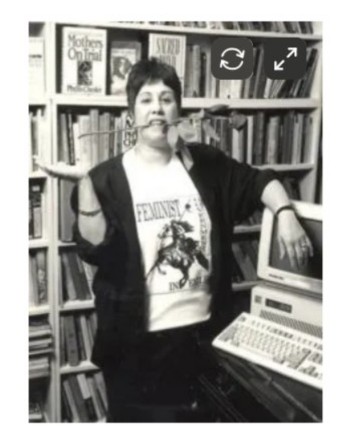 I have not spent my time on earth amassing money-wealth. That might have been nice, but doing so was neither my forte nor my destiny. I have built no palaces or country homes, commanded no armies in full military regalia. In future times, no building or sculpture of my visage, like the statue of Percy Bysshe Shelley’s “Ozymandias,” will inevitably crumble to dust.
My good deeds on earth will soon be forgotten, but hopefully they’ll be remembered in the World to Come.
As an intellectual, a scholar (a recovering academic), a journalist, an activist, a thinker, a wordsmith–I’m hoping that my every written word will remain available for use as long as time exists. As a witness to my own lived history, I hope to correct, even in a small way, the constant revisionism of events and biographies available on the internet; the increasing disappearance of objective truth down some Orwellian memory hole in order to burnish this or that reputation and in order to demonize the innocent, glorify their persecutors.
Why am I thinking about this now? Well, I am about to turn 86, and while it’s only a number, I think some rather heretical thoughts, namely, that I, too, may someday “shuffle off this mortal coil”–of course, I am but a human being, and thus, do not really believe it. But I must believe it in some way…because why else am I writing up a storm and leading a somewhat monastic life in order to do so? And so: “Who do I think I am?” Well, here’s one example of why I want to have my work very carefully preserved. Every word I’ve ever written, every lecture I’ve ever given, every interview too; all the drafts of my twenty-two books and thousands of articles and studies; the interviews I’ve given and even more importantly, the many people whom I’ve interviewed; my class presentations; my audio and visual cassettes; my calendars; my extensive collections of photographs; my published and unpublished works; the research that I’ve amassed; my enormous correspondence; etc.
are my palaces, and I want them to be able to time travel. I’ve crafted ideas, visions, analyses, engaged in conversations that are meant to last for all time and for all people everywhere, anywhere.
Yesterday, I was talking to a Dari-speaking woman who has recently been volunteer-counseling Afghan women who remain trapped by the Taliban. She said: “Phyllis I have your book Woman’s Inhumanity to Woman right here beside my computer, and I quote from it in every online counseling session. The women are not crying out about being sold to much older men in marriage–although that does happen. Their main sorrow is how badly their mothers abuse them. Constantly. Daily. They blame themselves. This has been going on for their whole lives. They do not know how to understand this–and with your book, I can explain it all.”
This is the very title that Iranian women pirated and translated into Farsi a few years ago. These brave souls sent me a copy with a beautiful cover and demanded that I meet with them on a Zoom call. Said I: “But I’m an alleged Islamophobe, a racist, a Zionist, a radical feminist.” And yet, they insisted on meeting with me anyway. We held that Zoom call. Women who were living in Teheran, Iranian women in exile around the world.
While I do not remember receiving an advance (I could be wrong), this book also appeared in Chinese. A young summer intern from China assured me that I was “a very famous woman in China.” Whaaat? I begged her to order some copies for me and so she did.
When I did interviews on this subject in far-off places like Brazil or Nepal or Australia, the interviewers all asked me, “How do you know so much about the women in our country?”
And this is the title that most American feminist icons warned me not to publish and chose not to endorse. Their comments were scornful and instructive. “The men will use this against us. Don’t do it.” “Are you going to name names?” (“What and publish a series of phone books?”) “I had a very good relationship with my mother. What you’ve written cannot be true.” One icon said: “I don’t even want to read a book with such a title.”
And, four years ago, when I checked Academia.edu, I found, to my astonishment, that my work–not just Woman’s Inhumanity to Woman but most of my other books and my studies on honor killing–was cited in ninety-seven (97) countries about 7,000-plus times.
Here’s why I’m thinking about this right now. So many library and university archives have cut back enormously on what they will accept and agree to preserve. They say that they are savagely restricting and limiting what they can accept due to recent funding cuts and/or because these are pro-forma archival rules. In other words, if you already have some of your archives in one place, then no other place can accept what that first archive refuses to take. I am at my wit’s end.
Any advice will be more than welcome.
First published in Phyllis’ Newsletter