By Lev Tsitrin
There was NASA before January 27, 1967, and after. On that day, a routine rehearsal test of the command module went deadly wrong. The fire broke out, killing the astronauts and sending a tsunami of grief and anguish through the country — and of self-examination at NASA. The resulting investigation discovered multiple problems: use of flammable materials, shoddy electrical wiring, poor design of the module — all requiring major changes of thinking and attitudes. The lessons of the tragedy made it possible to accomplish the mission set before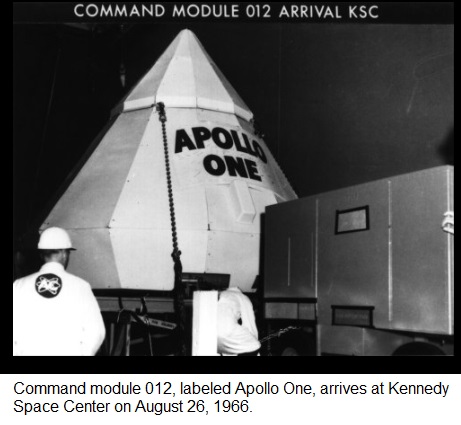 NASA: to send a man to the moon, and get him safely back. In the words of Michael Collins, the pilot of Apollo 11 “Without Apollo 1 and the lessons learned from it, in all probability, such a fire would have taken place later in flight, and not only the crew, but the entire spacecraft would have been lost. NASA, with no machinery to examine, could only guess at the causes and how to prevent still another occurrence. Yes, Apollo 1 did cause three deaths. But I believe it did save more than three later.”
The same, I believe, applies to October 7. To be sure, human societies are not machines — but their institutions are. Like individual parts in a machine, they make the society work. Each institution has its own, narrow and individualized, task: the police make life free of fear by removing the criminal element from the society; the army protects it from the external enemy; the government funds institutions with public money, and provides them with policy guidance.
Like Apollo 1 tragedy, October 7 brought to light spectacular flaws in Israel’s institutions of governance, and of the machinery of deterrence and protection it built. Just as the spark in shoddy wiring of Apollo 1 cabin brought to light a myriad of its design flaws, Hamas’ brutal attack exposed systemic failures in Israel’s thinking. The security border fence armed with modern gadgets offered no protection; intelligence services were ignorant of Hamas’ plans; the army had no plans of its own to counter an invasion from Gaza because it couldn’t imagine it — perhaps because the the government found such scenario inconceivable. The result of the collective blindness was frightful: 1,200 brutally murdered civilians, some 500 soldiers killed while expelling Hamas invaders from Israeli soil, hundreds of Israelis dragged into Gaza as hostages.
And yet, just as Michael Collins, looking back at the big picture of the Apollo program thought that despite the shock and the pain of the Apollo 1 disaster, in the final analysis it “was a blessing in disguise,” from a likewise emotionally detached viewpoint his words hold true for October 7 impact on Israel, too. Forced to act, Israel threw away the caution that allowed the choke-hold of Iran-funded militias like Lebanon’s Hezbullah to fester, and dealt them, and their supporting systems like the Assad regime in Syria a crippling blow — even reaching Iran, and its nuclear and missile programs, itself.
Like Apollo 1, October 7 gave Israel a much clearer view of the challenges facing the country. Some, well-known before, are external — but there are not a few internal ones, too. One is the lack of home production of munitions which creates a debilitating dependency of the US, and the resulting inability to conduct an Israeli-planned military campaign: Israel had to follow Biden’s ideas on how to proceed in Gaza, not Netanyahu’s — because no US munitions meant no ability to fight. Just as, proverbially, he who pays the piper orders the tune, he who gives the munitions orders the strategy — and Biden’s strategy, anchored in his grand vision of the “two-state solution” was not to Israel’s advantage. Hence, October 7 shed a bright spotlight in this crippling vulnerability, and on the need to build a native munitions-manufacturing industry.
Another deficiency revealed by October 7 was that of the manpower. In an army that relies on reservists to fight a protracted war, the question of the available pool of potential soldiers becomes critical — and the fact that the ultra-Orthodox are not conscripted (and routinely refuse to serve even when they are) was exposed as a glaring defect in the design of the society. Having learned nothing from the Holocaust, in which piety did not shield the ultra-Orthodox from annihilation, Israel’s haredim argue that it is in fact they — their study and prayers — that defend Israel, rather than the army. Yet — though I never heard this argued — this same claim can be put on its head: if the ultra-Orthodox are right, then October 7 was actually their fault, and having so spectacularly failed to protect the country through study and prayer, yeshiva students should do so by serving in the army.
The anniversary of October 7 is an emotional day — and yet, it is also the day for counting its lessons: the threats should not be allowed to accumulate and fester, the enemy should not be underestimated, the army needs its own supply of munitions and arms, and all should serve. If those lessons are not learned, another October 7 is possible.
Just as the tragedy of Apollo 1 made possible the triumph of Apollo 11, the lessons learned on October 7 should be used to ensure that the future of Israel is secure, and that it triumphs over all the enemies who are hell-bent on destroying it.









2 Responses
Israeli arrogance of forgetfulness (Yom Kippur -surprise- War) and deliberate depreciation of Hamas cleverness and purpose of years of tunneling, allowed the home invasion of Israel on Oct 7.
Hudna and kitman. apes and pigs are relevent as long as lKoran et al are kneeled to and obeyed.
Good essay. I had not known that the U.S. supply of munitions so determined Israeli decisions.