By Roger L Simon
I cannot tell a lie, Papa George—especially on the day the Supreme Court reversed the 9th Circuit and allowed ICE to conduct what the left chooses to call “roving” immigration raids.
I have hired illegal immigrants, knowingly and unknowingly.
Lately, probably for the last twenty years or so, well before I left Los Angeles for Nashville, it has been unknowingly but I’m not sure that makes it better.
The unknowingly drill was this: You would hire a gardening “service” usually run by a white person—in my case a big-boned lesbian who dyed her hair purple before it was cool (hey, it was LA)—who then in turn hires her staff, most of whom were Latinos who spoke little or no English.
Unfortunately, in terms of legality anyway, I speak some Spanish so could converse with them in their language and pretty much got the picture. I dealt with them on that old “don’t ask, don’t tell” basis. Frankly, I didn’t want to know.
Slightly earlier there was a more dramatic story. It was the late eighties and I was single at the time. I had hired a Nicaraguan woman, Isabela, to clean my house once a week. She didn’t speak English but told me she wanted to become a citizen and I told her I would help her. She was an extremely nice woman and ultimately became one. .
Still a bit of a leftist then, I was friends with the late Soviet crime writer Julian Semionov who was their Robert Ludlum and was also said to be a colonel in the KGB. How I became his friend is available elsewhere, but important to the immigrant story is that one day Julian arrived at my house in Hollywood with the Nicaraguan Minister of Culture, a leader of their Sandinistas, in tow. This guy had written a best seller of his own and the two invited me to accompany them to Managua the next day to meet the new Nicaraguan communist dictator Daniel Ortega.
Now, again to be clear, I was never, even then, much of a leftist, just someone who got to meet a lot of people that way I thought would be interesting to write about. But this would have been too much in my estimation and I turned them down.
Minutes after they departed, Isabela, who had been working in the kitchen that day, came out.
“Don Roger,” she asked me. “What was that man doing here?” She was apparently referring to the culture minister and looked very upset. In fact I immediately noticed she had tears in her eyes.
“What’s wrong?” I asked her.
“Those people killed my family,” she responded.
I think that was the day I began my journey from left to right.
Much of this time I was writing a screenplay for producer Paul Witt (“Dead Poet’s Society”) called “The Gardener.” It was a knockoff of DeSica’s classic “The Bicycle Thief” but with a twist that the hero was an illegal alien in Los Angeles, not a poor man in Rome like the original. When his gardening truck is stolen, because of his status he is afraid to ask the police for help and searches for the truck with his son with whom he has a difficult relationship. The boy disdains his father’s laudable old school values that the audience is supposed to admire.
People liked the script, including Andy Garcia who agreed to play the gardener, and for a while it was going to be produced with me as director. But, as happens so often in independent film, the money fell out.
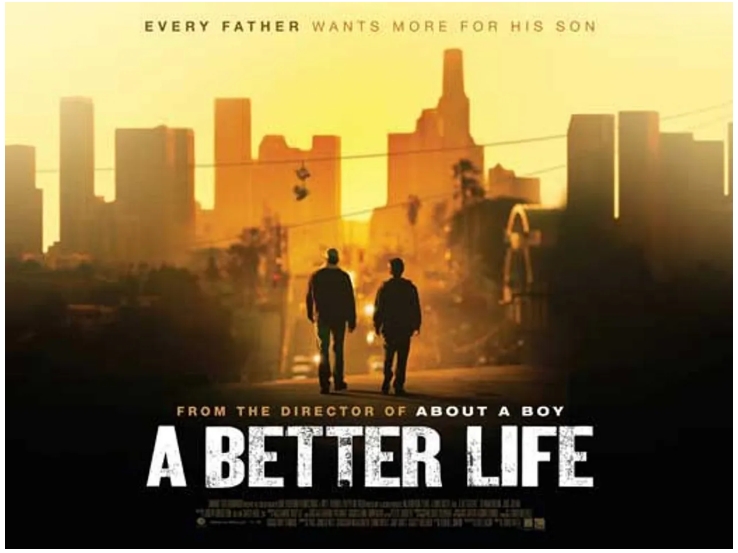
Some years later (2011) the movie was made as “A Better Life” and was something of an art house success in the U. S.—lead actor Demián Bichir nominated for the best actor Oscar—and a bigger one with audiences in Latin America.
I had been rewritten by a writer in South America and received story credit. Fair enough at that point. Any time a movie gets made is something of a victory and when it gets good reviews, all the more.
But in the process my views on illegal immigration had changed. I was less sentimental about it. At the opening in downtown Los Angeles, the director, aware of my by then Hollywood apostasy, graciously singled me out for praise as a “good sport” for attending.
So this has been a long way of explaining I have been thinking about immigration, legal and illegal, for quite a while.
Oddly, in this process, my originally complex thinking has simplified.
Illegal immigration is a terrible idea for the simplest of reasons.
If you allow people to enter on your country illegally, even the best of them, and there are many who are fine people, they will register, consciously or unconsciously, that the laws of their new country are not real. They are made, as the saying goes, to be broken.
When this is done, when the laws are broken, varies with the individual. Some are horrific Tren de Aragua types who are doing it immediately in every way imaginable, others try to be decent and get along. But in the end they have all already committed a crime. They are criminals. Coming back from that, while possible, is a difficult road.
At the conclusion of “A Better Life” as filmed, we find the gardener, who has previously been expelled from the country via an immigration court, sneaking back illegally into the U. S. behind a coyote to unite with his son. This is a cornball Hollywood ending that is actually more than slightly disingenuous. If the characters had developed in a moral manner in the way they want us to believe, the father would have invited the son to join him in Mexico.
This would have been, in effect, what President Trump and his administration are doing now, offering illegal immigrants free transportation and a stipend to leave while giving them the opportunity to return legally.
Better yet would be for them to go home and try to reform the country from which they came. Not an easy task, but, at the very least, an inspiring conclusion for a movie.
As for the 9th Circuit, these days I think every time they are reversed is a victory for justice.
First published in American Refugees