By Patrick Keeney
I recently stumbled upon one of my undergraduate textbooks: A Textbook of Psychology by the Canadian psychologist, Donald O. Hebb. Hebb is widely regarded as one of the founders of modern neuropsychology, remembered for the maxim that helped launch the field: “neurons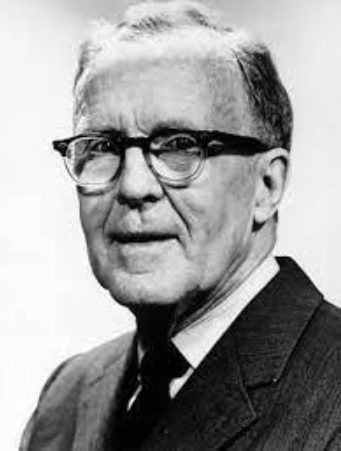 that fire together wire together.”
What stood out to me while reading his preface was his deep respect for literature and his awareness of the dangers of scientific overreach. As a young man, Hebb dreamed of becoming a novelist, and his lifelong passion for literature reinforced his belief that, despite its power, science has limits. Beyond those limits lies the domain where literature has long held sway. Psychology at its best can explain behaviour, but it cannot teach us how to live. Conversely, literature has always shed light on the moral complexities of the human condition with a depth that scientific methods can never fully reach.
Hebb’s respect for literature also influenced his views on scientific writing. He believed that clarity was a moral obligation for the scientist, not just a stylistic choice. Like all writers, the scientist owes the reader transparency. For Hebb, obscurity, jargon, and evasive language were not signs of sophistication but indications of intellectual failure, showing that the writer either did not understand the subject or was using language to hide that fact. His approach was a kind of straightforward Canadian honesty: if you know something, say it plainly; if you can’t say it plainly, then don’t burden the reader with needless complexity.
But Hebb’s deeper concern went beyond stylistic issues. He was worried that if psychology were to detach itself from the humanistic tradition, it would degrade into a collection of trendy opinions, pop remedies and therapeutic clichés. It might still present its findings in the language of science, complete with statistics that lend an air of rigour and precision, but the result would be an enterprise devoid of seriousness. In this spirit, he offered us who were new to the study of psychology a vital reminder:
“It is to the literary world, not to psychological science, that you go to learn how to live with people, how to make love, how not to make enemies; to find out what grief does to people, or the stoicism that is possible in the endurance of pain. … For such knowledge and such understanding of the human species, don’t look in my Textbook of Psychology—try Lear, and Othello, and Hamlet. … These people are telling us things that are not on science’s program.”
Hebb recalls Wilhelm Dilthey’s classic distinction: we explain nature, but we understand mental life. These two operations—explaining and understanding—are not interchangeable. “This means,” Dilthey continued, “that the methods used in studying mental life, history, and society differ greatly from those used to acquire knowledge of nature.”
To overlook the distinction is to reduce the human world to something it is not: a collection of variables to be measured rather than meanings to be understood. Hebb, shaped by both literature and science, instinctively grasped this duality. He understood that psychological science, at its best, can explain the mechanisms of human behaviour: neural pathways, conditioning, measurable patterns. But for the inner logic of our actions, for the tangled web of motives that move us, we turn to literature. Only literature can show what it means to be human, how a life is lived from within, and how the consequences of our choices echo through a human life.
Hebb’s warning about the proper boundaries and inherent limitations of psychological science now reads like prophecy. What he cautioned against as a distant hazard has become an unmistakable feature of our current intellectual landscape.
Yet the crisis we face today is not just about reducing psychology to pop therapy. It is something more systemic, more insidious, and far more dangerous: a scientific publishing system so bloated, mechanized, and corrupted by perverse incentives that it threatens the very conditions under which genuine knowledge can still be obtained.
A recent RealClearInvestigations report provides a sobering glimpse into this world. Scholarly publishing—once governed by the slow, exacting judgment of scholars—has become a commercial production line. In one extraordinary episode, the highly respected journal Philosophy & Public Affairs was instructed by its publisher, Wiley, to produce 35 new articles within 60 days. The editorial board, unwilling to sacrifice standards on the altar of throughput, resigned en masse.
The scandal is that such demands have become routine. The reason is straightforward: universities now demand a relentless publication pace from their scholars. “Publish or perish” no longer really functions as a metaphor. Fragile academics, competing for limited positions, are often required to pay article-processing charges of $3,000 or more to submit a manuscript, with no guarantee of publication. In 2023, publishers collected $2.5 billion in these fees. By any yardstick, this is big business.
The economic incentives are perfectly tuned to generate a flood of trivial papers. Some are sincere but forgettable; others are fraudulent, created by paper mills using AI-generated text and fake data. Peer review, once the cornerstone of scholarly integrity, has broken down under the overwhelming volume. Reviewers skim; editors filter; journals retract thousands of articles only after the damage has already occurred.
Jerry Z. Muller, in The Tyranny of Metrics, predicted this culture of numerical obsession. He argued that the modern university has fallen prey to “metric fixation,” the idea that everything significant can and must be measured, with the resulting numbers supposedly reflecting reality.
Muller pointed out that once metrics become targets, they stop serving as reliable indicators. In academia, this shift has meant moving from genuine scholarly work to strategic publication, which, in part, means researchers chase trendy topics and prioritize visibility over depth. Muller may well have been describing contemporary sciences when he warned that an obsession with quantification promotes practices that compromise intellectual integrity.
The disaster in scientific publishing is, in this sense, simply the logical result of an obsession with metrics. If success is judged by volume, then volume becomes the only sensible goal. The excess in publications reflects the excess in administrative structures and bureaucratic processes throughout the university. The modern university appears determined to replace understanding with metrics.
Hebb’s concern for psychology is that it might mistake accumulating data for true understanding. That situation now spans the entire research landscape. We live in a culture that confuses increasing the number of papers with making progress, as if insight can be measured or counted on a spreadsheet. Metrics have become the main goal; production has replaced understanding.
It is tempting to dismiss this as just another ivory-tower issue. Yet, that would be a mistake. Flawed studies influence public policy, shape medical practice, allocate billions in research funding, and sway judicial decisions. When judgment is overwhelmed by volume, society—not just the academic world—bears the burden. The problem isn’t only that many papers are mediocre, erroneous, or unreplicable, which has, to a greater or lesser degree, always been the case. The true danger is that the sheer volume now prevents genuine discernment. No researcher can read even a small portion of the work produced in their field. Peer reviewers, overwhelmed by submissions, skim rather than examine carefully. Literature reviews resemble triage. Citations become mere formalities rather than meaningful acts of engagement.
Science, at its best, has always depended on a collective judgment that is slow, careful, and selective. That judgment is now overwhelmed. We’ve already seen its impact: psychology’s replication crisis, biomedical research full of irreproducible results, environmental and medical studies skewed by advocacy, and social sciences broken into micro-specializations whose findings no one can verify.
The damage does not stay within journals. It spreads to hospitals, where treatment protocols may depend on studies that cannot be replicated. It reaches legislatures, where policymakers, swayed by the authority of “the latest research,” create laws based on findings that might later collapse under scrutiny. It extends to classrooms, where fashionable, yet untested, educational theories, grounded in the latest social science, are presented as settled truth to the unsuspecting. And it infiltrates courtrooms, where expert testimony may rely on claims that ultimately prove fragile or false. In all these areas, the appearance of scientific legitimacy wields great authority, but when that legitimacy is compromised, so are the judgments and decisions that affect people’s everyday lives.
Which is why the crisis, far from being an esoteric concern confined to the academy, ultimately concerns us all. A society that cannot trust its knowledge-producing institutions cannot trust the policies, judgments, and moral choices that flow from them. The erosion of judgment in science soon becomes an erosion of judgment everywhere.
Hebb, with his characteristic modesty, acknowledged that science can never replace the interpretive wisdom of literature. Nor can it provide the intellectual virtues—judgment, humility, clarity, restraint—that any serious inquiry demands. Dilthey’s distinction reminds us why: explanation is not understanding. To truly comprehend human beings, one needs imagination, sympathy, and the cultivated insight that only sustained engagement with literature can offer. The great writers give not data but understanding, revealing the textures of inner life that no psychological experiment or measurement can capture.
If science is to recover from its own excesses, it must remember what is not—and never will be—on its agenda. It must relearn what Hebb never forgot: that literature preserves truths science cannot reach, and that it is the humanities that safeguard those intellectual virtues that science relies on but cannot itself create. Shakespeare understood ambition better than any behavioural scientist; Dostoyevsky illuminated conscience more deeply than any moral psychologist; Conrad explored moral darkness more accurately than any neuroscientist armed with functional imaging; and Dickens understood the pressures of poverty on the human psyche with a level of insight no social scientist has ever matched.
Hebb’s preface, written more than seventy years ago, now reads like an admonition to a civilization drowning in its own information. He understood that the vitality of our intellectual life depends not on how much we publish but on how well we judge. And it is that faculty that remains the true soul of understanding, and the one we are now most in danger of losing.
Patrick Keeney is the Director of SEALE (South East Asia Literacy and Education), a Canadian charity dedicated to advancing the educational needs of vulnerable children and youth across Southeast Asia. To learn more about SEALE’s work, please visit our website. SEALE – South Asia Literacy and Education – South East Asia Literacy and Education
An earlier version of this article was first published in the Epoch Times as Buried by Our Own Knowledge: Donald Hebb and the Knowledge Crisis








2 Responses
Does not the ĺiterary character’s behavior express its understandings and valuations? If so, is this not the interplay of psychologic factors?
Why fragment and miss the multiple interactions?
Is it it not more a case of perplexity misleading, misreadimg complexity?
Timely and well written. The difference between ‘context sensitive’ and ‘everything is relative’ is profound. What is the threshold of adequacy of understanding that we need to bring to our decisions? Is simple qantitative measurements sufficient, and what happens to our evolving situation in the greater scheme of things if we’re satisfied with that? The flip side of this question is … what happens if we throw our hands up and give up on measuring completely? The point, I think, is that important aspects of situations often dont’t get measured because they’re mercurially elusive and too easy to bypass and come back and haunt us on the other side of our decisions.