By G. Murphy Donovan
“The enemy of a good plan is the dream of a perfect plan.”
– Clausewitz
Trying to anticipate what contingencies might arise as the latest war in the Levant unfolds, I asked GROK AI if the Straights of Hormuz might be have to be secured by US/Israeli ground troops. Twenty percent of the world’s carbon fuel flows through these straits. With brevity and clarity edits, here’s a summary what Grok had to say:
Securing and holding the Strait of Hormuz to ensure open navigation would not require ground troops in the conventional sense of large-scale amphibious invasions or occupying Iranian territory. The topography and hydrography of the area make it primarily a naval, air, and missile domain rather than one demanding boots on the ground for control.
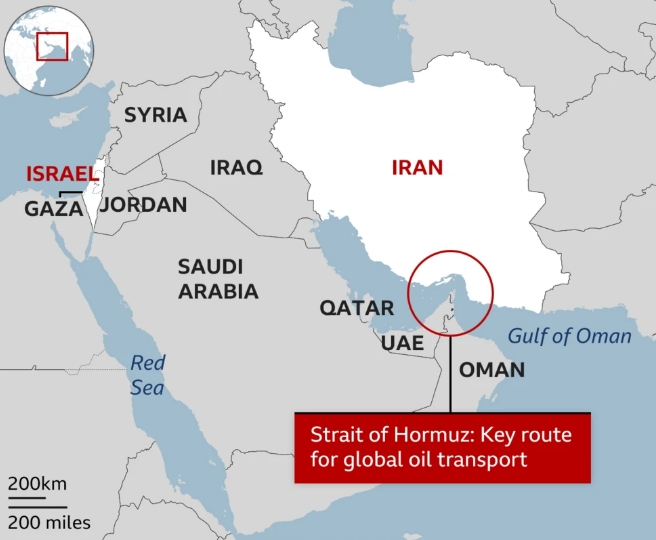
The Strait is about 21–35 miles (33–55 km) wide at its narrowest points, with deep navigable channels (generally 60–100+ meters / 200–330+ feet) suitable for supertankers. Shipping lanes follow a Traffic Separation Scheme, mostly hugging the Omani side (Musandam Peninsula) but still vulnerable to threats from the Iranian coast and nearby islands (like Qeshm, Hormuz, Larak, and disputed ones like Abu Musa).
The Iranian shore is mountainous with cliffs in places, while the Omani side has rugged peninsula terrain, but the water body itself is the key chokepoint—not land masses that need to be seized and held like a mountain pass or canal bank.
Primary Threats and how to counter Tehran’s main tools for disruption or “closure” (temporary/effective denial rather than permanent physical block) include:
- Naval mines (thousands in inventory, deployable by small boats, subs, or fast craft)
- Anti-ship cruise/ballistic missiles from coastal batteries
- Swarms of fast attack boats, drones, and mini-submarines
- Shore-based harassment/seizure ops
Countering threats relies on:
- Naval assets — Mine countermeasures ships (sweepers/hunters), escorts for convoys (as in the 1980s Tanker War, where dozens of U.S. warships were used), air defense, and surface combatants to neutralize small boats/missiles.
- Airpower — Strikes on Iranian coastal launch sites, radar, missile batteries, and naval bases (e.g., Bandar Abbas area).
- Special operations — Limited raids or boarding actions (e.g., to seize Iranian vessels laying mines), or even small Marine detachments on commercial ships for close-in defense (as considered in past tensions).
- Over-the-horizon capabilities — Drones, submarines, and standoff weapons to suppress threats without needing to land forces.
Historical precedent (1980s Tanker War) showed the U.S. kept lanes open via naval escorts, air cover, and limited special ops—no large ground invasion of Iran was needed or attempted.
When Might Ground Troops Become Relevant?
Only in extreme escalation scenarios:
- If the goal shifts from securing the strait to regime change or destroying Iran’s military entirely (which would require invading Iranian soil far beyond the coast).
- Seizing/holding key Iranian islands or coastal facilities (e.g., to eliminate missile sites permanently), but even then, special forces/amphibious raids would likely suffice over regular infantry occupation.
- Current discussions (e.g., recent U.S. statements) focus on naval/air responses, escorts, and deterrence—not ground invasions of Iran, which experts deem impractical due to terrain, size, and Iran’s defenses.
Bottom Line: The strait’s water-and-air-centric nature, combined with modern standoff weaponry, means effective security/holding (keeping it open for transit) can be achieved through sea control, air superiority, and mine clearance—without needing to put and sustain large ground forces ashore.
Grok assesses that ground troops would only enter the Hormuz Straight picture for much broader war aims unrelated to just the strait itself.
Hat tip to Grok AI and Elon Musk.
- Murphy Donovan writes about the politics of National Security and Intelligence









One Response
That was useful.