By Patrick Keeney
We live in feverish times. The daily news arrives as a succession of cultural upheavals, institutional breakdowns, and political fragmentation. It is accompanied by a pervasive sense that the moral grammar of Western civilisation is becoming increasingly unstable. Ancient truths and inherited verities, once the fixed points by which societies oriented themselves, are no longer merely questioned, but subjected to systematic suspicion and, increasingly, open repudiation.
What lies beneath this turbulence? In The Desecration of Man: How the Rejection of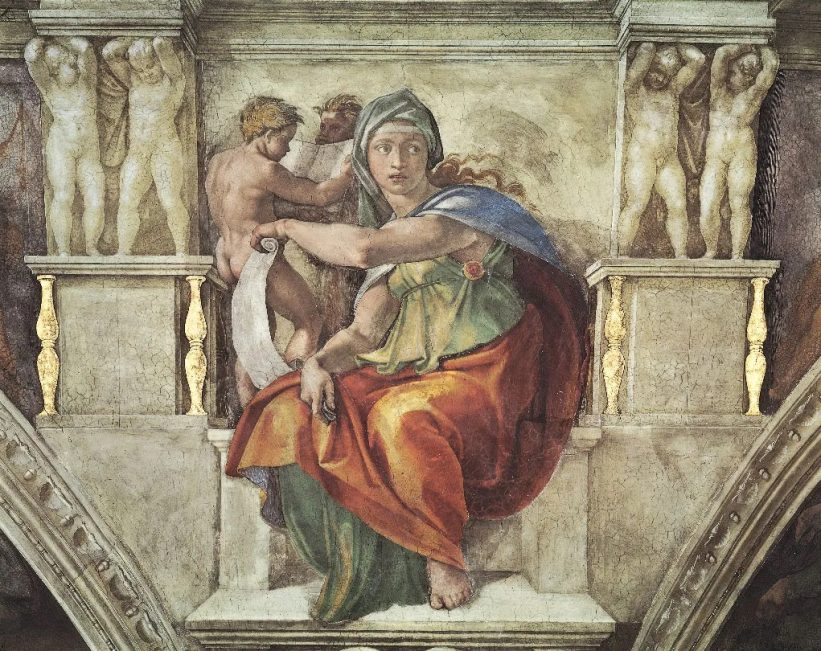 God Degrades Our Humanity, Carl R. Trueman argues that our cultural disarray reflects, at its deepest level, a crisis in our understanding of the human person itself.
Trueman is a professor of biblical and theological studies at Grove City College, though he makes it clear that his book is not an exercise in Christian apologetics.
Fundamentally, it is a work of anthropology, an inquiry into the nature of the human person and the conditions necessary for human flourishing. Beneath the political controversies and ideological disputes that dominate contemporary culture lies a more fundamental question: What is man? What is the human being for? Upon the answer to that question rests not only our moral and political order, but also our educational institutions, our understanding of rights, and ultimately our conception of civilisation itself.
Trueman borrows the term “social imaginary” from the Canadian philosopher Charles Taylor to capture how ordinary people understand their situation in the world. Trueman notes that the central modern assumption is that of “expressive individualism,” an understanding of the human in which the self is autonomous and self-creating, unbound by any transcendent moral order or inherited conception of human nature.
Trueman is hardly alone in this analysis. Here is how the political philosopher Pierre Manent summarises the temper of our times: “… what makes us human is our autonomy, our capacity to give ourselves the law, and, more generally, to make ourselves. The human being is defined by self-creation and freedom from all limits and constraints” (emphases in the original).
Yet once human identity is severed from any objective account of what man is, the person becomes increasingly defined by desire, will, and self-expression alone. Trueman writes, “The belief that we are autonomous, unencumbered self-creators lies at the heart of the anthropological crisis of our day.”
The crisis he describes is not merely political, cultural, or institutional but concerns the very meaning of the human person. Beneath our contemporary disputes lies a deeper uncertainty about whether human nature possesses any fixed character or purpose. Does freedom consist in self-mastery: the disciplined ordering of desire in accordance with truth, moral obligation, and the cultivation of virtue? Or does it consist in the endless assertion of the will: the rejection of all inherited limits in the pursuit of radical autonomy and perpetual self-creation? Trueman writes: “… the dominant way of understanding ourselves – that of expressive individualism – places self-expression and self-creation at its heart. All of this intensifies and enables our taste for transgression.”
Trueman traces this crisis to the Enlightenment’s long legacy and its attempt to liberate humanity from transcendence. The older Christian vision of humans as created in the image of God, endowed with moral obligations and oriented towards transcendent ends, gradually gave way to a radically different conception of humanity and the self-creating will’s decisive role in creating an entirely new order, what Max Weber famously described as the “disenchantment of the world”. The sacramental imagination of Christendom, in which reality possessed intrinsic meaning and moral order, was displaced by a mechanistic and materialist understanding of existence. The universe became not a cosmos but a clockwork. Nature ceased to be revered and sacred, becoming instead raw material for consumption and manipulation.
The consequences of this disenchantment were profound. Nietzsche’s declaration that “God is dead,” to which Trueman repeatedly returns, was never intended merely as an atheistic slogan. Nietzsche understood that once transcendence disappears, moral limits become increasingly difficult to justify. If there is no higher order to which man is accountable, then human beings inevitably begin to imagine themselves as their own creators. Freed from any externally given telos, the self seeks autonomy without limit.
Trueman rightly observes that this aspiration toward limitless self-creation is fundamentally Promethean in character: the desire to transcend all inherited boundaries and assume a godlike sovereignty over human nature itself. Yet, as the Greeks understood, the Promethean impulse rarely ends in liberation. More often, it culminates in hubris and disorder.
What is especially striking is that this impulse appears incapable of satisfying itself. As Trueman notes, “The revolution that modernity represents is a never-ending one. It is not that the old beliefs, values and practices are overthrown and something new and stable is put in their place. It is that the practice of overthrowing is itself the project.” Transgression becomes perpetual because no stable conception of the good remains capable of bringing the restless will to rest.
Indeed, modern culture increasingly celebrates transgression as a form of moral achievement. Trueman notes that our age has effectively answered the question of what man is with a startling proposition: man is “the one who transgresses what was formerly considered sacred and thereby demonstrates his own godlike status.” The act of desecration itself becomes a declaration of autonomy. What earlier civilisations regarded as limits to be respected are now treated as obstacles to be overcome. The result is a culture in which liberation is defined less by self-mastery than by the continual repudiation of inherited norms, obligations, and restraints.
Yet the paradox at the centre of the modern project, one that is exposed here with considerable force, is that the pursuit of limitless autonomy does not elevate the human person but ultimately degrades them. For once we reject the idea that humans possess a fixed nature, freedom itself becomes destabilised. Identity becomes endlessly malleable. The self becomes something to be constructed, curated, performed, altered and continually reinvented. The result is not liberation but exhaustion. A civilisation organised around expressive individualism eventually produces not confident selves but fragile ones.
Trueman is especially persuasive in showing how this anthropology has reshaped institutions far beyond religion. Education, law, politics, and even ordinary social life increasingly assume that the highest good is the affirmation of subjective identity. The older language of moral formation, discipline, obligation, and self-command gives way to therapeutic vocabularies centred upon validation and self-expression.
The strength of The Desecration of Man lies precisely in its insistence that these developments are not isolated phenomena. They are all downstream from anthropology. Civilisations inevitably build institutions that reflect what they believe human beings to be.
And here Trueman’s title proves especially apt. As he makes clear, desecration is not merely destruction. It is the stripping away of sacred meaning. What modernity increasingly desecrates is not only religion but man himself. Once the human person is severed from transcendence, dignity itself becomes precarious. Rights become unstable because they no longer rest upon any secure metaphysical foundation. The human being becomes, in effect, negotiable.
Trueman is not merely lamenting moral decline or criticising contemporary ideologies. He is reminding readers that the deepest conflict of our age is not finally between Left and Right, progressive and conservative, religious and secular. It is between rival understandings of what a human being is.
For if the human person is merely the accidental product of blind material forces, a temporary aggregation of biological matter without intrinsic purpose or transcendent significance, then concepts such as dignity, obligation, moral limits, and even freedom itself begin to lose coherence. The deeper moral foundations that once gave such claims intelligibility erode.
The Psalmist asks, “What is man, that thou art mindful of him?” (Psalm 8:4). The question captures a metaphysical depth and force that modern secular culture increasingly struggles to sustain. Until that question is faced directly, our institutional crises, political fragmentation, and cultural confusion will continue to deepen. For if Trueman is right, anthropology, in the end, is destiny.
An earlier version of this article was published in the Epoch Times





5 Responses
Secular individuals prove to be just as law-abiding, if not more adherent to the social spirit of the Ten Commandments than their religious counterparts. Just as humanity once required myth to anchor its social and moral life before learning to navigate the world without it, we are witnessing a similar evolution away from institutional religion. The true foundation of morality is not divine decree, but choice—the capacity to recognize that some paths are simply wiser than others. Long before the advent of the religious impulse, humans were forced to choose how to coexist, and it is in that fundamental act of choosing that is the root of all morality.
The ideas and insights advanced in this article summarize effectively the dilemma encountered by all individuals who believe in virtue and justice, but not in God or a well-defined Human Nature. Sartre, Camus and all of the Atheist Existentialists dealt with this issue and encountered similar perplexities outlined in Keeney’s essay. I have no solution to these questions, but for one of the premiere de-codings of this existential mystery I recommend Sartre’s “Existentialism is a Humanism.” It is his way of writing a reply to the issues so well-crafted paper in Dr. Keeney’s paper.
There is a good conversation going on here! I am glad to see such introspective work getting “out there.” It is also fine that, as John Mitchell noted above that existence is still a mystery, albeit the limits of which can be explored, as is here.
This article is quite rich at a number of levels. The one point that stands out is the idea in the current public narrative that we have somehow transcended consequence for our actions, that not only is our ‘creativity’ currently unbound, it should be. The rather obvious answer to that notion is ‘saying it doesn’t make it so’. General systems failure writ large is the lifeworlds resounding response to that level of hubris, and the evidence is screaming back at us, and it’s manifold, but most clearly seen in the demographic suicide of the western world, and increasingly, in the developing world. Women are voting with their wombs. We are not forming enough families. The future, increasingly, no longer feels like our friend.
Three Cheers for Patrick! This is a very impressive statement about the egotistic decline of the culture of the West. We are in serious decline. We will need bold thinking… to find the answer. The rot set-in during the 1960s when a former worship of Winston Churchill began to fade: the young started calling him a “War Monger”. How could this happen? Well, there were four “whammies” which had turned intelligent young people against the traditional values of the past. (1) The atomic bomb, (2) The computer, (3) space probes (4) DNA. They were unanswerable. These were huge discoveries of “biblical” stature. They were things which almost nobody in the 1930s had imagined could even be a possibility. They were nowhere mentioned in the Bible. In the eyes of youth, the traditional values of the past and Belief had been humiliated. Nothing could counteract this startling news. The score was: Science (4), Religion (0).
So the younger generation turned against traditional values and religion. They were determined to do their own thing.
The quantified discoveries of science had introduced logic and accuracy into the debate —thus upstaging famous, authoritarian comments made 2,000 years earlier. But the new discoveries had a downside. There was also a tsunami of “scientific information” which was mainly “humble” in the sense in which Karl Popper called their status “not-yet-falsified”.
Moral truths cannot rest on a body of “not-yet-falsified” qualified facts. Scientists had been determined since the renaissance to search for new knowledge in a piecemeal fashion. What was needed was unquestioned truth. The moral situation in the 1960s required a scientific switch to knowledge-with-closure like the four whammies. Or we might say “there is something wrong with today’s piecemeal scientific approach”. We need a more synoptic version of science.