The old imperial habit rises again: dividing the world into the natives and us
By Theodore Dalrymple
A BBC headline that arrived by algorithm on my computer attracted my attention: “Posthumous degree for Oxford’s first indigenous female student”. On the University’s news website, I found also the following headline: “First indigenous woman to study at Oxford to receive posthumous degree”.
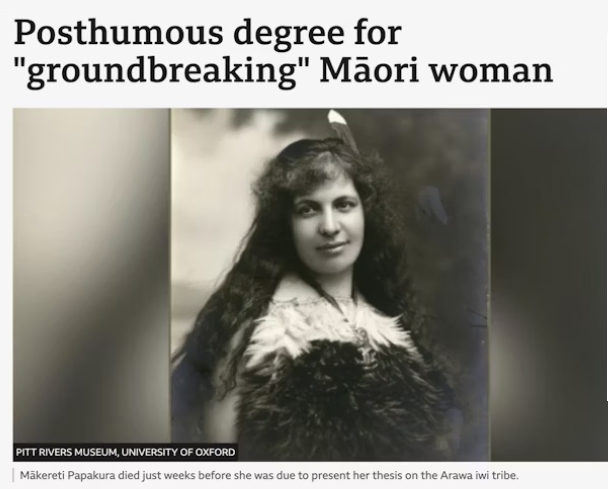
This, I thought, was a strange way to describe English female students, but of course I was forgetting the old imperial habit of dividing the world into the natives and us, although the natives are now more politely known as indigenes.
There are, of course, less polite terms for them, but even the supposedly post-imperial BBC would not lead with a headline such as “First fuzzy-wuzzy to study at Oxford … ” The Oxford University website explained: “Born in Aotearoa New Zealand in 1873, Mākereti [Papakura] was the first indigenous woman to matriculate to the University.”
She died in 1930, very shortly before she was due to hand in her thesis for an MPhil degree in anthropology, which is indeed tragic; and no doubt she was a remarkable or exceptional individual. But what of all those non-indigenous (which is to say English) young men who went off to war before they could complete their degrees at Oxford: are they to be granted posthumous degrees, either individually or en masse? Here is work for bureaucrats to do.
“Indigenous” is clearly a term of art: it does not mean merely native to a place, born and brought up there, but — nowadays at any rate — a higher state of being, almost an escape from original, or any other kind of, sin. Indigenes are inherently victims rather than perpetrators. Unlike us, they can do no wrong; in other words, indigenes or natives are not really fully human. This is what every imperialist has known in his heart for a long time.
First published in The Critic









One Response
From that photo she looks about as indigenous as Elizabeth Warren.
Funny how most of these indigenes and their promoters absolutely minimize any white contamination of their heritage. It’s as if they’re ashamed of it.