By Bruce Gilley
For more than a century, elements of the Left have harbored a deep suspicion of democracy whenever it fails to deliver left-wing outcomes. The classic Leninist critique branded liberal democracy as a “bourgeois” façade, allegedly captured by capitalist-controlled media and interest groups. On this view, elections are legitimate only when they ratify socialist or progressive aims; when they do not, democracy is exposed as a sham. The result is a persistent pattern of opportunism: democracy is celebrated as “the voice of the people” when the Left wins and denounced as “broken” or “rigged” when it does not.
In the United States, this tendency hardened during the Obama years. Many Democrats and progressives came to regard themselves as the natural governing class of the republic. They believed that a durable coalition of racial minorities, organized labor, public-sector employees, teachers, and affluent white liberals—especially college-educated women—would secure their hold on national power for the foreseeable future. More broadly, they fell into the trap diagnosed by the French writer Jean-François Revel in his 1988 book The Flight From Truth of seeing themselves as intellectual masters of the universe whose historic role was to shape and influence culture so as to retain a monopoly on power for the Left.
The election of Donald Trump in 2016 delivered a double shock. First, it shattered the conviction that Republicans could never again assemble a winning coalition. Second, it contradicted the assumption that only “respectable” conservatives—those who had drifted leftward along with the Democratic Party, like Mitt Romney—could remain electorally viable. That a conservative who openly refused to bow to the emergent woke consensus could win the presidency was nearly unthinkable to this self-styled governing class.

The reaction to Trump’s victory revealed how quickly the Left’s professed democratic commitments could give way to open resistance against the electoral outcome. President Obama rejected an initial CIA assessment that found no evidence of Trump–Russia collusion and instead encouraged the production of the now-infamous Steele dossier, which became the pretext for the Mueller investigation—an inquiry that ultimately failed to prove collusion. Within days of the inauguration, prominent Democratic strategists were declaring that “the coup has started,” announcing a campaign of permanent opposition to the elected government.
This mood of resistance manifested itself in mass street politics and escalating “lawfare.” The Women’s March in Washington, D.C., the day after Trump’s inauguration began a cycle of protest; subsequent demonstrations increasingly sought to disrupt constitutional and governmental processes, including the Kavanaugh confirmation hearings and federal immigration enforcement. The once studiously bipartisan National Endowment for Democracy, which preached accepting the legitimacy of electoral outcomes in foreign nations, veered sharply into anti-Trump activism. At the same time, Trump and his allies became the targets of an expanding web of litigation, investigations, and prosecutions. Hillary Clinton declared in 2019 that Trump was an “illegitimate president” who “knows” he stole the 2016 election, signaling that denial of electoral legitimacy was no longer confined to fringes but had entered mainstream Democratic discourse.

The summer of 2020 pushed this logic further. Black Lives Matter protests, which devolved into attacks on federal and state law enforcement facilities, were widely defended or minimized by Democratic leaders. These actions were not simply spontaneous outbursts but part of a broader effort to intimidate voters and office-holders into compliance with the radical wing of the Democratic Party, amounting to one of the most serious waves of domestic unrest since the 1970s. The riots around Lafayette Square and the White House in late May and early June 2020, which injured 150 officers and prompted the temporary relocation of President Trump to a secure bunker, were followed by a total of four prosecutions and no jail time for offenders.
By contrast, the events of January 6, 2021, triggered an intense legal backlash. The storming of the Capitol was a counter-mobilization by Trump supporters who believed that pandemic-era changes to election laws—especially rapid expansions of mail-in voting—had undermined electoral integrity. While Trump called on demonstrators to remain peaceful, a segment of the crowd breached the Capitol, leading to a serious but ultimately contained disruption. Unlike the leniency shown toward the Black Lives Matter rioters, the January 6 participants faced aggressive prosecution: more than 1,500 were charged and dozens imprisoned. This became the double standard that treats left-wing street violence as a tolerable form of politics while branding right-wing protests as existential threats to democracy.

The Biden administration provided further evidence that the Left had turned decisively anti-democratic. Large-scale illegal immigration, tolerated or encouraged by lax border enforcement, represented not just a policy failure but an attempt to alter the electorate itself. In this view, Democrats, frustrated by the stubborn independence of the existing citizenry, sought to “change the people” rather than persuade them, echoing Bertolt Brecht’s satirical line about a regime that, having lost the confidence of the people, decides to elect a new one.

This period also saw intensified use of the “deep state”—the permanent bureaucracy, intelligence agencies, and law enforcement apparatus—against Trump. IRS inquiries into Trump’s taxes, an unprecedented FBI raid on Mar-a-Lago, and a special counsel investigation into January 6 under Jack Smith all fed the impression that legal institutions were being weaponized for partisan ends. At the state level, Democratic prosecutors launched multiple cases: a hush-money prosecution in New York, a civil fraud case led by the New York attorney general, and a now-derailed RICO case in Georgia that sought to criminalize Trump’s efforts to challenge election results and explore alternative slates of electors. Further attempts by several Democratic-led states to remove Trump from the 2024 ballot signaled a willingness to use procedural means to nullify electoral competition altogether. This vindicated their claim that the supposed “defense of democracy” mounted by the Left was in reality an extended campaign of regicide—an effort to remove or block an elected leader by non-electoral means.
Yet, despite eight years of investigations, prosecutions, and rhetorical delegitimization, Trump returned to the presidency in 2024, defeating the weakest major-party nominee since Alf Landon.
Trump’s second administration has attempted to deter future campaigns of lawfare by seeking legal accountability for figures such as James Comey, Letitia James, and Jack Smith, central conspirators in efforts to criminalize him. Yet the climate of confrontation and left-wing political violence has persisted. Multiple assassination attempts and foiled plots against Trump, combined with harsh rhetoric from Democratic leaders, reinforce a sense that political conflict now routinely spills beyond normal constitutional channels.
Democratic politicians such as Representative Jamie Raskin have claimed that Trump’s 2024 victory was won under “fraudulent pretenses,” calling for continuous mass mobilization—“a rally a day keeps the fascists away”—as a permanent state of resistance. States like California, New York, and Oregon have filed or joined hundreds of lawsuits against the administration, many of them unsuccessful, but cumulatively aimed at slowing or obstructing its policy agenda through the courts. At the same time, conservative Supreme Court justices have faced personal vilification and even threats of violence, as dramatized by the attempted assassination of Justice Brett Kavanaugh and Senator Chuck Schumer’s warning that the Court would “reap the whirlwind” for decisions disliked by progressives. Six sitting members of Congress urged military personnel to disobey lawful orders—such as narcotics interdiction operations or domestic deployments to quell unrest—if they object on political grounds. This amounts to a startling flirtation with sedition and mutiny, undermining the civilian control of the military that is a cornerstone of constitutional democracy.

The result is that the loudest voices in the Democratic Party increasingly belong to those who regard existing institutions, including the constitution itself, as obstacles rather than arenas of democratic contestation.
The most striking change since 2016 is not simply the intensification of partisan conflict but the mainstreaming of the left-wing claim that the United States is no longer a democracy at all. By 2024, opinion surveys showed a majority of Democratic voters believing that Trump’s second term represents an authoritarian regime. The same constituency now reports a more favorable view of socialism than of capitalism. Some may dismiss this as typical ideological posturing, but it marks a significant intellectual shift with real consequences.
Political scientists have long argued that democracies fail primarily when their institutions deteriorate, not because a single leader suddenly overthrows them. Yet during the later Obama years and throughout the Biden administration, Democrats rarely claimed that democracy itself was collapsing; indeed, they praised the resilience of American institutions. It is implausible that a robust democracy could, almost overnight, become an autocracy simply because one elected leader returns to office. Yet this is the implausible worldview that now dominates one of our major political parties.
At some level, evidence suggests that Democrats do not genuinely believe they are living under dictatorship. If Trump were truly an autocrat, then opposition parties would seek alliances with “soft-liners” inside the regime—insiders willing to break with the leader—to negotiate a return to competitive politics. Instead, Democrats have largely pursued conventional partisan strategies: campaigning, litigating, and mobilizing voters.

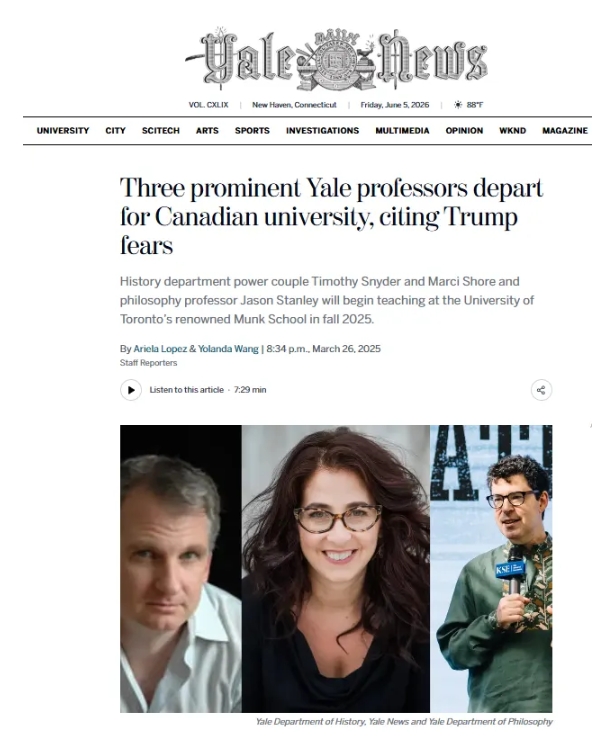
Nonetheless, intellectuals and activists on the Left have begun to argue that democracy must be “restructured” to deliver more just outcomes. Historian Timothy Snyder, for example, speaks of “distortions of democracy” and calls for reorganizing politics to give “the people greater power over a more just future.” The populist and quasi-Maoist flavor of such rhetoric includes the appeal to an undefined “people” combined with an equally undefined conception of “justice” that conveniently tracks the aims of the progressive intelligentsia.
Concrete proposals for ending American democracy now circulate openly. Some advocate putting the entire Trump cabinet, along with senior officials in agencies such as ICE, Justice, and War, on trial—a vision reminiscent of revolutionary tribunals in Jacobin France, Maoist China, or Stalinist Russia. House Minority Leader Hakeem Jeffries has suggested that all cabinet members could face criminal prosecution, singling out the Secretary of War.
Others promote expanding the Supreme Court to pack it with ideologically reliable left-leaning justices, or granting statehood to the District of Columbia and Puerto Rico in order to secure a permanent Democratic majority in the Senate. Still others call for legal “firewalls” against MAGA: state censorship of pro-Trump media, disqualification of candidates on grounds of “hate speech” or “misinformation,” and the systematic use of lawfare to marginalize an entire political movement. These proposals do not merely adjust rules at the margins; they seek to redefine the demos and constrict the space of legitimate political competition.
Given this landscape, what can be done to safeguard American democracy? One crucial development has been the Supreme Court’s 2024 ruling on presidential immunity, compelled in part by prosecutions brought by Jack Smith and Georgia’s Fani Willis. The decision draws a line between ordinary legal accountability and the kind of retroactive criminalization of political decisions that can turn courts into instruments of regime change. To the extent that it shields presidents—of any party—from post hoc “revolutionary justice” tribunals, it reinforces the separation of powers and the independence of the executive.
Electoral integrity reforms are equally central. Proposals such as the SAVE Act would require in-person voting, government-issued identification, and proof of citizenship for voter registration, aligning U.S. practice with many Western democracies, including France, Spain, the Netherlands, Italy, and Sweden. Such measures are minimal safeguards in a mass democracy, necessary to restore public confidence in close elections.
Immigration policy is another front. Promises of future border security in exchange for present amnesties have proven hollow. If large-scale unauthorized migration can be used to reshape the electorate over time, then democratic self-government itself is at stake: decisions about who constitutes “the people” cannot be outsourced to executive discretion or international flows. A firm commitment to the rule of law and the integrity of borders becomes, in this view, a precondition for democratic legitimacy. ICE is fighting for American democracy as it does daily battle with the thugs beseiging its facilities.
Most fundamentally, the American public must recognize the scale of the challenge posed by the anti-democratic Left. The danger is not that the United States will suddenly morph into a Latin American style left-wing autocracy, but that it will quietly drift toward the fate of other “democratic socialist” experiments.
Canada, where Snyder now teaches, offers a cautionary tale: a once robust liberal democracy now struggling with stagnating living standards, pervasive identity politics, and the erosion of historical memory, as statues, curricula, and civic symbols are recast in the image of a racialized, semi-socialist order. The proposal to criminalize dissent on Indian residential schools is a chilling example of academic theory turned into political repression. Those who have fled such regimes, or watched them decay from within, understandably recoil at the prospect of the United States following the same path.
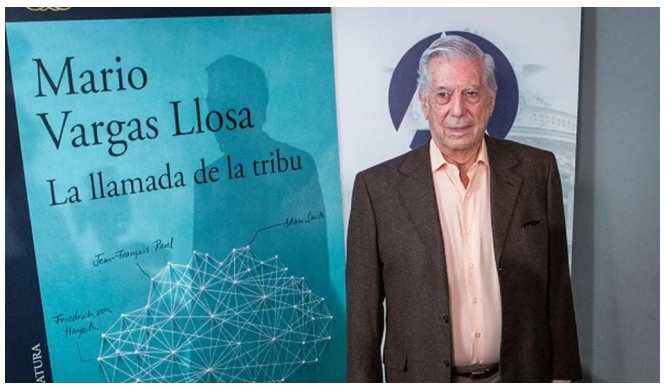
In his late-in-life mea culpa for decades of leftist activism, The Call of the Tribe, the Peruvian Nobel laureate Mario Vargas Llosa wrote that intellectuals of the left could no longer be trusted in matters political. “Usually the people themselves are better than the majority of their intellectuals: more sensible, more pragmatic, more free when it comes to deciding social and political issues,” he wrote. “The advantage of democracy is that the wishes of these ‘common people’ sooner or later prevail over those of the elites.”
The task, therefore, is not to abandon democracy but to defend it against those who would remake it in their own ideological image whenever voters refuse to comply. That requires institutional reforms to secure elections, legal constraints on partisan abuse of state power, and above all a renewed cultural commitment to treating political opponents as fellow citizens rather than enemies of the people. Only then can the republic withstand the currents that would turn democratic politics into a zero-sum struggle for permanent power.
First published in his Substack