By Petr Chylek
The tragic death of Rob Reiner, an actor and director, and his wife drew worldwide attention. Their son, Nick, became a prime suspect. I learned about Nick’s addiction from the Yahoo online articles by Dylan Stableford, Kate Murphy, and Andrew Romano [1]. What struck me were a few quotes attributed to Rob Reiner, his wife, and their son Nick, all related to Nick’s addiction.
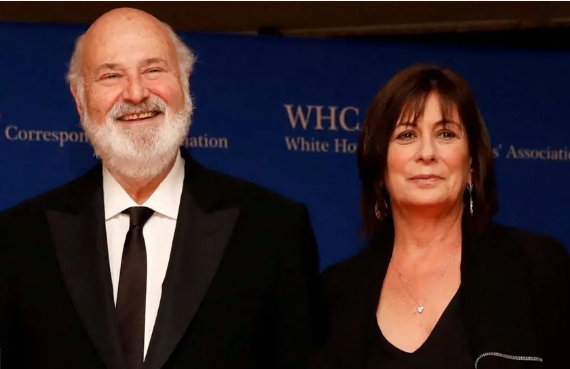 Rob Reiner is quoted as saying, “The program works for some people, but it can’t work for everybody. When Nick would tell us that it wasn’t working for him, we wouldn’t listen. We were desperate, and because the people had diplomas on their wall, we listened to them when we should have been listening to our son.”
And his wife, Michele Reiner, added, “We were so influenced by these people. They would tell us he’s a liar, that he was trying to manipulate us. And we believed them.”
The article [1] did not specify when or on what occasion Rob Reiner and his wife said what it claims they did. However, it appears they realized that the person who misled them was not their son, but “those people” who “had diplomas on their wall” and whom “we listened to when we should have been listening to our son.” Rob and his wife apparently attended a consultation for parents with some of their children addicted to drugs. Looking back, they apparently didn’t think highly of the advice they received.
On the receiving end of the advice was Nick, saying, “I come from a nice family. I’m not supposed to be out there on the streets and in homeless shelters doing all these … things.” Rob and his wife were probably busy with their own careers and helping a few of their friends gain fame. It was pretty easy to accept the advice to do nothing and wait until their son totally crashed, probably ending up in jail, before he decided to quit. Unfortunately, in his moment of anger, their son turned the situation into a tragic ending.
About thirty years ago, I faced a tough situation. I was a physics professor at one of the Canadian universities when I found out my son was addicted to drugs. I enrolled him in a rehab program, but it didn’t produce any positive results. I also went to several counseling sessions for parents of drug addicts and heard the same advice each time: “You cannot do anything. Stop supporting him, let him crash and get to jail; then he might choose to change.” I couldn’t do it. I totally ignored the advice I received.
Then my son read somewhere about ibogaine [2]. The treatment, which is not legal in the US, was offered on an island south of Florida. He had to undergo the treatment twice. Now, about thirty years later, he is married, has a family, and has been drug-free for a long time. It cost quite a lot of money. However, there was no doubt in my mind about what I had to do. What was the alternative? I think the experts providing consultation need to change their approach.
In 2025, Texas allocated $50 million for ibogaine research. A consortium of universities and hospitals was formed to develop a treatment for opioid use disorder. The goal is to establish Texas as a leader in psychedelic medicine research [3].
Notes
[2] Ibogaine is an extract of the bark of an African tree that induces a higher state of consciousness and apparently eliminates drug addiction.
[3] https://en.wikipedia.org/wiki/Ibogaine