By Lev Tsitrin
Among much useless, because already well-known information about fiber-optic Hezbullah drones that kill Israeli soldiers and civilians on an almost daily basis that was contained in a recent youtube interview with an Israeli expert, one key fact stood out: there is no defense against them. They are cheap ($100 apiece), untraceable, and deadly.
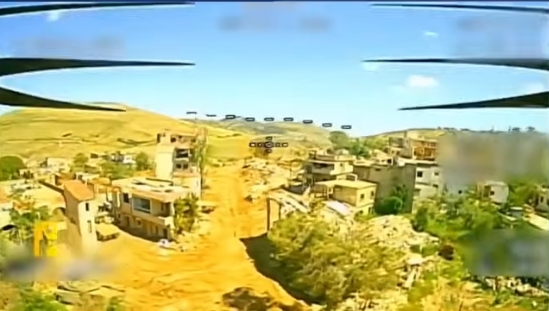 I am by no means an expert in radar technology or acoustics, and cannot advise on detection methods — but as to economics, how about making Hezbullah drones expensive? Like really expensive — not just $100 but say $100,000,000?
That is, every time a drone hits, Israelis bomb to the ground twenty buildings in Beirut’s Hezbullah stronghold, Dahia, broadcasting the correlation between Hezbullah drone strike, and Israel’s response to it?
After all, this is exactly how Iran behaves: When the US stops by force a ship bound for an Iranian port to enforce the blockade, Iran bombs a neighboring Arab country — UAE, Kuwait, Bahrain, to make them dread the cost of US strikes, and use their influence with the US to let Iran open Hormuz even on Iran’s condition of controlling it. So how about Israel likewise forcing Hezbullah into doing some math, and going through the cost-benefit analysis of its drone strikes?
Yes, I know that Trump vetoed Israeli strikes on Beirut, and is yet again relying on diplomacy with Lebanese government, hoping that this time around Lebanese army would finally choose to confront, and disarm Hezbullah. But this makes very little sense — not only because this very approach has been tried before, and failed — but also because putting Hezbullah under pressure by bombing Dahia would greatly help the US move Iran negotiations forward.
How? By replacing the current US approach of “Netanyahu, if you bomb Dahia, Iranians won’t talk to us, scuttling the talks!” with “Iran, if you won’t negotiate with us in earnest, Israelis will bomb the sh!t out of Dahia!” In other words, use Iranian tactic by making it very costly for Iran to not negotiate in good faith, surrendering their nuclear stockpile first and foremost, and opening Hormuz unconditionally.
Right now, Iranians do not have to choose — they can have both the enriched uranium, and Hezbullah. This, in fact, was the aim of Iran tying Lebanon ceasefire to Iran ceasefire. Well, make Iran choose — so if they make a wrong choice, they lose on both fronts.
That’s the Iranian way of negotiations. Both Israelis and Americans would do well to learn from Iran how negotiating is done, and to turn Iranian tactics on Iran itself — in Beirut’s Dahia.