By Patrick Keeney
Amid the clamour surrounding climate change, one truth remains curiously unspoken: the moral and practical costs that climate alarmism imposes on the world’s poor.
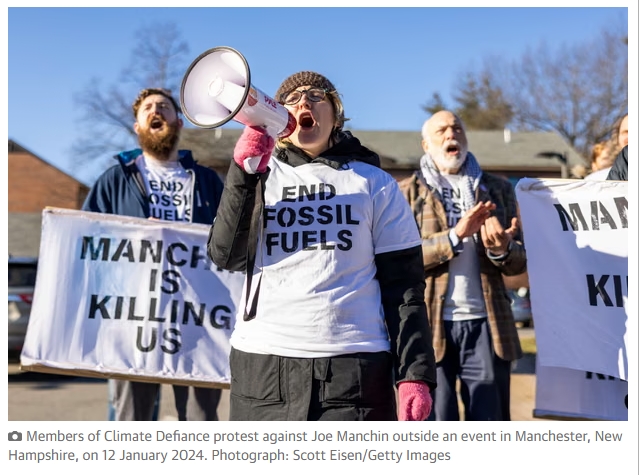 In the conference halls of Davos, the corridors of Brussels, and on the streets of Western cities, well-fed policymakers and activists recite the language of “climate justice.” Yet their prescriptions often result in energy austerity for those who have never known energy abundance. The moral calculus is clear: policies meant to comfort Western elites frequently condemn billions in Africa and Asia to lives of stalled development and suffering.
Behind the rhetoric of planetary salvation lies a harsher truth: in the name of “saving the planet,” we are depriving the world’s poor of the means to save themselves. Access to cheap, reliable energy is not a luxury of the affluent; it is the foundation of public health, education, and human dignity. It powers clean water systems and refrigeration for vaccines; it enables modern agriculture, industry, and transportation; it underwrites every advance in medicine, communication, and literacy. In short, energy is the lifeblood of civilisation itself. To restrict it is not environmental stewardship—it is moral negligence disguised as virtue.
For those in the industrialized West, energy is so abundant as to be invisible. We flick a switch, start a car, or refrigerate food without a moment’s thought for the intricate miracle of power that sustains modern life. But for billions across Africa, South Asia, and Latin America, energy is not a background convenience—it is the difference between subsistence and progress, between darkness and light, between ignorance and education.
It is easy for the comfortable to moralize about “ending fossil fuels.” For the world’s poor, that slogan means ending development itself. Wind and solar may supplement power in advanced economies, but they cannot sustain industrial growth. A solar panel may light a hut or charge a phone, but it cannot run a hospital, irrigate a farm, or power a modern city. To pretend otherwise is to indulge in a fantasy—one whose cost is measured not in carbon but in human potential.
The idea of “leapfrogging” fossil fuels and moving straight to renewables is delusional. As Danish economist Bjorn Lomborg points out in his book False Alarm, a solar panel “can provide electricity for a light at night and a cell phone charge, but it cannot deliver enough power for cleaner cooking to reduce indoor air pollution, refrigeration to keep food fresh, or the machinery needed for agriculture and industry to lift people out of poverty.” For the rural poor in Africa or Asia, what they need is not less energy but more reliable, affordable, and plentiful energy similar to what the West has long enjoyed.
Yet Western governments and financial institutions have become increasingly obstructive. Under pressure from climate activists, the World Bank and other lenders have reduced funding for coal and natural gas projects—the very fuels that helped Western countries prosper. Wealthy nations, which industrialized through the use of fossil fuels, now refuse the same opportunity to others. It’s a form of moral imperialism: a policy of “Do as we say, not as we did.”
The consequences are significant. In sub-Saharan Africa, around 600 million people still lack electricity. Women cook with wood or dung, inhaling toxic fumes that claim thousands of lives each year. Hospitals often operate on unreliable power supplies; factories frequently remain idle due to inconsistent electricity. Yet these are the same nations being lectured about “Net Zero” targets by Western elites whose own lifestyles rely on abundant energy.
The hypocrisy is staggering. Western countries call for global emissions reductions while outsourcing much of their manufacturing—and emissions—to Asia. They promote environmental virtue while importing goods made with coal-fired power. And they praise themselves for “climate leadership” even as their policies keep the developing world in poverty.
Worse still, climate alarmism diverts resources from the world’s most urgent humanitarian needs. Trillions are now spent on symbolic climate actions that will have negligible effects on global temperatures. The European Union’s aggressive emissions reductions, for example, will delay projected warming by only two years by the end of this century—at a cost of hundreds of billions annually. As Lomborg has shown, every dollar invested in such policies produces less than a penny in global benefit.
Meanwhile, a small portion of that money could save millions of lives today. For $3 billion a year—less than what the world spends on climate change in a week—we could halve malaria infections worldwide. We could provide every person on Earth with clean drinking water and sanitation for a fraction of the cost of the Paris Climate Agreement. Yet, within the hierarchy of Western moral priorities, these simple policies that could deliver immediate and life-changing benefits to millions are overshadowed by the more popular crusade against carbon dioxide.
The 2025 U.S. Department of Energy Critical Review of Greenhouse Gas Impacts highlights the folly of this approach. The report, written by an independent panel of respected climate scientists, concludes that climate change is real but manageable—and that extreme weather trends are not worsening in the United States. Its most notable finding is that current U.S. climate policies will have “undetectably small direct impacts on the global climate,” while the economic costs of aggressive decarbonization “could prove more detrimental than beneficial.” The report points to not climate change, but global energy poverty, as the true humanitarian crisis of our time.
That phrase—energy poverty—should focus the moral imagination. For without energy, there is no prosperity, no education, no public health, no women’s emancipation, no human dignity. A modern hospital needs electricity; a modern economy relies on it. Denying developing nations access to affordable power is to deny them the very means by which their human potential is fulfilled.
And yet, the dogma of climate alarmism continues to shape international policy. When elites in New York or Brussels—cheered on by climate activists—demand the end of fossil fuels, they are not saving the planet but entrenching poverty. They are condemning millions to remain in darkness.
This does not mean neglecting environmental stewardship. It involves restoring balance and proportion. Sensible policies—such as investing in clean technologies, innovating in nuclear and hydroelectric power, and implementing adaptation strategies for vulnerable regions—can address real risks without compromising the foundations of prosperity. However, this requires us to abandon apocalyptic rhetoric and rediscover the virtues of prudence, reason, and compassion.
The true moral test of our age is not whether we can abolish fossil fuels, but whether we can extend to every human being the dignity that reliable energy affords. Until the world’s poor can turn on a light, refrigerate a vaccine, or power a factory, talk of “climate justice” remains a bitter irony. The path to genuine justice begins with the courage to acknowledge an unwelcome truth: that cheap, dependable energy—the very energy that lifted billions from want and poverty—is not humanity’s curse, but its salvation.
An earlier version of this article was first published in the Epoch Times