By Janice Fiamengo
Popular perception has it that just over a century ago, women in the Anglosphere fought long and hard for the right to vote. To gain that right, according to the prevailing story, they battled contempt and misogyny from entitled men.
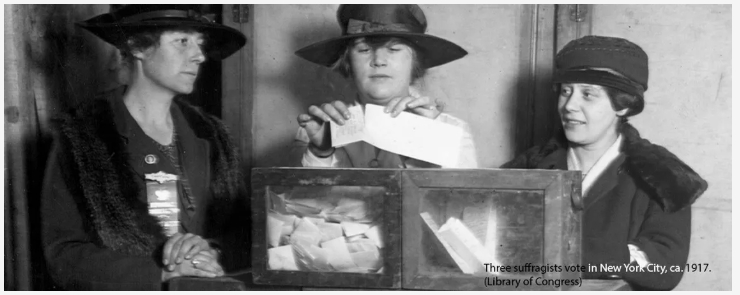
An examination of the history of this period in the late-nineteenth and early-twentieth centuries shows that both the villains and the heroines of the story are false constructs employed to whip up anger at men and faith in the goodness of feminism.
The reality, as always, is more interesting and fraught.
Did Women Know Enough of National Affairs to Vote on Them?
In brief, it is true that some men did not believe that women should vote at the federal level, and some of their arguments sound condescending to a feminist ear.
Brian Harrison’s Separate Spheres: The Opposition to Women’s Suffrage in Britain (1978), published at a time when it was still just possible, with some careful hedging and pro-feminist protestation, to write a fair historical overview, has chronicled the primary anti-suffrage contentions.
Opponents of women’s right to vote argued that most women lacked even rudimentary knowledge of national and international affairs, usually too preoccupied with domestic life to give politics the attention it required. They also lacked, it was alleged, the calm practical-mindedness and rational outlook necessary for political decision-making. One anti-suffragist claimed that “The point of hysterical emotion and unreason is always nearer with women” (quoted in Harrison, Separate Spheres, p. 80)
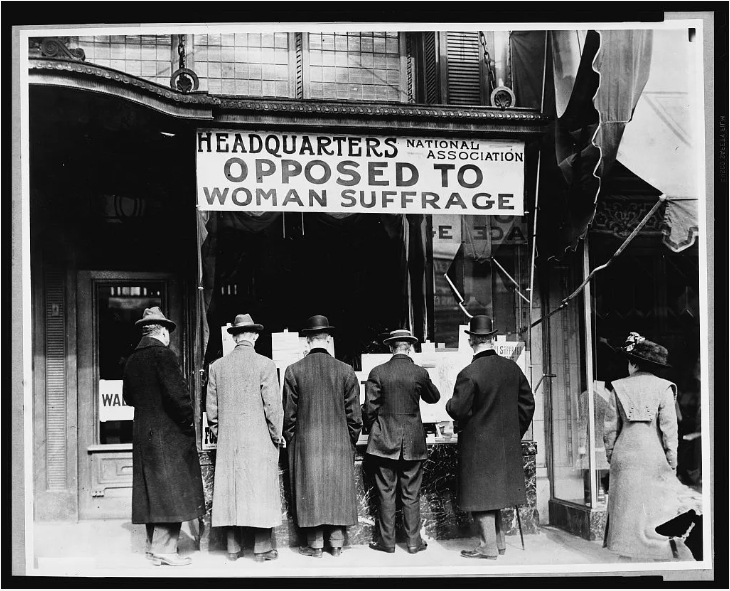
Some anti-suffragists worried that women’s much-touted emotionalism would lead them to vote for social policies that would massively expand the size of government, increasing both government debt and legislative interference in citizens’ private lives (Separate Spheres, pp. 80-84). Others believed that the women who led the suffrage campaigns were motivated primarily by antagonism towards men, and that the entire campaign for the vote was designed to drive a wedge between the sexes.
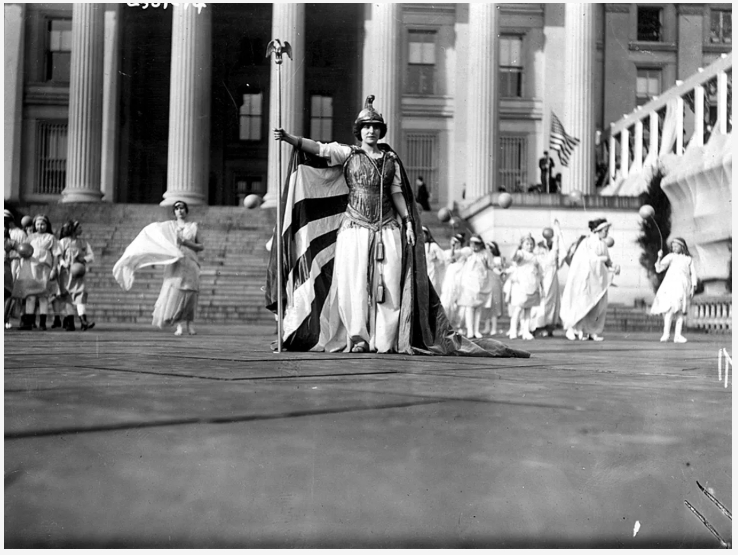
These assessments were hardly inaccurate. As British journalist Wilma Meikle pointed out in Towards a Sane Feminism, which she published in 1917, many of her fellow suffragists’ were filled with an all-consuming anti-male fury: “These were the women who regarded the majority of men as conscious and willful oppressors” (pp. 84-85). Some such as Theosophist Frances Swiney developed theories of men as deficient non-females: in her 1907 book Bar of Isis, Swiney castigated “a selfish, lustful, diseased manhood” that “sought in woman only a body,” and she characterized semen as a type of pollution.
In response to feminism’s rampant animus (see Elizabeth Cady Stanton’s Declaration of Sentiments [1848] and Christabel Pankhurst’s The Great Scourge and How to End It [1913]), anti-suffrage societies formed in the years prior to the First World War, attracting many active members.
They promoted the complementarity of men and women, alleging that women’s interests were already well represented by male voters and would not be furthered by forcing women into electoral politics. Their perspective was based not on dislike of women or contempt for their properly-directed abilities, but on a particular vision of the social good.
Significantly, many of those who warned against the consequence of female enfranchisement were women themselves. For these women, domestic responsibilities were a deep source of self-respect. They claimed emphatically that most women did not want the vote and that involvement in political life would harm women’s ability to make their most important contribution to family and national well-being. Long suppressed by historians, their views remain relevant a century later.
The Narrow Historical Window of Alleged Male Privilege
Viewed historically, woman suffrage was not the clear-cut issue of universal male privilege and universal female disenfranchisement that feminists then and now would have us believe. It was not the case that men had been able to vote throughout history simply because they were male or that women had never been able to vote simply because they were female.
Many American states, for example, allowed women to vote for state legislators in the years or decades before the ratification of the 19th Amendment. Some even allowed them to cast their ballot for President. Depending on the state, some women were able, in the later 19th century, to vote in local, particularly schoolboard, elections.
On the other side, men’s right to vote had been limited for various reasons. Property requirements restricted white American men’s ability to vote federally until 1856. Black men were not eligible to vote until 1870. A majority of British men lacked the right to vote until the later nineteenth century, and even at the start of the First World War in 1914, when feminist women were making their angriest demands, approximately 40% of British men, poor and property-less, still did not have the right to vote.
In brief, the nineteenth century was a period of rapidly expanding democratic reforms that saw increasing numbers of men enfranchised. Voting rights would, in time, almost certainly have been extended to women even without the massive displays of feminine fury and wounded self-love of suffrage activists.
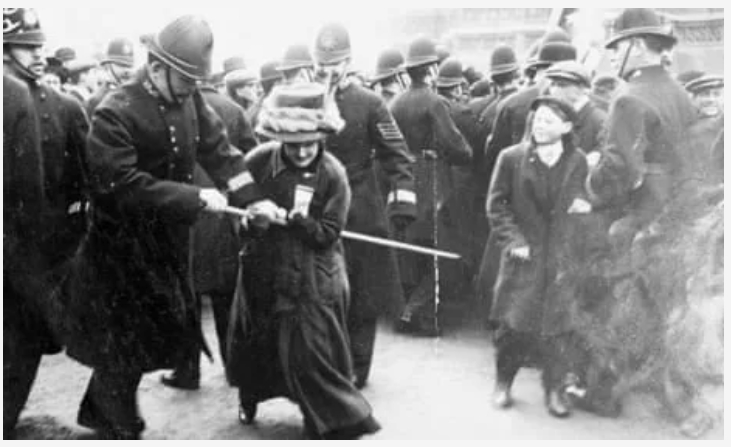
Women’s Arguments Against the Vote
Arguments against extending the vote to women were most often based on the claim that women were in general less suited to politics by temperament, interests, and experience, and that women’s most important contribution to their society—and to their own interests, ultimately—was made through care for family and non-partisan social advocacy, a set of “trusts,” that were, as one anti-suffrage organization put it, “as important and sacred as any that exist on earth.”
Historian Julia Bush, in Women Against the Vote (2007) has shown that anti-suffragist women believed with good reason that they spoke for the vast majority of women (exact figures on women’s suffrage views being impossible to determine, see pp. 3-4). After polling women across neighborhoods, anti-suffragists insisted that most women were not interested in partisan politics, preferring to direct their energies to areas of long-standing feminine concern such as child-rearing, public health, and public morality.
The Illinois Association Opposed to the Extension of Suffrage to Women phrased it in the following manner in its 1909 petition:
We feel that our present duties fill up the whole measure of our time and ability, and are such as none but ourselves can perform. Our appreciation of their importance requires us to protest against all efforts to infringe upon our rights by imposing upon us those obligations which cannot be separated from suffrage, but which, as we think, cannot be performed by us without the sacrifice of the highest interests of our families and our society.
At a time when most women were occupied in the domestic realm, often pregnant, often caring for children and dealing with household duties, electoral politics was an enervating and unwelcome distraction.
According to this anti-suffrage view, it was simply not true that non-voting women lacked political representation. On the contrary, women’s interests were vigorously upheld by the men in their families and by male politicians generally.
Liberal party member and British ambassador to Washington James Bryce concurred: “There can be no more baseless assumption than that the polling-booth is the main source of influence in politics. Women already enjoy greater influence in other ways, both public and private, than the franchise would give them” (quoted in Separate Spheres, p. 81).
Some anti-suffragists argued that women had more influence in their societies precisely because their advocacy was seen as non-partisan. The National Association Opposed to Woman Suffrage wrote, “Because women now stand outside of politics, they therefore are free to appeal to any party in matters of education, charity and reform.” As Brian Harrison noted, it was “difficult to think of reforms for which late Victorian women energetically campaigned and which they were not granted” (Separate Spheres, p. 73).
Anti-suffragist women also believed that politics was ultimately, and should remain, a male contest because national governance rested on the use of force. To extend the ballot to those without the obligation or ability to enforce law and sovereignty was to introduce a falseness into the political system that would ultimately weaken whatever nation implemented it.
The Illinois Anti-Suffrage Association represented the argument as follows:
Because the basis of government is force, its stability rests upon its physical power to enforce its laws; therefore it is inexpedient to give the vote to women. Immunity from service in executing the law would make most women irresponsible voters.
Ultimately, the anti-suffragist position rested on a vision of mutual respect between the sexes, in which the qualities and duties of one sex rested on and supported the qualities and duties of the other. To quote again from the Illinois Anti-Suffrage Association,
Our fathers and our brothers love us; our husbands are our choice and one with us; our sons are what we make them. We are content that they represent us in the corn-field, on the battle-field, and at the ballot-box, and we them in the school room, at the fireside, and at the cradle, believing our representation even at the ballot-box to be thus more full and impartial than it would be were the views of the few who wish suffrage adopted, contrary to the judgment of many.
If the anti-suffragists were wrong, it was certainly not because they hated women. Their vision of respectful complementarity was designed to honor the different strengths of women and men, as well as to protect women from the corrosive effects of public life.
Were the Anti-Suffragists Right?
As we know, the anti-suffragists’ arguments did not succeed.
The First World War ultimately decided the matter of women’s voting rights. Women’s service on the war’s home front—their work in munitions factories and farms—highlighted female duty and public-mindedness, provoking strong public approval. The war might have confirmed the anti-suffrage view that physical force and massive male combatant deaths were still a factor in world affairs, and that, unable to fight on frontlines, women should not be empowered to direct national decisions. But it didn’t.
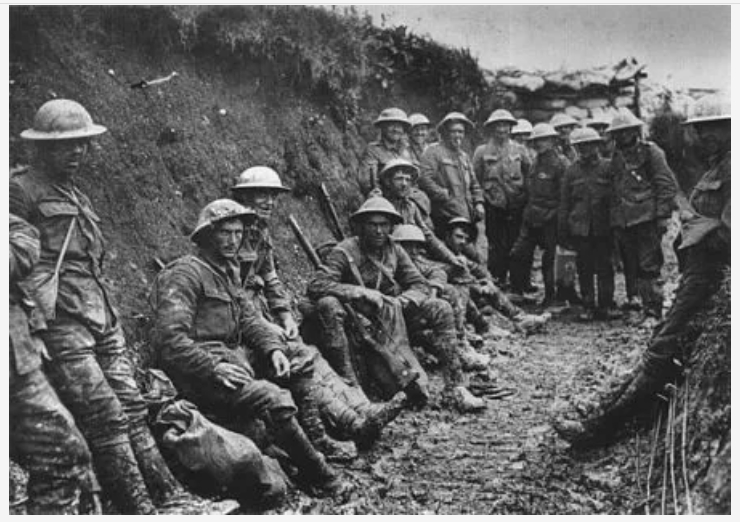
Women thus won the right to vote on the backs of hundreds of thousands of men dead in the trenches of Europe. That debt, of course, has never been acknowledged by feminists.
Although it is now difficult to imagine a world without women voting in national elections, it is at least as difficult to dismiss the anti-suffragists’ concerns. A female electorate has made politics increasingly emotion-based, with an ever-expanding state bureaucracy catering largely to women’s social concerns, fears, and easily-triggered outrage.
Over a century after women began voting, research has repeatedly found that men express far more knowledge about and interest in political affairs than women do. A 2019 article about gender differences in Britain reported a 20-point gender gap in expressed political interest amongst 15-year-olds and a 30-point gender gap amongst 25-year-olds.
A Pew Research Poll of Americans found women consulting newspapers for stories primarily about “weather, health and safety, natural disasters, and tabloid news.” Men were more interested in “international affairs, Washington news, and sports.” According to another report that criticized news organs for failing to attract female readers, women prefer local stories, accessible graphics, and an engrossing narrative rather than fact-based news.
The stereotypes that some suffrage activists raged against have turned out to be true.
Moreover, female political power has not made politics kinder or more efficient, wiser or less corrupt. It has driven a wedge between men and women, massively increased the size of government, increased bureaucratic regulation of private life, and left many children without motherly love and attention—and without their fathers at all.
Anti-suffragist’s professed gratitude for men and faith in gender balance stand in stark contrast to feminists’ continual complaints, accusations, and demands. As a minority of feminist radicals hijacked the political process, the worst fears of the anti-suffragists were realized.
What is perhaps most interesting about the historical debates concerning women’s voting rights is that they occurred at a time when it was still possible to discuss what was best for society from a perspective that included everyone: men, women, and children. Women’s suffrage has made it nearly impossible, finally, to talk about any good other than a feminist one.
First published in the Fiamengo File






3 Responses
Feminists who actaully support the feminine.
One must assume that Ms Fiamengo, if in the USA, proudly chooses NOT to vote in any elections, in order to reflect her meek recognition of her innate female inability to understand the ‘wider world’??
One lives in the world as it is. My dearest friend though very intelligent made her decisions about her vote based on emotion. It is hard to argue that the nation hasn’t veered left since the suffragettes succeeded.