by Petr Chylek (May 2026)
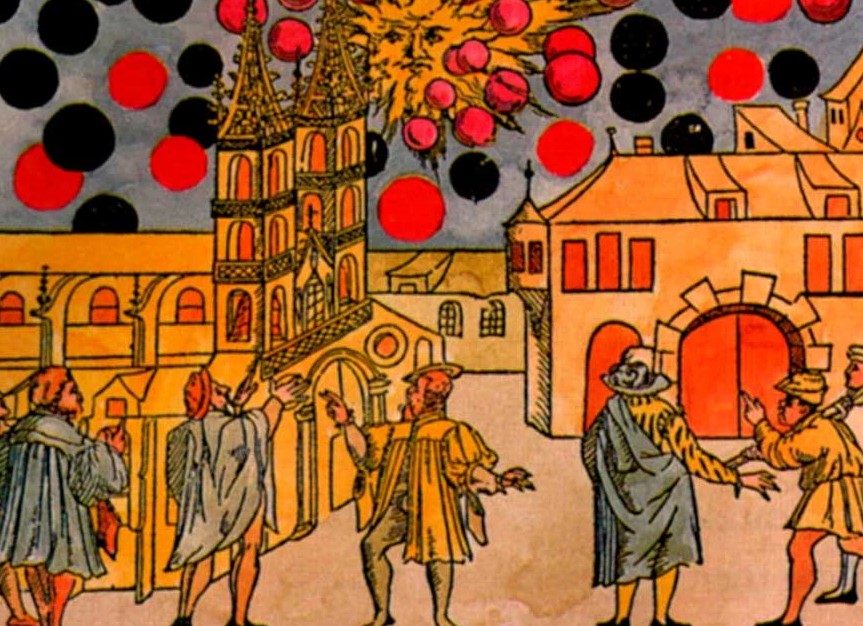
On June 13, 1971, a body was found in the Arizona desert near Tucson. Identification confirmed it was Dr. James E. McDonald, a physicist at the University of Arizona. McDonald specialized in atmospheric physics, focusing on cloud physics and light scattering by atmospheric particles and cloud droplets. He was also a well-known expert on unidentified flying objects (UFOs). Authorities stated the cause of death was suicide, though several experts questioned this conclusion.
In early June 1972, I began my postdoctoral fellowship at the National Center for Atmospheric Research (NCAR) in Boulder, Colorado. My research focused on light scattering, and I developed an interest in McDonald’s work.
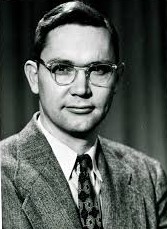
Since there were several postdocs, there wasn’t enough space for all of us in the main NCAR building. As a result, two offices for four people were located in the Fleischmann building, a small structure near the parking lot. One office housed Arthur Loesch (1942-2012) and me, while the other was shared by James Coakley and another postdoc whose name I don’t remember. The remaining offices in the Fleischmann building were occupied by Dr. Walter Orr Roberts (1915-1990), president of the University Corporation for Atmospheric Research (UCAR), and his staff. Walter Roberts secured funding for the construction of NCAR in the early 1960s, and he became the founding president of UCAR and the first president of NCAR. Through his efforts, Boulder became a prominent research center, attracting several other research institutions.
I knew Walter Roberts from our occasional encounters in the building’s hallways. After hearing that he was friends with James McDonald, I asked him one day for a meeting to learn about flying saucers and James McDonald’s work. He invited me to his house below Chautauqua on Bluebell Avenue. Here, I explain what I learned from that meeting with Walter Roberts.
The US Government, especially the Air Force, became involved in UFO research soon after WWII. The reports produced were often criticized as cover-ups, citing biases and a lack of expertise among staff and project leaders. Since 1966, McDonald has led a strong effort to take seriously the extraterrestrial origins of some UFOs. He believed that about 1% of reported UFOs were genuinely extraterrestrial, while the other 99% were hoaxes, misunderstandings, or misinterpretations. Sadly, the cases that could be easily explained were the focus of various committees and investigations, while the more complex ones were classified as potential threats to national security and kept out of committees investigations.
In 1966, a new committee to analyze UFOs was formed. Walter Roberts was asked to lead it. Familiar with the history of UFO research and aware that many prominent and influential people might disagree with the committee’s conclusions, regardless of what they might be, he hesitated and ultimately declined the offer. The chairmanship was then offered to Dr. William Kellogg (1917-2007), who was a director at NCAR’s Laboratory of Atmospheric Sciences at the time. After considering the work involved and the possible consequences, Kellogg also declined. The position was finally offered to Dr. Edward Condon (1902-1974) from the physics department at the University of Colorado in Boulder, who accepted the role.
According to some reports, James McDonald offered to serve on Condon’s committee, but his offer was not accepted. The Condon Committee’s final report was published in 1969. Condon wrote in the report’s introduction that most sightings can be explained as hoaxes or misunderstandings, and the committee concluded that no additional work on UFOs is recommended. Most experts, the general public, and the news media accepted the committee’s conclusion.
James McDonald knew that his work, which took UFOs seriously, might harm his reputation as a serious scientist. He did it anyway because he believed it was his duty as a human to share his true beliefs rather than merely those society would accept. Although his honesty is admirable, he apparently overestimated his resilience; eventually, his damaged professional reputation, combined with an unstable marriage, became too much for him to handle.
According to Walter Roberts, McDonald was personally convinced that extraterrestrial beings exist and, in some way, believed he had a personal experience of contacting them. This was apparently a reason he tried to persuade the US Government to continue investigating the UFO question.
The 1960s were an unusual time, marked by the civil rights movement, the Vietnam War, picketing, and dissent. Amid all this, Betsy, the wife of McDonald, was fully involved in the civil rights movement, while McDonald was preoccupied with his professional duties and his interest in UFOs. Sometime in the early 1970s, Betsy indicated that she had a problem. She wrote a letter to her husband, expressing that she felt her needs were neglected. In her letter, she described how she felt [*]:
” McDonald was seriously neglecting her. As a consequence of his frequent absences from home, she had become involved with a younger man who was active in the anti-war movement and whom she saw frequently at the Peace and Freedom Center. He fulfilled her need for companionship and also claimed to share her Marxist philosophy.”
Betsy asked for a divorce. Facing two crises—marital problems and the widespread rejection of the UFO program—proved too much for McDonald to handle. He quickly decided what to do. Within a few days, he settled his family matters and attempted suicide. He didn’t succeed; the bullet only injured his optic nerve. He spent several days in the hospital. During that time, Walter Roberts visited him and shared what he had learned with me. A few days later, McDonald was found dead in the Arizona desert near Tucson.
His death is often linked to UFOs, but I disagree. For many years, McDonald passionately opposed UFO skepticism, convinced he was doing good for all of humanity. An unsettled family situation can turn a person’s optimism into a seemingly hopeless outlook.
The UFO question didn’t end with the Condon Committee report or the McDonald death. Distrust between UFO enthusiasts and the government persists today. About 50 years after the events described, President Donald Trump wrote:
Based on the tremendous interest shown, I will be directing the Secretary of War and other relevant Departments and Agencies to begin the process of identifying and releasing government files related to alien and extraterrestrial life, unidentified aerial phenomena, and unidentified flying objects, and any and all other information connected to these highly complex, but extremely interesting and important, matters.
The current NASA administrator, Jared Isaacman, recently said that the existence of UFOs “goes to the heart of many things that we do at NASA,” adding: “When you think about it, we have so many galaxies out there. Who knows how many star systems within each? I would say the odds that we will find something at some point to suggest that we are not alone are pretty high.”
McDonald is a forgotten hero. More than half a century ago, he was a lonely voice, crying out and dying in the desert to draw attention to the possibility of extraterrestrial intelligence. If he could see the current attitude in the US toward UFOs and extraterrestrial visitors, he would rejoice. More than half a century after his death, the government seems to be following his advice. We have to wait to see what the future will bring.
________________________
[*] Ann Druffel, Firestorm, Granite Pub. 2003
Table of Contents
Petr Chylek is a theoretical physicist. He was a professor of physics and atmospheric science at several universities in the US and Canada. He is the author of more than 150 publications in scientific journals. For his contributions to science, he was elected a Fellow of the Optical Society of America and a Fellow of the American Geophysical Union. In 2017, he received the international Van de Hulst Prize for his original contributions to the theory of electromagnetic scattering.
Follow NER on Twitter @NERIconoclast






3 Responses
Thank you for this.
Few can survive being hit by multiple crises at once. We need people like McDonald in all walks of life. I look forward to eventually learning the truth, no matter what that may be.
Hello Dr. Chylek,
You might enjoy a short story I wrote for NER titled, “Up the Alimentary Canal with Camera and Ray Gun” (October, 2021.)
I enjoyed your article!
Best,
David Wiener
Thank you, David. I will look for it and read tomorrow.
Greetings,
Petr