by Justin Wong (January 2026)
—
One
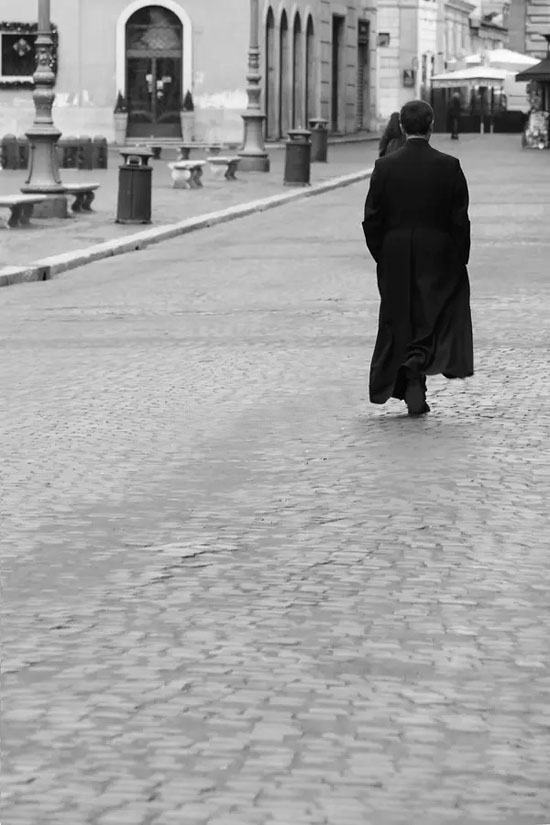
Father Horatio had yet to begin his studies. He had spent the better part of the morning in prayer, and it was imperative that he move on to his work.
As a Jesuit, this included research projects, whether they were in the arts, literature, languages, the sciences, theology, or philosophy.
Horatio’s expertise was in the sciences—or mathematics to be accurate. This wasn’t his primary interest, and he came interested in this field from the previous books he had written in philosophy and his more obvious theological studies.
Though how could he turn his interest so easily from one field of endeavour to another, when he might not have received strict training in it? It wasn’t unusual for the men that formed this order to be trained in multiple fields in the spirit of the age when the order was formed, the renaissance. The year was 1810, and that era had passed it possessed a similar spirit of that haughty age. That age produced in it many polymaths being the pinnacle of civilisation, the height of culture. In the public perception, it was always viewed as a tragic age to the papist. For a millennium, this church had a cultural dominance in Europe that began abruptly to unravel in this age of change.
The society of Jesus was a reaction to this: the printing press, the split from Rome, the dissolution of the monastery—the reformation. These men planting their orders around Europe and the world, were a fortress against spiritual and cultural forces that might lead to Catholicism’s disintegration. Although this group were against the age they cropped up in, they embodied many of its elements—a tendency to aspire to omniscience. Though why the contradiction? It was something that Horatio thought about himself and the only reply he could come up with, was something one of the wiser Priests told him in his years as a student. “The church is an institution that shapes society, but we can’t lose sight of the fact that it is also a part of society.”
Though the renaissance produced men of such diverse learning was one of the correct things that this age of turmoil came up with. The duty of the Christian was to imitate Christ. Our Lord was many things not one, and just as God could be the omnipotent, omnipresent, a judge, healer and redeemer, man in imitation of him could be the philosopher, scientist, artist, lawyer, medic, and absolver of sins. Different aspects in one man reflected the source from which all things came.
This was why Horatio could move so easily from his Philosophical and Theological studies into the field of Mathematics.
Though why did Mathematics fascinate him, and others in his order? For one thing, the number was a perfect and whole representation. As he walked in the grounds of the monastery, and saw the elm trees standing and blowing in the wind, he could help but notice how different each of these things from one category were. Some had more leaves, some hovered over the rest, whilst others were wider. You never saw this variation in the field of Mathematics: 1 was always 1, as 2 was always 2. This was an idealised representation of the world, and quite conceivably as way of understanding God. The fact that it was an imagined language, something of this world didn’t detract of this splendour. Mathematics could be likened to a language—an imagined system of which we can know and contemplate the mysteries of this world.
The fact that the world had different languages, didn’t stop the church carrying out its mission, to save the souls of men.
Beyond this, mathematics was a language of similar use, through to different ends. The more Horatio started to view the world in mathematics, the more he became convinced of the principal doctrine of St Augustine, that the world is fallen.
Nowhere was this awareness more present than the city he inhabited, the monastery that he lived. All was flawed, everything contained in it, imperfection, the spire of the church, the paving of the street, the rows of the pews.
Though the more he contemplated mathematics, he was convinced that not only the physical world, but the whole of life, could be reduced to geometric principles. There was shape and pattern in the scriptures. There were 66 chapters in the book of Isaiah, which reflects the 66 books in the Bible as a whole. The shape of the book of Job, beginning of perfection, being cast down and inhabiting a state of suffering only to be given back all that he had to begin with, could be considered to encapsulate in a microcosm, the story of the Bible as a whole, from innocence, fall, and redemption.
Might all we know be reduced to such patterns? Horatio assented to this.
Two
The life of a priest was hectic, in addition to prayers, his studies, he still had to perform his functions as a cleric. He had to prepare services, deliver sermons, listen to confession, give alms to the poor, etc. His waking life was taken over with these duties. The more he interacted with people in the community, the more he thought that he wasn’t at all different from the people he lived amongst. Although he was a man of God—a priest—he was prey to worldly temptations as much as the souls he absolved. There was of course envy, coveting another man’s lot—his possession. This was easily done when he had to profess a vow of poverty and lived without anything—material goods. This wasn’t for him as bad as one might assume. The monastery—its communal living, the life of spiritual contemplation, and academic interests—were enough to satisfy him.
Though once in a while he would see a wealthy man pass by in his finery, with all the interest and fascination this attracted, and Horatio wished he could be him. He was aware of how foolish this was, and nothing so important to him as the life he lived, the work he carried out. He had to make sure to get hold of himself, and realise that these thoughts were sinful, and a transgression against the God he worshipped.
Beyond envy, there was lust. This would happen when he was about the town on one of his weekly duties, he would spot a young lady that he would desire to love, though knew that he never could. The life of a priest came with certain duties, celibacy being a principal one. But his faithfulness, his duties, his giving his life over this order, wasn’t enough to suppress his earthly desires. But such feelings weren’t limited to unknown faces that he might never see again, there was also Marie Cerny. She was an impertinent girl who was younger than him by some five years, she sporadically turned up to mass, whispered to her friends throughout the sermon, and then say to the priest how much she thoroughly enjoyed the service.
Why after all this blatant mockery, should Horatio find her at all charming, defied the kind of logic that he spent hours of his day in contemplation of. It represented much as could be found in the rest of the world: a flaw, this time in himself. Why he should find this young woman to his liking when she had obvious deficiencies—a half-formed thing—when there were other young ladies who behaved in ways more saintly.
Though him showing an interest in women was a thing more troublesome, though he convinced himself that the affections he had for her were as platonic as the numbers he daily studied. But he could not deny, as anyone with sight, that she was beautiful. The more he contemplated beauty, the more he thought this an inaccurate thing to say, that beauty is something that one is born with; a representation of the hollowness of a materialist age. It was possible that she was beautiful in soul as in body—the soul being to the flesh, what weather is to the day. The former making the latter transformed based on its state. This might have explained the fascination that others, Horatio included, had for her.
He was thrilled to see her on one of her random appearances. Though the image of her didn’t haunt him much in prayer, in study, or good works. Though the more he did these things, the less thought of her. He thought that carrying out his Godly duties was a bulwark against what could led him down a ruinous path.
He thought about his good works, and how this could be, as everything else, reduced to mathematics, an equation. For him as for other Catholics, the more good works one did, the more likely they were going to be saved, and the more evil they did, the more they would be cast down in hell—eternally so.
He reduced this to a formula
Xg= b
B=s
X represented the number, g – works, b – blessings, and s – salvation.
The more good works one did, the more blessings one could receive, which represented God’s grace, being salvation. Such a formula was easy to learn, and as such could be taught in Sunday School to any child—a fool proof guided to the blessings and wonders on this earth, and eternal life hereafter.
In the afternoon after musing upon this, he walked out from the library he had been huddled in with its many thousand books and entered the courtyard most satisfied with the day’s work.
Three
As well as reducing tall things to formula, seeing the world in number, he had other duties. Though back to that in a moment. He came up with other such formulas—mathematical models. How nature along with human creation might look after the rapture, how things crooked would be made straight. Beyond this there were formulas to avoid calamity, poverty, misfortune, disease, untimely death. Such formulas included a life of virtue, and whenever they erred from the path, repentance, penance, and confession.
Though on this particular day, Horatio as a part of his clerical duties, was to perform the last of these. Whilst he was doing this, he was met with the usual hodgepodge of familiar faces, or at least voices, admitting to minor wrongdoings, their venal sins.
He thought that he would be met with Jiri Skosihov, a young man who frequently turned up and admitted to some of the most heinous crimes.
It was just his luck, and when Horatio was set to pack up, he had this familiar youth come into the confession booth.
“And what sins have you committed my boy?”
“I’m afraid that I was in a tavern on the weekend. My companions and I were drinking heavily, and we got into a fight with another group of youths. I can’t say that this was simply a case of self-defence. I along with some of my friends fuelled the flames.”
“Then if you a sincerely repentant then you are forgiven my boy. Though just remember, although the scripture says that we ae permitted a tipple so as to make merry, drunkenness is a sin.”
He walked away after his confession, out of the dusk dark chapel, and into the bright autumnal day, soon to fade.
Horatio was glad of his confession, but disappointed that he never seemed to learn.
Last week he was there being drunk, and a public nuisance, this week it was for brawling, next week it would be for murder. What else could he teach such a man?
He tried with all his might, not to dwell on such matters. But dealt with issues to do with the community, confession, and sermonising. These were things he loved to do, and were central to his vocation. Though he would have liked to get some days away from it all, these people with their impertinence, their rudeness, their criminality.
He was working on a paper on his chosen obsession. This was away from formulaic catechisms, showing the uninitiated salvation. This was a paper discussing the strange and mystical nature of number. How this language was used to map out, and measure the world, is an ever-present fact that was nowhere seen. Did this mean that number was real? In a way it is a reality more real than the one we are condemned to know. Things of this earth degrade and transmute. Numbers as we know it are impervious to the transfigurations of time—the earth in constant movement, not merely as it revolves around the sun, but the one of history, nature—the inner revolution. Despite all of this, 2 is always 2. When man was wrenched from nature in order to farm, 2 was 2. When the first cities began to be constructed of bricks and man began to live proximate to one another in filth and squalor, 2 was 2. When the systematic thought was beginning to be developed in the academies of Greece, and man began to ponder the nature of life with a foreseen profundity, 2 was 2. In Israel, 2 was 2. When Christ came into the holy land and was condemned by Pilate to die, 2 was 2. During the spread of the Holy Roman Empire across the lion’s share of Europe, and scattering of other places across the globe, 2 was 2. In the hour of the reformation, 2 was 2, as it is now.
Number was a mooring against time, something itself, reduced to number. Its chance nature, unpredictability, rise and fall. How deep could Horatio delve into this study? He was well aware that in contemplation of this, he could escape reality, into this idealised world. Would this be a sin, an evasion of being a man, and this, a priest. And more than this, was his study of number akin to monks of the early church, walling themselves off from the world to live in a monastery. Numbers were perfect, unwavering, untransmutable, unflawed, fleshless, as Horatio surmised man would be in heaven. He pondered upon these things, for close to two weeks between other duties. But something was to upset this, he was notified that someone was sickly ill, and soon to die.
Four
Horatio knew little about this person he was meant to minister to. When someone described her to him, he had seen the wife of this man on a number of occasions, as for the man—this person as such, he had never before glanced eyes upon. He had heard that he used to be a regular attendee of communion and mass, though through some strange misfortune, stopped.
He was said to not be holding up well, and it was at the request of his wife that a Priest be sent, and last rites performed. In such cases there was an urgency to him, a desire to gather all that he needed, and move through the streets as his quick as his legs permitted him, without doing damage to his exalted standing in the community.
He knew the infirmary in question and had been there on several occasions throughout the years to do as he now was doing, to perform for the dying, their last rites.
He walked through what seemed like the cold, dark, mortifying hallways, till he got to his desired ward. Although he hadn’t stepped into the ward long when he was accosted with dying man’s wife, who was impatient and raving.
“Father, Father, quickly come, he is in here, as she led him into the room where he was lying down in a bed in a barely conscious state. He didn’t want to wake him up, this was needed. Although Father Horatio thought that he arrived far too late. He seemed as if slipping deeper into unconsciousness.
“Father, Father, what can you do for him?”
“I don’t know, I need to give communion, perform confession, and pray. Though I can do the last these, he seems too out of it, for the first two.”
“But father, I am scared. He hasn’t attended mass in years. He needs confession and the eucharist if he is going to go to heaven.”
“Yes, I can see your face is familiar to me, though I have not seen your husband’s face before today.”
“My husband was once so devoted a Catholic that he could have been made into a plaster saint. He was kind-hearted, charitable, and slow to anger. Though something happened to him, to us. Our son died of consumption before his 21st birthday. He was our child, my husband’s pride and joy. The whole ordeal was difficult for us, but such a misfortune changed him. He stopped going to church, and in lieu of this spent his free time in taverns. This along with the death of our son was difficult for me to bare. At this time, he grew cruel and salty. Any previous warmth and charity had all but been extinguished. I tell you I know this as I know anything, that some form of demon possessed him. I wanted to leave him, I really did. But the state or the church doesn’t divorce on such fallow grounds. Still, after all this hell he put me through, I know there is a good man inside of him. That is why I have asked you to perform last rites for his sake ….. to redeem his soul from the place I am fearful it will end up in.”
Her Husband—Mr Horah—was not holding up well, and he could be classed as semi-conscious when he walked into the hospital. He nevertheless blessed the wine and bread, that it turn into the body and blood of Christ. He tried to place these elements to mouth of Horah, though it was clear that he was in no state to ingest anything. Then he tried to see if he had wits enough to confess to any of the years of wrongdoing, years he presumed since his last confession. Though he was simply not awake, and even if he was, it was unlikely that he would be able to trail off a history of sin. But what he could do for him was pray—fervently so—seeing as the other things, due to his decrepit state, had to be passed upon.
Two hours after his arrival, a doctor pronounced him dead.
This wasn’t the whole of it, and he prayed for his widow in the face of all the horror that had transpired.
He walked back to the Monastery, his head awash with questions of mortality, a scene like that naturally brings to mind. On his way through the sombre promenade, he was met with something that was to shock him further, more than the death of that dying old apostate.
He saw Marie Cerny and Jiri Shosikov on the street on his contemplative walk between the infirmary and the monastery. What are two such people doing together, he thought? How could two souls wildly different come into communion with each other? Thought the father. Though these questions the situation naturally bred in his mind, were answered for him.
It wasn’t long after spotting them that they began to hold hands. A feeling of joy was present on both their countenances, such that he never saw in the context where they had been familiar to each other previously, the church.
Horatio thought where is the law in this? Where the righteous are inflicted with sores, the good son gets not his feast, God’s people are trampled underfoot, the saint through chance loses his faith, and the common scoundrel finds his love.
–
Table of Contents
Justin Wong is originally from Wembley, though is presently based in the West Midlands. He has been passionate about the English language and literature since a young age. Previously, he lived in China working as an English teacher. His novel, Millie’s Dream, is available here.