by Christopher Carson (March 2026)

Thus times do shift, thus times do shift.
Each thing its time must hold.
New things succeed, new things succeed,
as former things grow old.
–
—from “Candlemas Eve,” by Kate Rusby, 2008[*]
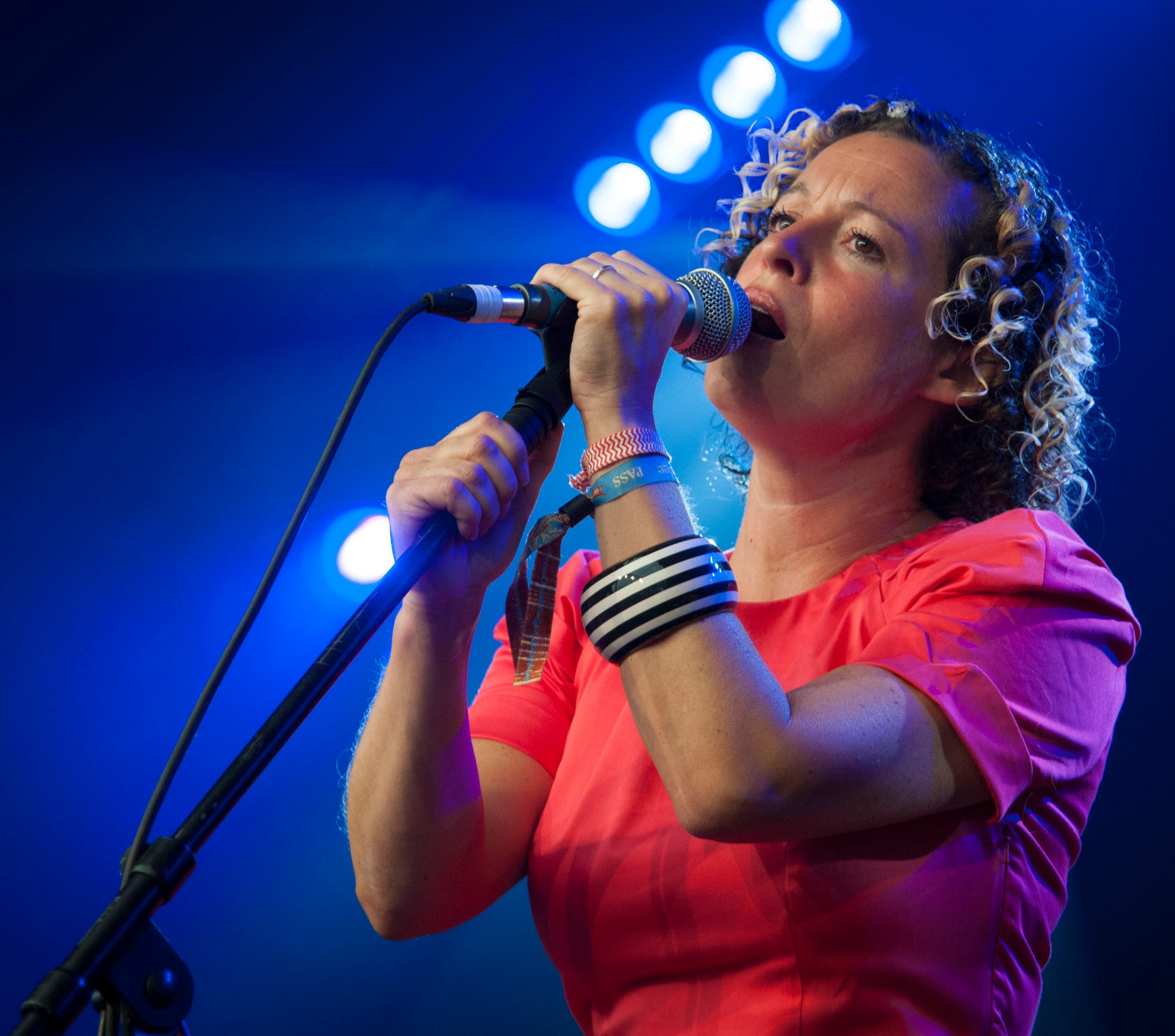
One of the quiet miracles of the contemporary folk revival is that, on rare occasions, it produces a song that does not merely reference the past but seems to remember it from within. Kate Rusby’s Candlemas Eve, released in 2004 on Sweet Bells, is such a piece, modest almost to the point of understatement, harmonically simple, lyrically unadorned, yet suffused with a sense of temporal belonging that feels increasingly foreign to modern ears. It does not present medieval England as an object of reconstruction, nor does it approach the ritual year as a theme to be curated. It sings instead as if the calendar itself were still alive, as if time retained measure, texture, and shared meaning.
The song moves gently through the old English year, from Christmas toward Candlemas, with glances forward to Eastertide and Whitsuntide, as lived markers in a shared temporal landscape.[*] There is no rhetorical sophistication in the language, no metaphysical display, no attempt to compress doctrine into symbol. The words sound as though they might have been spoken rather than written, shaped by weather and memory rather than polish. Precisely for that reason, the song feels trustworthy. Its lack of refinement enhances its sweetness, because it refuses to aestheticize what was once simply how time was kept.
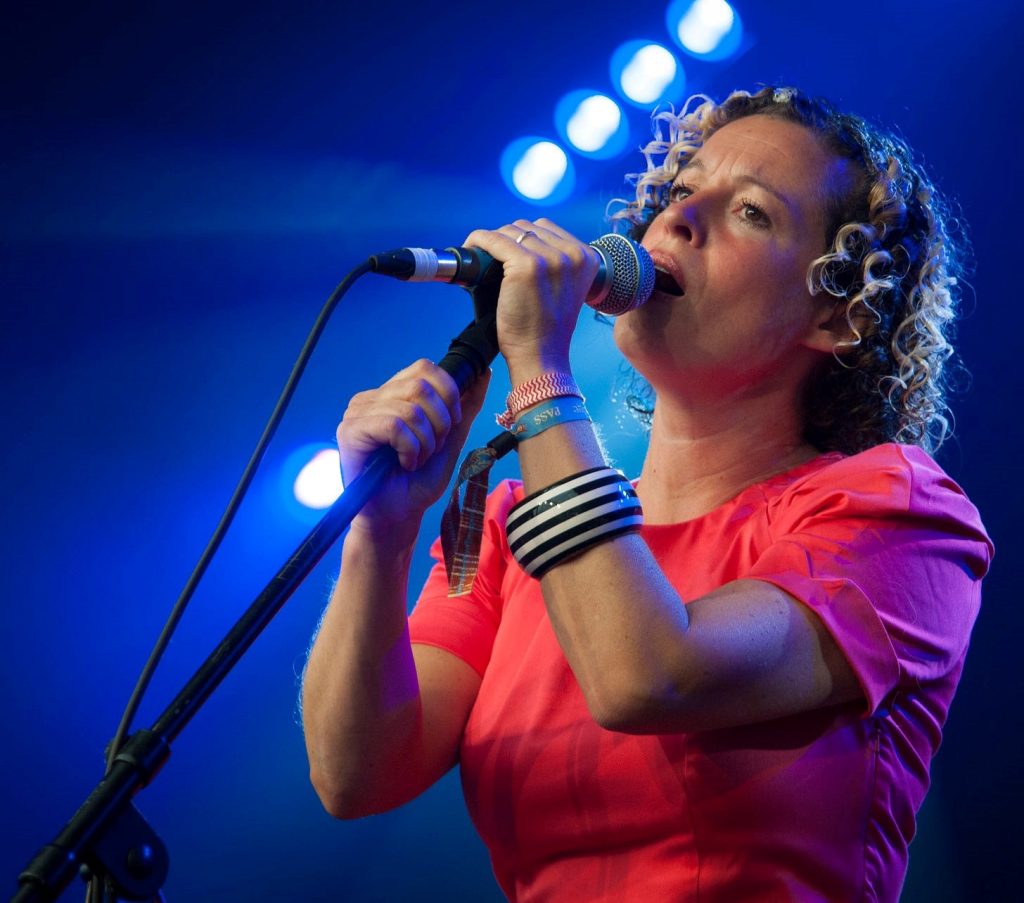
Candlemas itself occupied a position of quiet equilibrium within the late medieval English calendar, a point of balance rather than culmination, neither penitential nor exuberant, marked by blessed candles carried into the dimming winter and by a communal acknowledgment that light was returning, though not yet returned. As Eamon Duffy describes in his magisterial The Stripping of the Altars, it was a feast that taught patience, holding promise without acceleration, hope without triumph. Rusby’s song inhabits that temper almost instinctively. The year it assumes unfolds through return. Christmas settles into Candlemas. Candlemas gestures toward Easter. The circle holds but is never complete.
What the song presupposes, without argument, is what the medieval calendar presupposed as a matter of course, namely that time itself possesses a moral and communal shape. Feasts coordinate bodies, labor, rest, and expectation. They synchronize inner life with outer season, trusting the year’s meanings themselves.
It is from within this trust that the deeper medieval world opens naturally. The communal dances of late medieval Europe, the village rounds preserved by Michael Praetorius, the kinetic abundance of Bruegel’s peasant festivals, and the integrated sacramental economy that once bound Eucharist, agriculture, and movement into a single circulatory system all belong to the same temporal imagination that Candlemas Eve quietly reanimates. Anthropological stability was achieved through motions rightly patterned.

What appears paradoxical to the modern imagination but would have felt nearly self-evident to the Medieval one is that motion itself was the condition of endurance. The world lasted because it turned. Seasons advanced and withdrew with patterned reliability. Feast days returned with ceremonial inevitability. Fields passed from sowing to harvest and back again. The liturgy moved through its year not as pageant but as participation in time’s structure, a living medium whose intelligibility depended upon recurrence.
Within such a world, dance was an organizing mode of our species. Bodily movement aligned the human body with a larger choreography already in motion. Dance functioned as the still point of the turning world. The dancer found equilibrium within time, inhabiting its pattern. The confidence of medieval dance lies precisely here. It assumes that the world’s turning is intelligible, that rhythm precedes the individual and will outlast him, and that to move in time with others is to locate oneself securely within an order larger than any single life.
This assumption is written deeply into the musical structures that accompany medieval and early modern communal dance. Repetition is actually metaphysical reassurance. The ground bass establishes a place where variation may unfold without threatening coherence. Motion occurs, intensity accumulates, bodies tire and recover, yet nothing essential is lost. The phrase returns. The circle closes. One dances within time rather than toward an ending.
In the Bransle de Villages dance movement by the 17th Century composer Michael Praetorius, taken from his suite collected from older French dances he called Terpischore, this confidence is audible without commentary. The lateral sway, the collective emphasis, the refusal of linear drive all presuppose a community that expects to remain intact across seasons and a calendar whose authority does not require defense. The joy of the music is settled rather than ecstatic, resting on the unspoken assurance that the conditions which make joy possible are sociologically necessary.
The same confidence animates the village dances painted by Pieter Bruegel the Elder. In Peasant Dance, the sacred diffuses into the conditions of the scene. The church recedes from compositional dominance, yet the dancers move with the confidence of a calendar that has already sanctioned this moment. Their excess occurs within a system that knows how to receive it. Sacred time has become infrastructural, embedded so thoroughly that it no longer needs to announce itself.
Here the relationship between motion and stillness becomes clearest. The ever-increasing kineticism is really a kind of equilibrium achieved through movement. Energy circulates rather than fractures. Frenzy restores balance rather than threatening it. The turning of the world paradoxically finds rest in patterned motion, just as the liturgical year finds repose through return. To dance was to stand at the center of an ecstatic wheel whose turning was trusted by the whole village.

That trust did not vanish through disbelief so much as it thinned through political fragmentation as Europe rent itself asunder with the divisions of the Reformation. As the integrated calendar weakened, as feast days lost their binding authority and ritual drifted toward custom and performance, dance itself survived but certain of its anchoring assumptions faded. Forms persisted while their cosmological grammar eroded. Steps could be learned, melodies preserved, contexts reconstructed, yet the deep assurance that recurrence itself was guaranteed no longer governed experience. Motion remained, but the still point it once created became harder to locate.
What survives into the present retains a double character. The dances still move beautifully, sometimes fiercely, yet they no longer still the world in the way they once did. The continuity they presupposed has become something to be remembered rather than inhabited. The calendar only aspires in its relics to a shared meaning.
It is here that Rusby’s song returns to me, quietly and without insistence. Candlemas Eve simply remembers, in melody and measure, what it felt like to live within a year that made sense of itself through return. The song accepts that times do shift, that new things succeed as former things grow old, yet it sings this truth without anxiety, as though change itself could still be held within a trustworthy order.
That, finally, is what the concept I formulated in earlier essays called the Danse Doree (golden dance) named and what the Medieval world assumed without defense, that the turning of the seasons, the return of feasts, the renewal of communal life, and the patterned motion of bodies were not provisional arrangements but the deep grammar of reality. The dancer moved as he did because the world itself was moving over the calendar’s works and days, and because movement, rightly ordered, was how rest appeared within time, season after season, phrase after phrase, world without end.
____________________________________
[*] The lyrics were actually penned by Robert Herrick, (baptized 24 August 1591 – buried 15 October 1674), poet and Anglican cleric.
DOWN with the rosemary and bays,
—Down with the misletoe ;
Instead of holly, now up-raise
—The greener box (for show).
–
The holly hitherto did sway ;
—Let box now domineer
Until the dancing Easter day,
—Or Easter’s eve appear.
–
Then youthful box which now hath grace
—Your houses to renew;
Grown old, surrender must his place
—Unto the crisped yew.
–
When yew is out, then birch comes in,
—And many flowers beside ;
Both of a fresh and fragrant kin
—To honour Whitsuntide.
–
Green rushes, then, and sweetest bents,
—With cooler oaken boughs,
Come in for comely ornaments
—To re-adorn the house.
–
Thus times do shift ; each thing his turn does hold;
New things succeed, as former things grow old.
Herrick’s poem was set to a Basque melody by Edgar Pittman (1865-1943).
The most famous of Herrick’s poems begins with this stanza:
Gather ye rosebuds while ye may,
Old Time is still a-flying;
And this same flower that smiles today,
Tomorrow will be dying.
0
Table of Contents
Christopher S. Carson, J.D., M.A., formerly of the American Enterprise Institute, is a criminal defense attorney in private practice in Milwaukee.
Follow NER on Twitter @NERIconoclast




2 Responses
I loved this. Superbly written.
Once phrase meant something to me and it was this: “no attempt to compress doctrine into symbol”
Assuming I understand the meaning intended by this, it is the same point I make in my own work: namely, the rapacious need of the modern age for certainty and the corresponding tendency to collapse everything into discrete form — a this or that. But when we do this, the life goes out of things. Everything dies. There can be nothing new under the sun.
Perhaps there are deeper cycles beyond the yearly one. Perhaps the last age is dying, clearing space for the new.
For what its worth, here’s a musical piece that captures the end of the last age for me:
https://www.youtube.com/watch?v=zi33ozz4Cm8
Now, however, I look forward to the new.
thanks Andy! I’ll keep them coming!