by Bernard Martoia (January 2026)
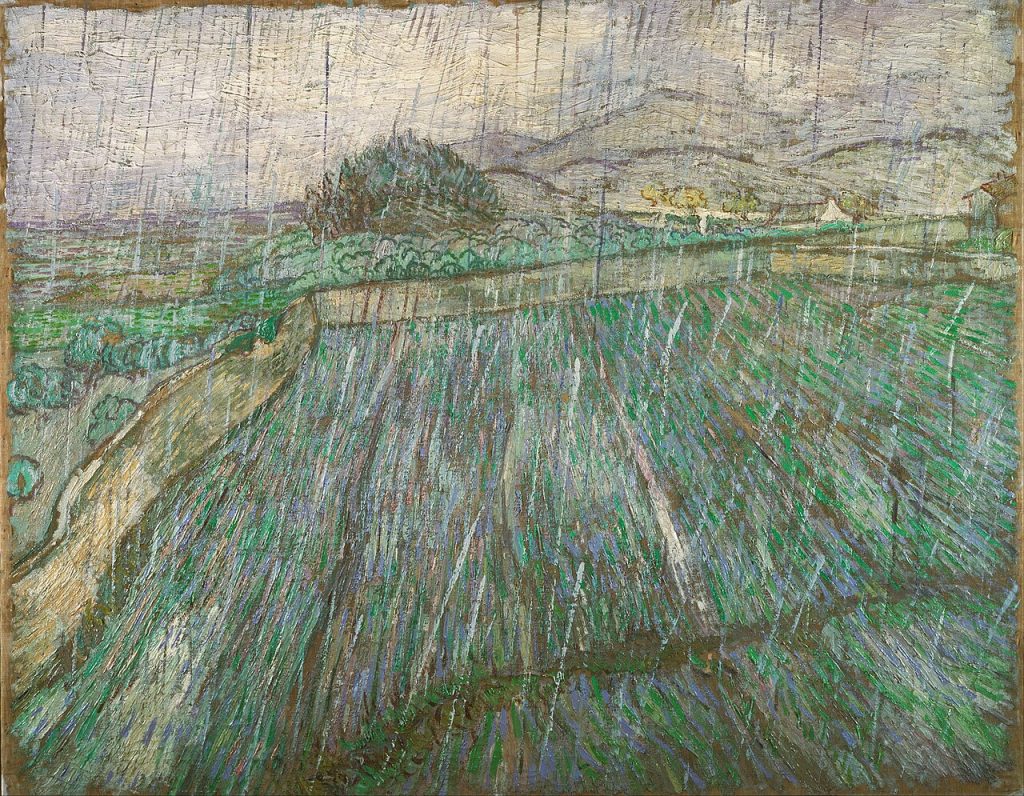
After a night of heavy rain, the clouds obscured the obelisk monument at High Point. Waffle Print grabbed his shorts and T-shirt off a tree branch; the fabric clung to his fingers as he wrung them before pulling them on. Yes, everything in his backpack got wet. The pack cover failed to keep out water.
As the precipitation kept coming, he recalled Bill’s invitation—one of the three mountain bikers he had met at the start of his journey in Harper’s Ferry—who offered him lodging for a night at his residence in Unionville.
“Should I give him a ring when I arrive? A roof would be amazing after all this bad weather,” he considered.
He examined his data book and found the town to be only six miles off. Because of his busy agenda, he had no free time, so he could not stay all afternoon. Despite its being a Sunday, a huge sense of urgency drove him.
As he skipped the hut in the dark, he desired to view it in the daylight. The flooring held various people, and soft sounds of sleep or dream whispers echoed. He considered, envious of the hikers with no time constraints, in contrast to him.
The trail descended eight hundred feet with a gentle slope, offering relief to his aching leg muscles. After the crossing of a paved road, the path veered south. The AT traveled beside the New York State border, yet nothing displayed it.
Without going through Unionville, the route scaled three small hills. The village tucked away in Orange County depended on the dairy farms for its livelihood.
When he passed the cemetery, heavy rain resumed, obscuring the path ahead with a sheet of water. On the porch of Horlers General Store, he sought refuge from the deluge, a spot for town talks.
A chilling fear washed over him as the memory of his past panic resurfaced.
October’s sunset painted the horizon with long shadows in vivid hues. He came to resupply at the convenience store at the end of the afternoon. Three old women cautioned him, their voices rough with time, concerning the noise of a bear searching the trash, a frequent occurrence.
“You’re gonna run into the scavenger on the trail,” the woman with the headdress warned him.
Since he intended to rest at the Wits End Tavern, he ignored her warning. In the pub, he sat at the counter, got a beer and inquired about the availability of a place to stay for himself.
“We’ve got a room, but don’t expect a good night’s sleep. There’s a bash tonight,” the bartender answered.
The unwelcome data arrived as he drank a lager, resulting in a choking fit. Then, the television screen broadcast the news that Arnold Schwarzenegger had become governor of California.
“Terminator may defeat a bear, but I’d be toast,” the backpacker mused as he heard about his victory.
As twilight deepened, he left the tavern, the sounds of laughter fading behind him, seeking a suitable campsite. Darkness surrounded him before he located a proper one on the AT.
As his search yielded nothing, he noticed two eyes, still and shining in the dark. Their height off the ground exceeded that of all familiar animals. He said hello to the bashful man as he moved nearer. Though the individual remained silent, he kept advancing at great speed.
At a bend on the trail, a large black bear, its wet nose sniffing the air, stood on its hind legs. The animal towered over everything, standing at least seven feet tall. The creature, startled by the distracted person’s shout, withdrew into the woods, producing a howl while demolishing all in its path.
“I can’t imagine it didn’t strike me,” he reflected, his knee quivering. Afterward, he reminisced regarding how much difficulty he had caused his mother with his solo travel overseas prior to her passing. He was the only person she trusted. He discovered peace, oblivious to the timing of his calling by the Lord.
Back to the topic, Waffle Print entered the Horlers General Store. The covers of multiple newspapers on the display rack displayed a picture and a double date (1925-2008). Paul Newman, the actor, died. On this rainy day, the news filled him with a sense of dread. He was not alone in grief over his departure. A woman used a handkerchief to conceal her weeping. All generations loved the thespian with striking blue eyes.
The backpacker ordered a hamburger at the old counter, its surface worn smooth by countless elbows. An employee cut a portion of beef and cooked it while adding seasoning.
“This beats any fast-food burger,” he told the clerk.
He consumed his savory meat in a confined space next to the veranda, the aroma of cardboard permeating the atmosphere, as the wind and rain assailed the unenclosed porch.
At noon, the church bell’s deep resonance echoed through the town. Upon the last chime, he understood he must go, his body racked with uncontrollable tremors. Before venturing forth into the downpour, he slipped on the jacket and continued his walk.
Ahead of the marsh, the trail meandered through the pastures. The hiker experienced joy in fleeing the confined impression of the forest.
In the late seventeenth century, the first Europeans here were from the Netherlands. The surname of the Wallkill River, “Drowned Land,” reflected the big lake that appeared each spring.
In draining the swamp, the farmers hoped to transform the muddy terrain into fertile farmland, but the mill owners wanted to maintain the ground underwater.
A long conflict involved the tillers and millers, who disagreed. “The Muskrat and Beaver War” titled the situation. In 1871, the court sided with the cultivators to resolve the contention.
Until the public discovered that biodiversity was declining in the late twentieth century, the world seemed fine. The endangered bog turtle and avian migrants used the diminishing wetland as a habitat. By a governmental decree made in 1990, the marsh expanded to construct the Wallkill River National Wildlife Refuge, a sanctuary for amphibians and reptiles. The land encompassing 5100 acres spans both New Jersey and New York.
When the rain stopped, mosquitoes buzzed around Waffle Print’s ears. He donned a mosquito net. The trail skirted a square-mile swamp. Five years earlier, he recalled his encounter with thirteen water snakes; yet the insects bothered him.
The path departed the sanctuary at Liberty Corners Road and proceeded to Pochuck Mountain, which overshadowed the swamps. From the overlook, the panorama stretched northward to the Kittatinny Range; the High Point obelisk, shrouded in a grounding mist, resembled a solitary lighthouse on the ocean.
The elevated humidity led Waffle Print to perspire, and the wetness was visible on his brow. A long undulating walk followed the steep northern slopes of the Pochuck Mountain. He encountered three white geese on the trail, their calls echoing through the woods; yet, the haughty birds did not let themselves be approached by a stinky pedestrian.
At the bottom of the slope, the wooden planks of the boardwalk made the crossing of the Vernon Valley swamp easier. From the footbridge, he captured a photo of the water lilies floating over the Pochuck Creek.
On NJ 94 Road, he turned left toward Heaven Hill Farm. The store, true to its name, sold local fruits, vegetable juices, and trinkets. As he ate an apple on the porch, he pondered his next move. Dark, menacing clouds mushroomed in the sky. He checked his data book again. Despite the Appalachian Motel being a mile and a half distant, he persisted.
With the coming of night, marked by bursts of lightning, he sensed the wind and reached the top of Wawayanda Mountain. In the opposite direction, a runner stopped, his face red with exertion. The man, his bare chest glistening, appeared to be in his mid-twenties.
“I’m late to meet a friend on NJ 94 Road,” he uttered, catching his breath.
“Slow down; these rocks are slippery on the northern slopes,” Waffle Print said. He needed all his concentration as he navigated the boulder field at the bottom of the hill.
“Do you have any idea how far away the Wawayanda Shelter is?” the hiker asked him.
The runner glanced at his watch and replied, “Around a couple of miles.”
He resumed his running at breakneck speed; the wind whistling past his ears, ignoring the warning.
The clock struck 8:15 p.m. as the lone wolf pulled up to the hut. Two people in their seventies stayed the night in the cozy cabin. He inquired if any water was close, desiring to quench his thirst and wash up.
“The Ranger Station has a spigot outside,” the old man said, “but it is a good half-mile from here.”
Drenched and exhausted from the twenty-five miles stage under heavy rain, he lacked the determination to reach it. He cleansed his muddy legs in the falling precipitation; the water flowed down his body.
After that, he implored the two elders to give him space. Their things lay scattered across the bunk.
Lucie’s jaw dropped upon discovering his walk from High Point Shelter, visualizing the hard stage.
“Wow, I needed three days to get here from there!” she stated.
After her comments about painful shoulders, Waffle Print mentioned he got an acromioclavicular joint cortisone shot one month earlier.
“Oh, I should do that before my next trip,” she exclaimed with a smile.
Was it any easier?
Table of Contents