This is Maulana Sikander Iqbal from 5 Pillarz, the puritanical Islamic enforcement website.
“Football fever” is an appropriate expression for the fervent, almost religiously obsessive excitement that grips millions whenever a major international tournament approaches.
Yet the metaphor perhaps points to a deeper reality: a contagion that has afflicted the Ummah for more than a century.
What may once have been a low-intensity sickness has become a chronic disease.
we must cast our gaze into the past. Only then can we appreciate that football is not merely intertwined with colonial ambitions but has also played a significant role in entrenching the noxious European doctrine of nationalism among Muslims and consolidating modernity as a global order.
Football was also exported throughout the Muslim world through European colonial rule in efforts to advance modernisation and state-building. Abdullah Al-Arian notes that football frequently served the interests of nationalist mobilisation and political consolidation throughout the colonial Middle East. In Mandate Palestine, organised football was utilised by colonial authorities and rival political actors alike to cultivate competing nationalist identities.
The sad reality is that, whichever perspective one adopts, whether European control of colonised Muslim populations or Muslim resistance through nationalist frameworks, the outcome was catastrophic. Both colonial suppression and opposition to it increasingly occurred through the language of nationalism and modernity, relegating the very force that possesses the power to change the world — Islam — to a distant and forgotten status.
Through global institutions, commercial interests, and international competition, attachment to national identities is continually reinforced and celebrated.
Yet perhaps the greatest tragedy lies not in Europe but within the Muslim world itself.
Despite periods of weakness and fragmentation, for over thirteen centuries Muslims were united through the overarching concept of a single Ummah, whose ultimate political expression was the Khilāfah. Following the collapse of the Ottoman Caliphate in 1924, Muslim lands were increasingly butchered into territorial nation-states.
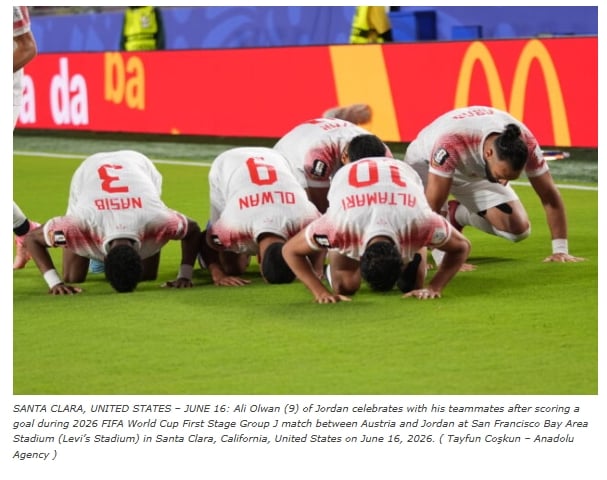
Ethnic identities become national identities. Emotional attachment is transferred from the Ummah to flags, anthems, and sporting institutions. Islam gradually becomes displaced as the primary anchor of identity.
. . . the issue is not simply a ball being kicked across a pitch. The issue is twofold: how it operates ideologically and what football as a sport produces culturally. Islam does not oppose beneficial recreation.
Recreation becomes blameworthy only when it distracts from obligations, consumes excessive amounts of time, leads to sinful behaviour, cultivates harmful attachments, and compromises the primacy of Islam both intellectually and practically.
Football culture leads to these blameworthy traits.
Millions organise their lives around fixtures whilst neglecting gatherings of knowledge. They memorise league tables, statistics, transfers, and player histories whilst remaining ignorant of the lives of the Prophets, the Companions, and the scholars of Islam. They spend hours debating clubs, managers, and referees whilst dedicating little time to the Qur’an.
In other words, it subtly distorts the believer’s hierarchy of priorities.
One is compelled to ask: how many Muslims know the starting eleven of their favourite team better than they know the names of the ten promised Paradise? How many become emotionally devastated by the defeat of a football club whilst remaining unmoved by the suffering of the Ummah?
The Messenger of Allah صلى الله عليه وسلم said: “From the excellence of a person’s Islam is leaving that which does not concern him.” The modern obsession with football stands in stark contrast to this Prophetic guidance.
. . . it is difficult to cleanly separate football from its cultural baggage, especially when we consider another important Islamic concern: the gradual absorption of foreign values, identities, and worldviews through cultural imitation.
Football is not simply 90 minutes of physical exercise. It arrives as part of a wider cultural package consisting of celebrity worship, consumerism, gambling, alcohol sponsorship, tribal partisanship, nationalism, music, chants, slogans, and symbols.
What begins as support for a football club often develops into emotional attachment, cultural identification, and eventually imitation.
This raises an important question: if Islam has already provided avenues for physical strength, brotherhood, recreation, competition, and collective identity, why should Muslims seek these things through institutions rooted in entirely different civilisational foundations?
The Messenger of Allah صلى الله عليه وسلم encouraged archery, horse riding, physical strength, and beneficial recreation. (all of which were training for war, of course)
The issue, therefore, is not simply the game itself. It is the wider network of loyalties, symbols, habits, commercial interests, and identities that accompany it. What begins as entertainment can gradually become attachment; attachment can become admiration; and admiration can eventually become identification.
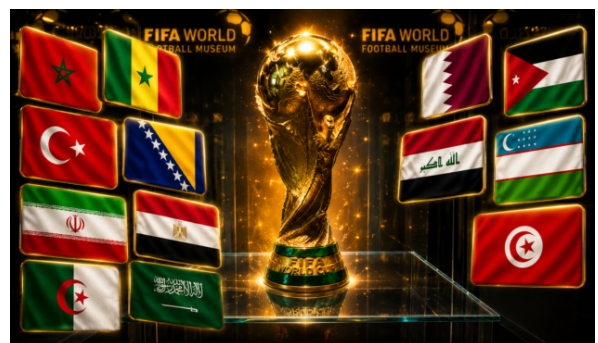
So given this discussion, we are compelled to ask: what should be said of Muslims who proudly wear the scarves, hats, and shirts of football clubs and national teams? What should be said of those who reduce football to mere physical exercise whilst ignoring its historical, ideological, and cultural baggage?
The believer who recognises the implications of these realities must understand that he is participating in something far greater than a game.
The fever must break. The cure lies not in transferring allegiance from one team to another, but in restoring loyalty to Allah, His Messenger صلى الله عليه وسلم, and the Ummah of Muḥammad صلى الله عليه وسلم.
For the Muslim possesses no banner superior to Islam, no identity nobler than servitude to Allah, no brotherhood greater than the Ummah, and no victory more worthy of celebration than the triumph of the religion of Allah.









2 Responses
This guy’s a certain buzzkill. 🙂
They hate anything that’s fun.